Showing posts with label Xenophon. Show all posts

Sunday, January 3, 2021

Ancient cavalry spurs

Early spurs had a neck that ended in a point, called a prick, riveted to the heel band. The spur was used by the Celts during the La Tène period (which began in the fifth century BCE), and is also mentioned by Xenophon (circa 430 - 354 BCE.) in his treatise "On Horsemanship".  

When the horse is about to leap over any obstacle, Xenophon recommends applying the spur on takeoff, so that the horse will use his whole body over the obstacle and make a safer jump. If this is not done, Xenophon points out, he may lag with his hind end. Xenophon goes on to admonish those wishing to make a horse "showy" to spare the spur. He emphasized that the rider should not pull on the bit nor spur or whip the horse, as this type of riding causes the opposite effect, simply distracting and frightening the animal and causing him to dislike being ridden. Instead, Xenophon urges, the horse must enjoy himself. He should be trained to be ridden on a loose rein, to hold his head high, arch his neck, and paw with his front legs, taking pleasure in being ridden.

Despite Xenophon's reputation for equestrian knowledge, however, the famed Companion Cavalry of Alexander the Great did not use spurs, bit, or stirrup. 

Bronze spurs have been found in Etruscan tombs dating to the 2nd century BCE, though, and iron or bronze spurs were used by Julius Caesar's auxillia cavalry, as evidenced by archaeological finds in England, and, later, throughout the Roman Empire. 

Some examples of Roman period spurs have been found in bogs and thought to have been offered by Germanic populations as a sacrifice to the gods, along with other war booty, after a successful battle. 


Germanic or Gallo-Roman prick spur, 2nd - 3rd century CE


Bronze Celtic spur from about 300 BCE courtesy of horsefactbook.com


More simple spur from a Roman military workshop in Aquincum, a Roman municipium north of modern Budapest, Hungary, 2nd century CE, courtesy of Wikimedia Commons contributor Bjoertvedt


If you enjoyed this post, never miss out on future posts by following me by email!


Sunday, May 27, 2012

Poison Honey and the Importance of the Classics


My husband brought home a beehive this week so he could learn to become a beekeeper (his latest hobby).  We have multitudes of rhododendrons blooming in the front yard right now and, remembering my Xenophon, when we went to Glory Bee Foods to get some beekeeping supplies, I asked the salesperson if we were supposed to keep the bees shut up during the rhododendron bloom?  She seemed totally clueless so I reminded her of the fate of Xenophon's men who became severely sickened from eating honey produced by bees feasting on rhododendron pollen. She said she had never heard anything about it.  I told her she should brush up on her ancient history.

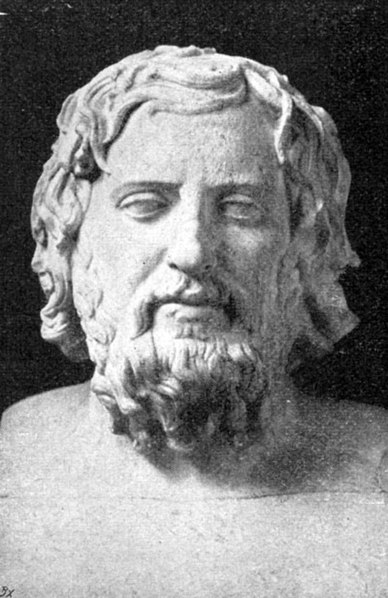
Xenophon, author of "Anabasis" that
relates the famous March of the Ten 
Thousand.  Image courtesy of 
Wikimedia Commons.
"The effect upon the soldiers who tasted the combs was, that they all went for the nonce quite off their heads, and suffered from vomiting and diarrhoea, with a total inability to stand steady on their legs. A small dose produced a condition not unlike violent drunkenness, a large one an attack very like a fit of madness, and some dropped down, apparently at death's door. So they lay, hundreds of them, as if there had been a great defeat, a prey to the cruellest despondency. But the next day, none had died; and almost at the same hour of the day at which they had eaten they recovered their senses, and on the third or fourth day got on their legs again like convalescents after a severe course of medical treatment." - Anabasis by Xenophon, Book IV Chapter VIII

I also pointed out that if she needed a more recent reference she should check out the campaigns of Pompey the Great as well since, he, too, failed to learn from history and suffered from the effects of rhododendron honey when he and his troops were campaigning in Turkey in the 1st century BCE.

"As king of Pontus and a scholar of toxicology, Mithridates was well aware of the deadly properties of the rhododendron honey of his kingdom.  He would have kept some in his royal laboratory of pharmaka and, as noted earlier, he may have included it in his mithridatium...Mithridates would also have known of Xenophon's misadventure with the poisonous honey..."
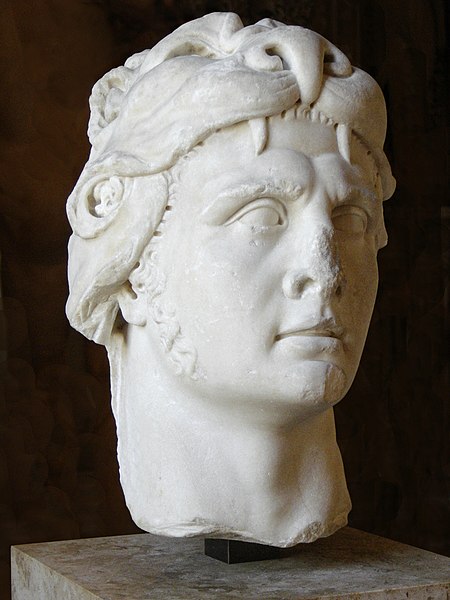
Mithridates VI of Pontus, The Poison King
Image courtesy of Wikimedia Commons

"In about 65 BCE, Pompey's army was approaching Colchis.  Mithridates' allies there, the Heptakometes, were described by Strabo as 'utterly savage' mountain barbarians, dwelling in tree forts and living on 'the flesh of wild animals and nuts.'  The tribe was feared for attacking wayfarers - suddenly leaping down on them like leopards from their tree houses.  The Heptakometes may have received specific orders from Mithridates on how to ambush the Roman army.  What we do know for a fact is that they gathered up great numbers of wild honeycombs dripping with toxic honey and placed them all along Pompey's route.  The Roman soldiers stopped to enjoy the sweets and immediately lost their senses.  Reeling and babbling, the men collapsed with vomiting and diarrhea and lay on the ground unable to move.  The Heptakometes easily wiped out about one thousand of Pompey's men." - Greek Fire, Poison Arrows, and Scorpion Bombs: Biological and Chemical Warfare in the Ancient World by Adrienne Mayor

I saw an article last week listing the ten most worthless disciplines to pursue in higher education and among them was archaeology and anthropology.  It looks to me like this is a prime example of information from the past that has direct modern implications and could be one of many examples that could refute such nonsense!


Enhanced by Zemanta
If you enjoyed this post, never miss out on future posts by following me by email!