A history resource article by Mary Harrsch © 2015
In my struggle to try to understand the conflicts in the Middle East, I recently watched a three-part documentary produced by Al Jazeera entitled "World War I Through Arab Eyes". About 30 minutes into the first installment I was stunned by an account of Roman-style decimation that occured on December 15, 1914 near the Belgium village of Zillebeke. In the documentary, Tunisian writer Jaloul Azouna related his father's eyewitness account describing how 20 Tunisian colonial soldiers of the French 8th Co. 10th Battalion Regiment Mixte de Tiraillerus were selected at random, draped with a placard and order to march unarmed into the German lines. Their comrades were ordered to shoot them down if the Germans did not.
On the 23rd of September 1914 twelve men, 1/10 of the 5th Regiment of the 73rd brigade of the 37th Infantry Division, an Algerian regiment, were shot personally by the company commander in an act of decimation for abandoning the field of battle.
At Vingré, in Aisne, in November 1914, the men of the 298th Infantry Regiment retreated against a sudden attack. Six of them, chosen by lot, were courtmartialed and sentenced to death and shot.
At Souain, in Marne, in March 1915, the soldiers of the 21st company of the 336th Infantry Regiment, exhausted by the fighting, refused to get out of the trench to attack the village. Twenty-four men were brought to court martial, four corporals were sentenced to death and shot.
At Flirey, Lorraine, in April 1915, the 5th company of the 63rd Infantry Regiment, who had just taken part in a harsh offensive were brought back to the cantonment and appointed to lead a new attack. But the men refused to get out of the trench. Six men were selected for court martial with four sentenced to death and executed.
Of the "Entente" countries who participated in "The Great War", more than 1700 soldiers were sentenced to death and executed for cowardice or desertion. Of this total more than 600 French soldiers including their colonial conscripts met this end. The Italian Army, another force that employed decimation, executed 750. The English shot 350. The U.S. and Australia were the only countries who refused to execute individuals for cowardice.
These incidents were identified by a French organization known as the Ligue des droits de l'Homme (LDH). The LDH has been working since "The Great War" to "rehabilitate" the military records of men who were shot "by example". These men were not only executed but, in Roman terms, suffered damnatio memoriae. Their families did not receive any compensation for their loss and their names were not allowed to be inscribed on any commemorative memorials.
Many modern military commanders hold up the Roman army as an example of the value of stern discipline. But was Roman discipline as harsh as we have been led to believe or did it become a modern myth used to enforce obedience in crises resulting from poor leadership?
Polybius, writing in the 2nd century BCE, clearly explains punishment by the bastinado (fustuarium). Describing the punishment for those who fail to keep night watch:
In addition to failure to keep night watch, Polybius lists other offenses that result in clubbing:
The most feared and probably most famous military punishment described by Polybius became known as decimation:
Roman history is littered, though, with accounts of military mutinies. So how often were the severe punishments outlined by Polybius actually dispensed?
In his book, "Patriarchy, Property and Death in the Roman Family", Richard Saller points out that beatings were viewed by the Romans as "the grossest form of invasion and thus a deep humiliation." Beating was associated with slaves so Saller maintained that Roman fathers were discouraged from beating their children, even though they had the right to do so, "lest the servile punishment inculcate servile habits." Saller believed, however, that soldiers were in a separate category saying "corporal punishment to enforce discipline was part of a soldier's way of life."
Eugenia C. Kiesling, Professor of Classical History at the United States Military Academy, West Point, thinks this may not have been the case in actual practice, though. In her article, "Corporal Punishment in the Greek Phalanx and the Roman Legion: Modern Images and Ancient Realities", Kiesling points out that Roman law protected citizens from violence and such military punishments were not a necessity as demonstrated by the Greeks who were able to maintain discipline without the lash.
She goes on to say,
Kiesling describes several events recorded by Livy where corporal punishment backfired on those attempting to administer it. In 473 BCE a lictor attempted to flog one Publius Volero for refusing conscription. A mob intervened and the lictors fled with their rods broken. Volero was subsequently elected tribune. In 414 BCE, military tribune Marcus Postumius Regilensis addressed the Roman senate and demanded the punishment of soldiers who objected to his distribution of booty. The Senate was appalled by the tribune's arrogance. After the soldiers in question learned of his demands, a rebellion broke out in camp and a quaestor was attacked.
Kiesling points out that these accounts imply Roman leaders had conflicted feelings about the maintainence of discipline in support of the actions of a bad commander. She says even in the famous case of Titus Manlius Torquatus beheading his son as a salutary lesson in discipline Livy appears to be uncomfortable with this extreme example of Roman "virtue". She observes Livy rejects as too "dark" a similar story involving the Dictator Aulus Postumius Tubertus and his son in 431 BCE.
In another example from Livy, Kiesling states that soldiers so hated their commander Quintus Fabius that, after he had broken an opposing army with a cavalry charge, they refused to advance upon the fleeing foe to complete the victory. Then the following year, the men of Appius Claudius so disliked their commander that they allowed themselves to be defeated by the Volscians.
Only after a second defeat by the Volscians was Claudius able to successfully order the execution of soldiers who threw away their arms. Then he decimated the army as a whole.
Scipio took the action described, however, only after debating the extent of punishment to be meted out with his advisors.
Even Gaius Marius who was described by Plutarch as a harsh character who exercised authority with unbridled passion maintained the approval of his soldiers through the fairness of his judgments.
In his "Life of Lucullus", Plutarch says that general forced men who had fled from battle to dig a large trench while other soldiers watched, a "customary disgrace," falling far short of the expected execution for cowardice.
Marcus Licinius Crassus perpetrated the most famous incidence of decimation during the Third Servile War only because of very unique circumstances (in my opinon). The troops who threw down their weapons and fled a battle with the slave army of Spartacus in 72 BCE were paid for by Crassus himself, purchased so to speak, by the wealthiest man in the Republic. They were not professional soldiers like those of the later Empire but newly recruited (although supposedly trained to some extent). Furthermore, their foe was an army of slaves. These Roman citizens ran from slaves. Therefore, from a public perspective, they were worse than slaves and deserved the punishment of disobedient slaves who threatened their superiors. I am also relatively certain Crassus had well paid burley body guards to prevent any demonstrations of resistance as well.
Clementia was Julius Caesar's watchword, though, in both the military and the political realm.
When Caesar's troops fled the field at Dyrrachium, leaving 32 standards in the hands of Pompey's forces, Caesar insisted that his soldiers felt their humiliation so strongly that they punished themselves. Appian reports that officers, feeling Caesar's reprimands did not meet the enormity of the offense, proposed the decimation of their own units. But Caesar reassured his soldiers rather than punish them.
Unfortunately, Caesar's successor, Augustus, was not so lenient and revived the punishment of decimation in 17 BCE. But his successor, Tiberius was first and foremost a soldier and did not resort to cudgels to restore order when his troops became disgruntled.
In 14 CE, troops from the Army of Pannonia complained of brutality by the centurions, in particular the camp prefect Aufidienus Rufus, who was hated for attempting to restore old-fashioned hard military discipline (antiquam durumque militiam). The soldiers mutinied and began plundering surrounding villages. When the camp commander attempted to restore order, a notorious centurion, Lucilius, Cedo Alterm (bring another [vinestick]) was murdered. Emperor Tiberius dispatched his son Drusus to bargain with the soldiers. Drusus lectured the men on discipline then ordered the execution of only two ringleaders.
Germanicus dealt with an even more serious mutiny by offering demobilization after twenty years service and cash. When further violence erupted, "Germanicus addressed the soldiers on the importance of obedience, whereupon they took it upon themselves to massacre the leading mutineers on the spot."
Although Josephus claims Roman discipline included the punishment of even trivial offenses with death, other ancient sources do not support his claims.
In his 5th century CE work, "De Re Militari", Publius Flavius Vegetius Renatus gives us a much less draconian outline for Roman military discipline than Polybius.
If only those French commanders during World War I had actually studied Roman history instead of using its most sensational punishment so callously.
References:
Corporal Punishment in the Greek Phalanx and the Roman Legion: Modern Images and Ancient Realities Author(s): Eugenia C. Kiesling Source: Historical Reflections / Réflexions Historiques, Vol. 32, No. 2 (Summer 2006), pp. 225- 246
Richard Sailer, Patriarchy, Property, and Death in the Roman Family (Cambridge,
1994), p. 136.
William Stuart Messer, "Mutiny in the Roman Army. The Republic," Classical Philology
15(1920): 158-175
Peter Garnsey, "Why Penalties Become Harsher: The Roman Case," The Natural Law Forum 13 (1968): 152. Gamsey identifies the use of the rod on citizens as an imperial innovation, pp.147-48
In my struggle to try to understand the conflicts in the Middle East, I recently watched a three-part documentary produced by Al Jazeera entitled "World War I Through Arab Eyes". About 30 minutes into the first installment I was stunned by an account of Roman-style decimation that occured on December 15, 1914 near the Belgium village of Zillebeke. In the documentary, Tunisian writer Jaloul Azouna related his father's eyewitness account describing how 20 Tunisian colonial soldiers of the French 8th Co. 10th Battalion Regiment Mixte de Tiraillerus were selected at random, draped with a placard and order to march unarmed into the German lines. Their comrades were ordered to shoot them down if the Germans did not.
Although I have watched Stanley Kubrick's "Paths of Glory" about the execution of French soldiers who refuse to continue a suicidal attack, for some reason I was under the impression the film was based on an isolated occurrence. My knowledge of World War I is admittedly limited, primarily what I've learned from watching "Once An Eagle", "Lawrence of Arabia", "The Blue Max" and a few documentaries with grainy images produced by The History Channel. I also remember listening to my husband's grandfather, a carpenter, who was assigned to build coffins when he arrived in France in 1917 as part of the American Expeditionary Forces. So, I was so shocked to learn the French employed full scale decimation, repeatedly that I felt compelled to learn more about it. Not only did I find confirmation of the action described in the Al Jazeera program, the best documented, but learned that the use of decimation was employed periodically throughout 1914 and 1915 and perhaps beyond (the military records have since been sealed and will not be made available to the public until 2017). In addition to the Zillebeke decimation, I found references to the following incidents as well.
On the 23rd of September 1914 twelve men, 1/10 of the 5th Regiment of the 73rd brigade of the 37th Infantry Division, an Algerian regiment, were shot personally by the company commander in an act of decimation for abandoning the field of battle.
At Vingré, in Aisne, in November 1914, the men of the 298th Infantry Regiment retreated against a sudden attack. Six of them, chosen by lot, were courtmartialed and sentenced to death and shot.
At Souain, in Marne, in March 1915, the soldiers of the 21st company of the 336th Infantry Regiment, exhausted by the fighting, refused to get out of the trench to attack the village. Twenty-four men were brought to court martial, four corporals were sentenced to death and shot.
At Flirey, Lorraine, in April 1915, the 5th company of the 63rd Infantry Regiment, who had just taken part in a harsh offensive were brought back to the cantonment and appointed to lead a new attack. But the men refused to get out of the trench. Six men were selected for court martial with four sentenced to death and executed.
 |
| In WWI, French colonial troops were said to be unsuitable for trench warfare so were often called to attack enemy positions. |
These incidents were identified by a French organization known as the Ligue des droits de l'Homme (LDH). The LDH has been working since "The Great War" to "rehabilitate" the military records of men who were shot "by example". These men were not only executed but, in Roman terms, suffered damnatio memoriae. Their families did not receive any compensation for their loss and their names were not allowed to be inscribed on any commemorative memorials.
Many modern military commanders hold up the Roman army as an example of the value of stern discipline. But was Roman discipline as harsh as we have been led to believe or did it become a modern myth used to enforce obedience in crises resulting from poor leadership?
Polybius, writing in the 2nd century BCE, clearly explains punishment by the bastinado (fustuarium). Describing the punishment for those who fail to keep night watch:
"The tribune takes a cudgel and just touches the condemned man with it, after which all in the camp beat or stone him, in most cases dispatching him in the camp itself. But even those who manage to escape are not saved thereby: impossible! for they are not allowed to return to their homes, and none of the family would dare to receive such a man in his house. So that those who have of course fallen into this misfortune are utterly ruined. The same punishment is inflicted on the optio and on the praefect of the squadron, if they do not give the proper orders at the right time to the patrols and the praefect of the next squadron. Thus, owing to the extreme severity and inevitableness of the penalty, the night watches of the Roman army are most scrupulously kept." - Polybius, Book VI:37
In addition to failure to keep night watch, Polybius lists other offenses that result in clubbing:
"The bastinado is also inflicted on those who steal anything from the camp; on those who give false evidence; on young men who have abused their persons; and finally on anyone who has been punished thrice for the same fault. Those are the offences which are punished as crimes, the following being treated as unmanly acts and disgraceful in a soldier — when a man boasts falsely to the tribune of his valour in the field in order to gain distinction; when any men who have been placed in a covering force leave the station assigned to them from fear; likewise when anyone throws away from fear any of his arms in the actual battle. Therefore the men in covering forces often face certain death, refusing to leave their ranks even when vastly outnumbered, owing to dread of the punishment they would meet with; and again in the battle men who have lost a shield or sword or any other arm often throw themselves into the midst of the enemy, hoping either to recover the lost object or to escape by death from inevitable disgrace and the taunts of their relations." - Polybius, Book VI:37
The most feared and probably most famous military punishment described by Polybius became known as decimation:
"If the same thing ever happens to large bodies, and if entire maniples desert their posts when exceedingly hard pressed, the officers refrain from inflicting the bastinado or the death penalty on all, but find a solution of the difficulty which is both salutary and terror-striking. The tribune assembles the legion, and brings up those guilty of leaving the ranks, reproaches them sharply, and finally chooses by lots sometimes five, sometimes eight, sometimes twenty of the offenders, so adjusting the number thus chosen that they form as near as possible the tenth part of those guilty of cowardice. Those on whom the lot falls are bastinadoed mercilessly in the manner above described; the rest receive rations of barley instead of wheat and are ordered to encamp outside the camp on an unprotected spot. As therefore the danger and dread of drawing the fatal lot affects all equally, as it is uncertain on whom it will fall; and as the public disgrace of receiving barley rations falls on all alike, this practice is that best calculated to both inspire fear and to correct the mischief." Polybius, Book VI:38
Roman history is littered, though, with accounts of military mutinies. So how often were the severe punishments outlined by Polybius actually dispensed?
In his book, "Patriarchy, Property and Death in the Roman Family", Richard Saller points out that beatings were viewed by the Romans as "the grossest form of invasion and thus a deep humiliation." Beating was associated with slaves so Saller maintained that Roman fathers were discouraged from beating their children, even though they had the right to do so, "lest the servile punishment inculcate servile habits." Saller believed, however, that soldiers were in a separate category saying "corporal punishment to enforce discipline was part of a soldier's way of life."
Eugenia C. Kiesling, Professor of Classical History at the United States Military Academy, West Point, thinks this may not have been the case in actual practice, though. In her article, "Corporal Punishment in the Greek Phalanx and the Roman Legion: Modern Images and Ancient Realities", Kiesling points out that Roman law protected citizens from violence and such military punishments were not a necessity as demonstrated by the Greeks who were able to maintain discipline without the lash.
"Instead of assuming that Roman citizens accepted treatment in military life that they would have considered outrageous elsewhere, one ought to wonder about the realities of Roman punishment and the reliability of Roman obedience." - Eugenia C. Kiesling, Corporal Punishment in the Greek Phalanx and the Roman Legion: Modern Images and Ancient Realities
 |
| Roman Centurion with vinestick. The vitis, however, was not listed in the ancient sources as a standard accouterment of a centurion. Image courtesy of Total War: Rome by Creative Assembly. |
"Almost a century ago William Stuart Messer, observing the prevalence of mutiny in the legions throught the entire history of Rome, suggested that perfect Roman disipline was in fact a 'legend'....Roman attitudes towards military punishments were more varied and complex than those of the Greeks, combining rhetorical praise for strict discipline with tacit acknowledgment of the sensitivities of citizen soldiers. Roman commanders sometimes inflicted corporal punishment, but not as a matter of course and not without the risk of mutiny." - Eugenia C. Kiesling, Corporal Punishment in the Greek Phalanx and the Roman Legion: Modern Images and Ancient Realities
Kiesling describes several events recorded by Livy where corporal punishment backfired on those attempting to administer it. In 473 BCE a lictor attempted to flog one Publius Volero for refusing conscription. A mob intervened and the lictors fled with their rods broken. Volero was subsequently elected tribune. In 414 BCE, military tribune Marcus Postumius Regilensis addressed the Roman senate and demanded the punishment of soldiers who objected to his distribution of booty. The Senate was appalled by the tribune's arrogance. After the soldiers in question learned of his demands, a rebellion broke out in camp and a quaestor was attacked.
"After ordering some of the rebellious soldiers to be crushed to death, Postumius was stoned by his soldiers. The plebs deferred the punishment of the killers to the consuls, who, judging the case with 'summa moderatione ac lenitate,' condemned only a few." - Eugenia C. Kiesling, Corporal Punishment in the Greek Phalanx and the Roman Legion: Modern Images and Ancient Realities
Kiesling points out that these accounts imply Roman leaders had conflicted feelings about the maintainence of discipline in support of the actions of a bad commander. She says even in the famous case of Titus Manlius Torquatus beheading his son as a salutary lesson in discipline Livy appears to be uncomfortable with this extreme example of Roman "virtue". She observes Livy rejects as too "dark" a similar story involving the Dictator Aulus Postumius Tubertus and his son in 431 BCE.
 |
| Consul Titus Manlius Torquatus beheading his son by Ferdinand Bol. |
In another example from Livy, Kiesling states that soldiers so hated their commander Quintus Fabius that, after he had broken an opposing army with a cavalry charge, they refused to advance upon the fleeing foe to complete the victory. Then the following year, the men of Appius Claudius so disliked their commander that they allowed themselves to be defeated by the Volscians.
"The general's initial efforts at punishment were blocked by his officers, who warned him that the men would fight only of their free will." - Eugenia C. Kiesling, Corporal Punishment in the Greek Phalanx and the Roman Legion: Modern Images and Ancient Realities
Only after a second defeat by the Volscians was Claudius able to successfully order the execution of soldiers who threw away their arms. Then he decimated the army as a whole.
"Caution in punishing even the most glaring military crimes can be seen in both Polybius' and Livy's accounts of mutiny in Spain in 206 BCE in the legions of Publius Cornelius Scipio (later Africanus)...Scipio ordered his officers to invite the ringleaders to dinner and ply them with drink. Having captured them and surrounded the rebellious legions with loyal men, Scipio castigated the mutinous troops and ordered the immediate flogging and execution of thirty-five men. The others reaffirmed their oaths..." - Eugenia C. Kiesling, Corporal Punishment in the Greek Phalanx and the Roman Legion: Modern Images and Ancient Realities
Scipio took the action described, however, only after debating the extent of punishment to be meted out with his advisors.
"Over the centuries after Scipio's successful handling of the mutiny in Spain, the Roman army underwent a series of significant changes as volunteers replaced conscripts, the cohortal legion replaced the manipular, loyalty shifted from the Republic to competing generals of the late Republic and finally to Emperors (and pretenders), and auxiliary troops fighting in tribal or national units became increasingly central to Roman defense. On the one hand, one might expect discipline to have become more severe as soldiering evolved from a civic obligatiion into a means of escape from poverty. On the other hand, in an age of civil strife, a commander's need to attract men to his eagles may have discouraged extreme severity." - Eugenia C. Kiesling, Corporal Punishment in the Greek Phalanx and the Roman Legion: Modern Images and Ancient Realities
 |
| Publius Cornelius Scipio freeing Massiva by Giovanni Batista Tiepolo 1719-1721 CE |
Even Gaius Marius who was described by Plutarch as a harsh character who exercised authority with unbridled passion maintained the approval of his soldiers through the fairness of his judgments.
In his "Life of Lucullus", Plutarch says that general forced men who had fled from battle to dig a large trench while other soldiers watched, a "customary disgrace," falling far short of the expected execution for cowardice.
Marcus Licinius Crassus perpetrated the most famous incidence of decimation during the Third Servile War only because of very unique circumstances (in my opinon). The troops who threw down their weapons and fled a battle with the slave army of Spartacus in 72 BCE were paid for by Crassus himself, purchased so to speak, by the wealthiest man in the Republic. They were not professional soldiers like those of the later Empire but newly recruited (although supposedly trained to some extent). Furthermore, their foe was an army of slaves. These Roman citizens ran from slaves. Therefore, from a public perspective, they were worse than slaves and deserved the punishment of disobedient slaves who threatened their superiors. I am also relatively certain Crassus had well paid burley body guards to prevent any demonstrations of resistance as well.
 |
| Bronze statue of Julius Caesar near the Forum Romanum in Rome Italy. Photo by Mary Harrsch © 2009 |
Clementia was Julius Caesar's watchword, though, in both the military and the political realm.
"Caesar's biggest stick was threat of dismissal from his army, which always led soldiers to beg his forgiveness and urge him to punish those who had led them astray." - Eugenia C. Kiesling, Corporal Punishment in the Greek Phalanx and the Roman Legion: Modern Images and Ancient Realities
When Caesar's troops fled the field at Dyrrachium, leaving 32 standards in the hands of Pompey's forces, Caesar insisted that his soldiers felt their humiliation so strongly that they punished themselves. Appian reports that officers, feeling Caesar's reprimands did not meet the enormity of the offense, proposed the decimation of their own units. But Caesar reassured his soldiers rather than punish them.
Unfortunately, Caesar's successor, Augustus, was not so lenient and revived the punishment of decimation in 17 BCE. But his successor, Tiberius was first and foremost a soldier and did not resort to cudgels to restore order when his troops became disgruntled.
In 14 CE, troops from the Army of Pannonia complained of brutality by the centurions, in particular the camp prefect Aufidienus Rufus, who was hated for attempting to restore old-fashioned hard military discipline (antiquam durumque militiam). The soldiers mutinied and began plundering surrounding villages. When the camp commander attempted to restore order, a notorious centurion, Lucilius, Cedo Alterm (bring another [vinestick]) was murdered. Emperor Tiberius dispatched his son Drusus to bargain with the soldiers. Drusus lectured the men on discipline then ordered the execution of only two ringleaders.
 |
| The Roman emperor Tiberius. Photographed at the Getty Villa by Mary Harrsch © 2014 |
Germanicus dealt with an even more serious mutiny by offering demobilization after twenty years service and cash. When further violence erupted, "Germanicus addressed the soldiers on the importance of obedience, whereupon they took it upon themselves to massacre the leading mutineers on the spot."
Although Josephus claims Roman discipline included the punishment of even trivial offenses with death, other ancient sources do not support his claims.
"...after Vespasian's troops broke during an attack on the town of Gamala, leaving their commander to cut his way back to Roman lines, Vespasian not only failed to punish the troops for retreating but 'consoled them, suppressing any allusion to himself to avoid the least semblance of reproof.' When troops under the command of Vespasian's son Titus ignored orders and fell into a Jewish trap, Titus merely threatened mass execution and settled for a lecture on obedience." - Eugenia C. Kiesling, Corporal Punishment in the Greek Phalanx and the Roman Legion: Modern Images and Ancient Realities
"The mutinies and their resolution suggest that the army of the early Principate, though different in composition from that of the Republic, would rebel against corporal punishment and that even the sons of Princeps had to handle mutinous troops with care. Ironically, the continuing mildness of military punishments contrasts with the increasing cruelty of Roman civilian life and the elimination of traditional protections for Roman citizens." - Eugenia C. Kiesling, Corporal Punishment in the Greek Phalanx and the Roman Legion: Modern Images and Ancient Realities
In his 5th century CE work, "De Re Militari", Publius Flavius Vegetius Renatus gives us a much less draconian outline for Roman military discipline than Polybius.
"Vegetius describes discipline as the key to Roman success, more important than numbers or even courage, but he does not equate discipline with punishment. While the Romans of old 'were strict in punishing ideleness and sloth,' a soldier's courage came from knowledge and practice of his profession. Mutiny could normally be prevented by constant training; 'in short, a soldier who has proper confidence in his own skill and strength, entertains no thought of mutiny.' If necessary, potential trouble makers could be dispatched to other posts. In the worst case, that of an actual mutiny, the commander ought, 'after the manner of the ancients, to punish the ringleaders only in order that , though few suffer, all may be terrified by the example'...it is much more to the credit of a general to form his troops to submission and obedience by habit and discipline than to be obliged to force them to their duty by the terror of punishment.'"- Eugenia C. Kiesling, Corporal Punishment in the Greek Phalanx and the Roman Legion: Modern Images and Ancient Realities
If only those French commanders during World War I had actually studied Roman history instead of using its most sensational punishment so callously.
References:
Corporal Punishment in the Greek Phalanx and the Roman Legion: Modern Images and Ancient Realities Author(s): Eugenia C. Kiesling Source: Historical Reflections / Réflexions Historiques, Vol. 32, No. 2 (Summer 2006), pp. 225- 246
Richard Sailer, Patriarchy, Property, and Death in the Roman Family (Cambridge,
1994), p. 136.
William Stuart Messer, "Mutiny in the Roman Army. The Republic," Classical Philology
15(1920): 158-175
Peter Garnsey, "Why Penalties Become Harsher: The Roman Case," The Natural Law Forum 13 (1968): 152. Gamsey identifies the use of the rod on citizens as an imperial innovation, pp.147-48
 
|
 
|
 
|


 some years ago and found it so irritating with its uncompromising interpretations of good and "evil" that I actually had to force myself to finish it. Almost all the Romans were presented as arrogant, sexually debauched and greedy while the slaves were depicted as all innocent, true-hearted and loyal (with the exception, perhaps, of Crixus). Fast carefully omitted less admirable historical information about the brutality of Spartacus' own plunder of the Roman countryside or use of crucifixion to taunt the Romans.

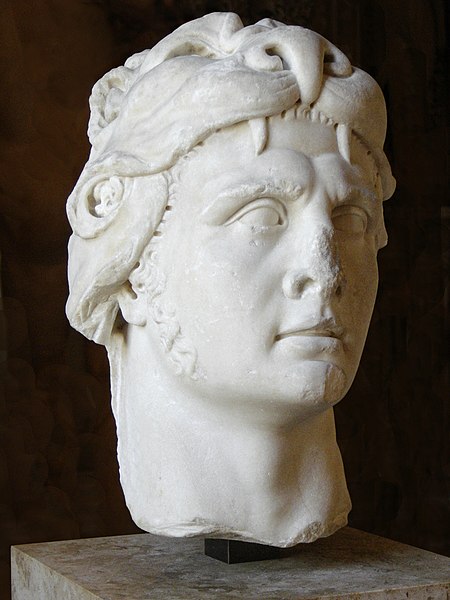
 " that Spartacus was not reviled by later Roman historians.
 ". In it, he has Arminius ponder the reason so many of his countrymen joined with him in the massacre of the Roman legions in the Teutoburg Forest. Arminius realizes that most of the warriors took part for merely the chance to grab the prized Roman goods in the baggage train and not for any higher sense of desire for independent nationhood. Although the book is fiction, I think Turtledove hits the nail squarely on the head. Plunder was viewed in ancient society as a bona fide "right" of the strong over the weak and did not appear to have any particular moral implications. Plunder was even recognized by conquering armies as an accepted method used to pay their soldiers. So the slaves and poor attracted to Spartacus would have had no qualms about depriving other people of their possessions (or their lives) and, in fact, would view it as a fortuitous change of events, not the social class struggle implied in Kubrick's film.


