Tuesday, May 12, 2009

Museum Disaster Preparedness Almost put the test in Santa Barbara


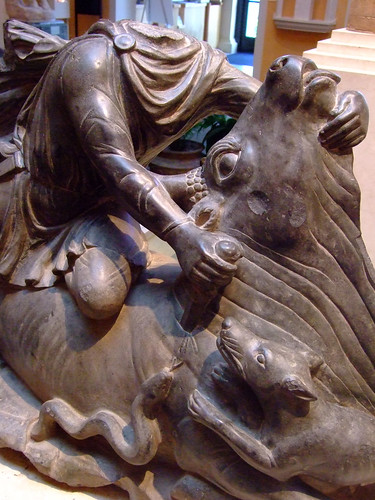
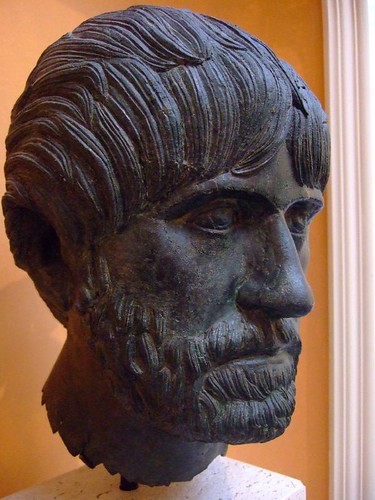
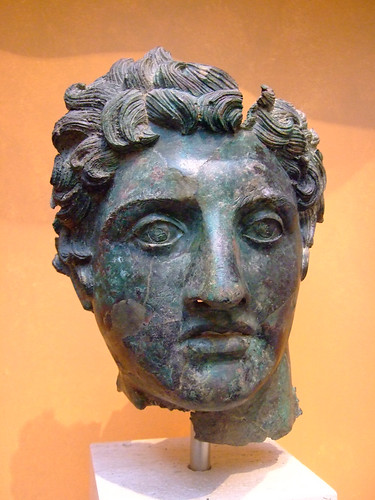
I was so relieved to read that the wildfire raging out of control and coming to within 4 miles of the city center of Santa Barbara, California was finally suppressed. The wonderful Santa Barbara Museum of Art lies at the heart of the city and I was worried about the beautiful antiquities I photographed there several years ago. Among them is a marvelous sculpture of Mithras slaying the bull from the 2nd century CE, a well-preserved bronze head of a bearded Gallic Man from the mid-3rd century CE, a lovely Fayum portrait from the 2nd century CE and even a dramatic bronze head of Alexander the Great from the 3rd century CE.
Although thousands of people in surrounding homes had been evacuated I heard nothing about any provisions to preserve the art collection. I hoped that the director of the Santa Barbara museum had attended one of the Getty's disaster preparedness workshops and that a plan was in place and activated.

The Getty held the first disaster preparedness workshop in January 1992.

The directors of eight California museums gathered at the GCI in Marina del Rey and at the J. Paul Getty Museum in Malibu to hear first-hand accounts of how institutions in Chicago, Louisiana, and San Francisco coped during real-life disasters, and to learn about the Getty's comprehensive emergency plans and drills.

The workshop included a tour of the J. Paul Getty Museum to view emergency preparations, including measures developed to protect every object in its collections, whether on display or in storage, from earthquake damage. The Museum developed its first emergency plan in 1986. A year later, it joined with the GCI [Getty Conservation Institute] and the University of Southern California in a two-year research project to evaluate the effectiveness of its seismic damage mitigation measures. The results of that study, available from the GCI Scientific Program, include general guidelines for evaluating the seismic vulnerability of objects.

In addition, the GCI, along with the National Academy of Sciences and the Earthquake Engineers Research Institute, has participated in selected emergency response missions in the wake of such disasters as Hurricane Hugo and the Loma Prieta earthquake. It has also assisted in missions organized to cope with disasters at individual institutions, including the flood in the Carillo Gil Museum in 1987, and the 1988 fires at the Louisiana State Museum and the Library of the Soviet Academy of Sciences (now the Russian Academy of Sciences) - The Getty Newsletter, Spring 1992

Much emphasis has been placed on earthquake damage prevention because of the frequency of quakes in southern California but wildfires are an annual threat there as well. Although quake damage can often be repaired, many antiquities like the Fayum portrait would be irrevocably lost in a fire so I do hope equal attention has been given to catastrophic fire preparedness.

[Images by Mary Harrsch]
If you enjoyed this post, never miss out on future posts by following me by email!


Symbols of Roman vox populi to get scrubbed

I had to shake my head and smile about this article. The Romans use antiquties for this purpose while here in Eugene, Oregon, we must be content with posting complaints on telephone poles!

The Pasquino, the remnants of a statue that once depicted Menelaus cradling the slain Patroclus, but now one of the six remaining "talking statues" of Rome, is slated for a clean up. Placed near Piazza Navona by Cardinal Carafa after it was unearthed in 1501 during excavations in Rome's Orsini Palace, the worn sculpture became the focal point of local discontents who vocally expressed their dissatisfaction with various bureaucracies, both religious and political, by festooning the work with posters and messages. The practice has continued for centuries.

[Image by Peter Heeling Courtesy of Wikimedia Commons]


The humble statue was placed near Piazza Navona by Cardinal Carafa, who held a Latin poetry contest each year and used the statue to hang and display the poems for all to see and admire. Over the years, however, more than just poetry began appearing on the statue. The work became a platform for mocking notes from the public.

Eventually, the statue became known as "Pasquino," taking its name from a neighborhood tailor with a biting wit. The tailor's and others' satirical poems and other such postings eventually became known as "pasquinate" and, in modern English, "pasquinade" now means a satirical piece of writing posted in a public place.

Among Pasquino's earliest messages was "Quod non fecerunt Barbari fecerunt Barberini (What the Barbarians did not do, the Barberini did)."

The message was addressed to the Barberini Pope, Urban VIII, who was accused of plundering Rome's artistic heritage for his own grandiose projects.

By the mid-sixteenth century, the caustic messages on the statue carried such strong anti-papal tones that religious leaders suggested dropping the statue into the Tiber River. - More: MSNBC


If you enjoyed this post, never miss out on future posts by following me by email!


Wednesday, May 6, 2009

Gladiator Playmobil tribute A Hoot!

A history resource article by  © 2009


This morning I received an email that included a link to a video about Playmobil's new pyramid playset. I wanted to include it on my blog but found the video didn't embed well so I started searching Youtube for Playmobil videos thinking I would find it there and I came across this marvelous gem!

What a hoot! The videographer even included the arrow strike in the leg, the leap onto the horse, the sword toss, even Commodus going "wooowooo"!

The creator says the stop-motion sequences in this film were created with a stop-motion feature on a leica d-lux 3 camera, and then imported into iMovie.

"I''ve discovered a better way of doing it," he says, "importing still photos from apple iPhoto into iMovie and giving them each 2 or 3 frames on the video. "

I'll have to try it out although my collection of Playmobil collectibles is rather limited. Maybe I should try using my Marx Ben Hur playset figures instead!

I recently retired from the University and I know, I'm having just too much fun!


If you enjoyed this post, never miss out on future posts by following me by email!


Tuesday, May 5, 2009

'Pompeii And The Roman Villa' opens at LACMA


It looks like I need to plan another visit to the Los Angeles County Museum of Art. 'Pompeii And The Roman Villa' has opened there and will be on exhibit until October 4. At least I have most of the summer to find a decent airline ticket. This article doesn't mention anything about gladiator armor. When I was in Naples a couple of years ago I was very disappointed that gladiator armor found in Pompeii was not on exhibit at the Museo Archaeologico di Napoli. It was apparently on tour. I was hoping this traveling exhibit from the Naples museum was the one that contained it.

"An exhibition celebrating the art, culture and luxurious lifestyle of Ancient Rome's wealthy elite has reached Los Angeles. Entitled 'Pompeii And The Roman Villa', the event features over 120 items from ancient villas in the Bay of Naples, destroyed by the eruption of Vesuvius in AD 79.

The mosaics, sculptures, paintings and jewellery, some of which only uncovered in the last few years, are mostly on loan from the Naples Archaeological Museum.

Solid silver wine goblets, jewelled caskets that once contained exotic perfumes and the remains of gourmet delicacies, such as flamingo tongue and roast ostrich, are among the items uncovered.

In addition, the exhibition documents the fascination of Rome's nouveau riche with Greek culture, through books by Epicurius and Plato, garden sculptures of nude athletes and scantily clad statues of the Greek goddess of love, Aphrodite. - More: Ansa.it
If you enjoyed this post, never miss out on future posts by following me by email!


Sunday, May 3, 2009

Domitilla catacomb paintings revealed by laser scanners

It looks like I will get to explore the catacombs of Saint Domitilla after all! A team of 10 Austrian and Italian archaeologists, architects and computer scientists from the Vienna Academy of Sciences have scanned its winding passageways with a 3-D laser scanner. I think it is really exciting that paintings that are not readily visible to the naked eye have been revealed by the laser and "painted" in living color by the laser's computer.

The leader of the project, Dr Norbert Zimmerman of the Vienna Academy of Sciences, was behind the idea to use laser scanners to record every part of the Catacombs.

His scanner, which looks like a cylinder on a tripod, stands a metre or so high and is a piece of kit you usually find in the construction industry.

It turns slowly, sending out millions of light pulses that bounce off every surface they come into contact with. The light pulses rebound back into the scanner and are recorded on a computer as a series of white dots, known as a "point cloud".

Gradually, every wall, ceiling, and floor is bombarded with the dots, enabling the computer to build up a picture of each room. At the same time a camera on the scanner takes a picture of each surface. That information is also fed into the computer enabling colour to be added to "fill in" the dots. Paintings on walls, which have not been seen in nearly 2,000 years, are now visible - their colours vivid and clear. - More: BBC


If you enjoyed this post, never miss out on future posts by following me by email!