A historical resource article by Mary Harrsch © 2018


Having recently delved into Adrian Goldsworthy's "Pax Romana" which I found eminently readable and stuffed with fascinating facts and insight into the Roman world, I was excited to see that Goldsworthy had tried his hand at historical fiction when "Vindolanda" showed up in my list of audiobooks available on Audible. Without hesitation I used one of my subscription credits to purchase it and began listening to it as soon as I finished my last of eleven novels by Anthony Riches.
I realized this novel appeared to be his first effort at using his formidable knowledge about the Roman world in a fictional tale but I was not daunted by that since one of my favorite series, "Warrior of Rome", was written by a the Director of Studies in Ancient History at Oxford University, Harry Sidebottom.
Goldsworthy's protagonist, Flavius Ferox, is a prince of the Silures tribe who, as a hostage taken after the Roman conquest of Britain, was educated in Rome and inducted into the legions.
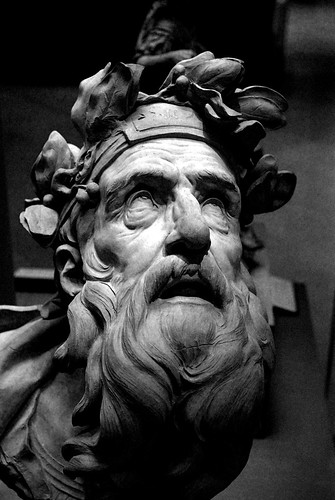
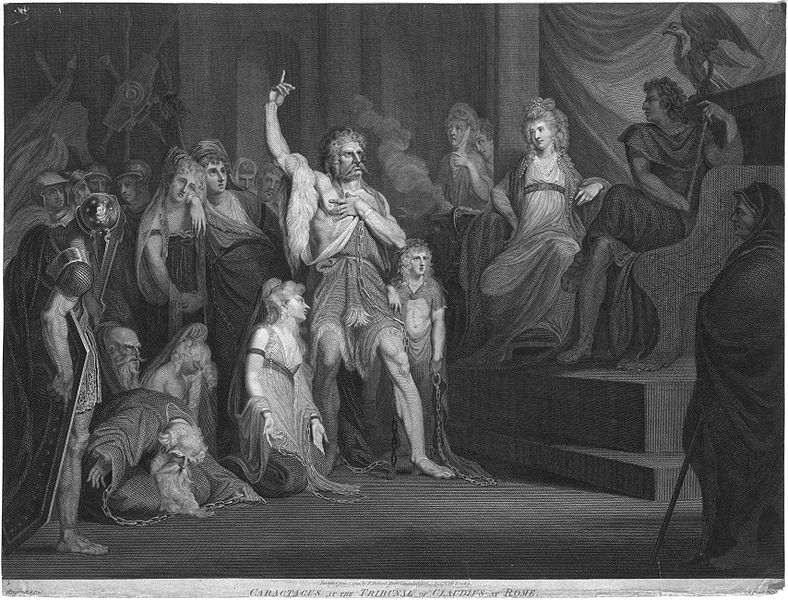
The Silures were a powerful tribal confederation that occupied what is now southeast Wales. Their first resistance to Roman conquest began in 48 CE with the help of Caratacus, a prince of the Catuvellauni, who had fled from further east after his own tribe was defeated. The Romans, led by Publius Ostorius Scapula, spent several years campaigning against the Silures, and found the Silures so adept at guerrilla warfare that Ostorius announced they posed such a danger that they should be either exterminated or transplanted.
After Ostorius died the Silures, still undefeated, went on to defeat the Second Legion. But, they were eventually subdued by Sextus Julius Frontinus in a series of campaigns ending about 78 CE. Of the Silures, the Roman historian Tacitus wrote: non atrocitate, non clementia mutabatur– the tribe "was changed neither by cruelty nor by clemency".
When the novel begins, Ferox is a Centurio Regionarius, an officer responsible for local law enforcement, who has been sent to an isolated outpost within a days ride of the more formidable Roman fort at Vindolanda. We learn from his own recalled memories or from comments made by a Brigantes scout named Vindex, that Ferox has a past littered with moments of extreme bravery clouded by an irascible nature that has resulted in conflict between Ferox and his commanders, ultimately leading to his apparent banishment to this backwater post.
Ferox also appears to have a sporadic drinking problem that crops up whenever he is not kept suitably occupied. We learn his wife mysteriously disappeared some years ago and he blames himself. Whether she was kidnapped by disaffected druids or simply left for personal reasons is not made clear. This plot point was apparently introduced to justify his rather unprofessional initial behavior.
Vindex has known Ferox for some time and knows how to handle him during his despondent periods. The best medicine is loosing Ferox on the scent of a murder and fortunately, Vindex rides in with two bodies.
At this point I had to adjust my expectations for this story. I was expecting a story about a Centurion and a band of reluctant cohorts that he had to whip into shape to confront a threat from local rebels. But, I was only partly correct. As it turns out, Ferox is first and foremost, a highly skilled tracker and more of a detective type, than cohort commander. Ferox appears to have little influence on his own troops but soon leaves them anyway so I guess it doesn't matter. The only relationship he has developed is with Vindex and it is more like that between two lone wolves than the close brotherhood of centurions I had grown so accustomed to after reading eleven novels by Anthony Riches.
This lack of depth in character dynamics left me feeling detached from any of the people I met, including Ferox. So I began to struggle to become engaged in the plot.
Ferox and Vindex find evidence of a rebel war band and track the rebels to the road leading to Vindolanda. They find the rebels attacking a Roman carriage escorted by a Batavian cohort from Vindolanda. But, the Batavians are outnumbered and are being overwhelmed by scantily dressed warriors emblazoned by tatoos shaped like a horse.
At this point, I really had to struggle to remain open-minded as I had just read "Betrayal" and "Onslaught" in Anthony Riches' "Centurions" series about the Batavian Revolt in which I learned the Batavians were considered the "best of the best" Roman auxilliaries. But this was about thirty years after that time and perhaps the Batavians had lost some of their edge after being put in their place when the Romans exacted "Retribution" (the third novel in the series due out in April).
Anyway, Ferox and Vindex turn the tables and Ferox ends up saving the life of Sulpicia Lepidina, wife of the prefect of Vindolanda, Flavius Cerialis (and a real woman in history as attested to by letters that have been recovered by archaeologists there).
Ferox and Sulpicia are apparently attracted to one another and their relationship will become a subplot throughout the rest of the novel.
Ferox and Vindex return the lady and her maid to Vindolanda and confer with Cerialis about the looming rebel threat. Then Ferox and Vindex ride out to the signal tower to see why the warning signal was delayed. There they find the detachment slaughtered with the exception of one soldier who is missing. At this point Ferox begins to suspect there must be a high-ranking traitor among the Romans who is working with the enemy.
The rest of the novel follows Ferox as he tries to determine who has betrayed Rome and survive the forces of "The Stallion."
With Goldsworthy's extensive classical education, the descriptions of Roman life and military deployments is, of course, authoritative. However, sometimes the extensive descriptions actually get in the way of the story and slow the pace considerably. I also felt the supporting characters lacked sufficient development to make the story as compelling as it could have been. I didn't know enough about the officer who turned out to be the villain to be appalled by his behavior and Goldsworthy didn't supply enough information about why his family opposed the newly minted emperor Trajan to really justify his betrayal. I also didn't think there were enough "breadcrumbs" left throughout the story so a reader could at least have an idea who the traitor might be. At the end, when all was revealed, I felt no catharsis, since I didn't have hardly a clue about who it might be anyway.
However, I do think Goldsworthy's battle scenes were visceral and authentic, reflecting his extensive study of the Roman military in action. For a first novel, it was a good effort and I do plan to give the sequel, "The Encircling Sea," a listen if it makes it to Audible.
A Kindle preview:
More suggested reading:

Having recently delved into Adrian Goldsworthy's "Pax Romana" which I found eminently readable and stuffed with fascinating facts and insight into the Roman world, I was excited to see that Goldsworthy had tried his hand at historical fiction when "Vindolanda" showed up in my list of audiobooks available on Audible. Without hesitation I used one of my subscription credits to purchase it and began listening to it as soon as I finished my last of eleven novels by Anthony Riches.
I realized this novel appeared to be his first effort at using his formidable knowledge about the Roman world in a fictional tale but I was not daunted by that since one of my favorite series, "Warrior of Rome", was written by a the Director of Studies in Ancient History at Oxford University, Harry Sidebottom.
Goldsworthy's protagonist, Flavius Ferox, is a prince of the Silures tribe who, as a hostage taken after the Roman conquest of Britain, was educated in Rome and inducted into the legions.
The Silures were a powerful tribal confederation that occupied what is now southeast Wales. Their first resistance to Roman conquest began in 48 CE with the help of Caratacus, a prince of the Catuvellauni, who had fled from further east after his own tribe was defeated. The Romans, led by Publius Ostorius Scapula, spent several years campaigning against the Silures, and found the Silures so adept at guerrilla warfare that Ostorius announced they posed such a danger that they should be either exterminated or transplanted.
After Ostorius died the Silures, still undefeated, went on to defeat the Second Legion. But, they were eventually subdued by Sextus Julius Frontinus in a series of campaigns ending about 78 CE. Of the Silures, the Roman historian Tacitus wrote: non atrocitate, non clementia mutabatur– the tribe "was changed neither by cruelty nor by clemency".
When the novel begins, Ferox is a Centurio Regionarius, an officer responsible for local law enforcement, who has been sent to an isolated outpost within a days ride of the more formidable Roman fort at Vindolanda. We learn from his own recalled memories or from comments made by a Brigantes scout named Vindex, that Ferox has a past littered with moments of extreme bravery clouded by an irascible nature that has resulted in conflict between Ferox and his commanders, ultimately leading to his apparent banishment to this backwater post.
Ferox also appears to have a sporadic drinking problem that crops up whenever he is not kept suitably occupied. We learn his wife mysteriously disappeared some years ago and he blames himself. Whether she was kidnapped by disaffected druids or simply left for personal reasons is not made clear. This plot point was apparently introduced to justify his rather unprofessional initial behavior.
Vindex has known Ferox for some time and knows how to handle him during his despondent periods. The best medicine is loosing Ferox on the scent of a murder and fortunately, Vindex rides in with two bodies.
At this point I had to adjust my expectations for this story. I was expecting a story about a Centurion and a band of reluctant cohorts that he had to whip into shape to confront a threat from local rebels. But, I was only partly correct. As it turns out, Ferox is first and foremost, a highly skilled tracker and more of a detective type, than cohort commander. Ferox appears to have little influence on his own troops but soon leaves them anyway so I guess it doesn't matter. The only relationship he has developed is with Vindex and it is more like that between two lone wolves than the close brotherhood of centurions I had grown so accustomed to after reading eleven novels by Anthony Riches.
This lack of depth in character dynamics left me feeling detached from any of the people I met, including Ferox. So I began to struggle to become engaged in the plot.
Ferox and Vindex find evidence of a rebel war band and track the rebels to the road leading to Vindolanda. They find the rebels attacking a Roman carriage escorted by a Batavian cohort from Vindolanda. But, the Batavians are outnumbered and are being overwhelmed by scantily dressed warriors emblazoned by tatoos shaped like a horse.
At this point, I really had to struggle to remain open-minded as I had just read "Betrayal" and "Onslaught" in Anthony Riches' "Centurions" series about the Batavian Revolt in which I learned the Batavians were considered the "best of the best" Roman auxilliaries. But this was about thirty years after that time and perhaps the Batavians had lost some of their edge after being put in their place when the Romans exacted "Retribution" (the third novel in the series due out in April).
Anyway, Ferox and Vindex turn the tables and Ferox ends up saving the life of Sulpicia Lepidina, wife of the prefect of Vindolanda, Flavius Cerialis (and a real woman in history as attested to by letters that have been recovered by archaeologists there).
Ferox and Sulpicia are apparently attracted to one another and their relationship will become a subplot throughout the rest of the novel.
Ferox and Vindex return the lady and her maid to Vindolanda and confer with Cerialis about the looming rebel threat. Then Ferox and Vindex ride out to the signal tower to see why the warning signal was delayed. There they find the detachment slaughtered with the exception of one soldier who is missing. At this point Ferox begins to suspect there must be a high-ranking traitor among the Romans who is working with the enemy.
The rest of the novel follows Ferox as he tries to determine who has betrayed Rome and survive the forces of "The Stallion."
With Goldsworthy's extensive classical education, the descriptions of Roman life and military deployments is, of course, authoritative. However, sometimes the extensive descriptions actually get in the way of the story and slow the pace considerably. I also felt the supporting characters lacked sufficient development to make the story as compelling as it could have been. I didn't know enough about the officer who turned out to be the villain to be appalled by his behavior and Goldsworthy didn't supply enough information about why his family opposed the newly minted emperor Trajan to really justify his betrayal. I also didn't think there were enough "breadcrumbs" left throughout the story so a reader could at least have an idea who the traitor might be. At the end, when all was revealed, I felt no catharsis, since I didn't have hardly a clue about who it might be anyway.
However, I do think Goldsworthy's battle scenes were visceral and authentic, reflecting his extensive study of the Roman military in action. For a first novel, it was a good effort and I do plan to give the sequel, "The Encircling Sea," a listen if it makes it to Audible.
A Kindle preview:
More suggested reading:
  |
  |