Showing posts with label god. Show all posts

Friday, August 27, 2021

Pompeii Walk - 1st 30 minutes

The first 30 minutes of a 5 hour Pompeii walk video that I enjoyed immensely. Although I wasn't controlling the video camera, I was able to grab some screen shots that with a little editing with Topaz Sharpen AI, On1 Effects, and Photoshop's sky replacement feature (In summer Naples skies are usually empty and that makes for boring images!) I felt like I was revisiting the site and didn't even have to suffer any jet lag!


Enhanced screen captures:

House of the Mariner Tablinum screen capture from Pompeii Walk video courtesy of POMPEII ARCHAEOLOGICAL PARK

Mosaic fragments from the House of Trittolemo Pompeii Walk video courtesy of POMPEII ARCHAEOLOGICAL PARK

Mosaic fragments from the House of Trittolemo Pompeii Walk video courtesy of POMPEII ARCHAEOLOGICAL PARK

Apollo statue in Temple of Apollo Pompeii screen capture from Pompeii Walk video courtesy of POMPEII ARCHAEOLOGICAL PARK

Apollo statue in Temple of Apollo Pompeii screen capture from Pompeii Walk video courtesy of POMPEII ARCHAEOLOGICAL PARK

Diana in the Temple of Apollo Pompeii screen capture from Pompeii Walk video courtesy of POMPEII ARCHAEOLOGICAL PARK

Temple of Apollo Pompeii screen capture from Pompeii Walk video courtesy of POMPEII ARCHAEOLOGICAL PARK

Temple of Apollo Pompeii screen capture from Pompeii Walk video courtesy of POMPEII ARCHAEOLOGICAL PARK


The Eumachia, the largest building in the Forum of Pompeii screen capture from Pompeii Walk video courtesy of POMPEII ARCHAEOLOGICAL PARK

Statue of the priestess Eumachia in Pompeii screen capture from Pompeii Walk video courtesy of POMPEII ARCHAEOLOGICAL PARK

The Forum in Pompeii screen capture from Pompeii Walk video courtesy of POMPEII ARCHAEOLOGICAL PARK

Interior of the Sanctuary of the Genius of Augusts in Pompeii screen capture from Pompeii Walk video courtesy of POMPEII ARCHAEOLOGICAL PARK

Sanctuary of the Genius of Augustus in Pompeii screen capture from Pompeii Walk video courtesy of POMPEII ARCHAEOLOGICAL PARK

The circular area in the center of the Macellum was a fish market in Pompeii screen capture from Pompeii Walk video courtesy of POMPEII ARCHAEOLOGICAL PARK

Frescoes on the walls of the Macellum in Pompeii screen capture from Pompeii Walk video courtesy of POMPEII ARCHAEOLOGICAL PARK

Frescoes on the walls of the Macellum in Pompeii screen capture from Pompeii Walk video courtesy of POMPEII ARCHAEOLOGICAL PARK

Frescoes on the walls of the Macellum in Pompeii screen capture from Pompeii Walk video courtesy of POMPEII ARCHAEOLOGICAL PARK

Remains of victims of Pompeii stored in the Macellum screen capture from Pompeii Walk video courtesy of POMPEII ARCHAEOLOGICAL PARK

A worship center in the end of the Macellum in Pompeii screen capture from Pompeii Walk video courtesy of POMPEII ARCHAEOLOGICAL PARK

Another view of the Forum in Pompeii screen capture from Pompeii Walk video courtesy of POMPEII ARCHAEOLOGICAL PARK

If you enjoyed this post, never miss out on future posts by following me by email!


Friday, August 20, 2021

Disability and the politics of "Divine Disfavor" in the Greco-Roman world

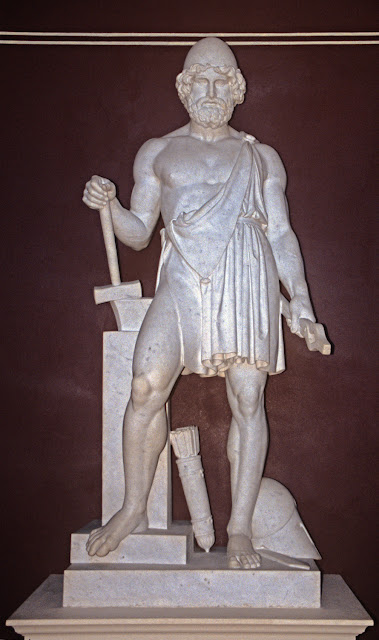
I was reading Classical Wisdom's newsletter in preparation for this weekend's virtual symposium and found their article "Hephaestus:The Humane God" particularly interesting. Although most of us think of Hephaestus as the divine metalworker that forged magical armor and weapons like the shield of Achilles, Sean Kelly pointed out that he was also the only god in the Greek pantheon (and Roman under the name Vulcan) who suffered from a physical impairment.  Hephaestus attempted to intervene in a quarrel between  Zeus and Hera, and an enraged Zeus  cast him from Mount Olympus, injuring his legs.  Thereafter he was the subject of derision because of his lameness although he was respected for his smithing skills. He forged Hermes' winged helmet and sandals, the Aegis breastplate, Aphrodite's famed girdle, Agamemnon's staff of office, Achilles' armour, Diomedes' cuirass, Heracles' bronze clappers, Helios' chariot, the shoulder of Pelops, and even Eros's bow and arrows. This did not prevent him from being referred to as "the lame one" or "the halting" though. However, an inscription found in Knossos, Crete indicates he was still worshipped.

So was this contradiction extended to those who suffered physical impairments in the human realm of the Greco-Roman world?

Classicist Martha L. Rose argues that modern models of "pity, charity, and categorization" were not imposed onto ancient persons with disabilities. Other scholars further observe that although modern categories of disability were not employed by ancient Greeks and Romans, there was the social stigma that individuals who were "unable" to perform some activities fell short of bodily or aesthetic ideals.  Garland adds that these individuals were also, at least to some extent, excluded from the religious life of the community, especially from service in priesthoods.

"In classical antiquity as in later times the social response to the handicapped was in part determined by religion, since beauty and wholeness were regarded as a mark of divine favor, whereas ugliness and deformity were interpreted as signs of the opposite. It made a difference, too, whether a disability was congenital or acquired later through disease, accident, warfare, or debauchery". - Robert Garland, The Eye of the Beholder: Deformity and Disability in the Graeco-Roman World.

References to "debilitas" in Rome encompassed both physical and other types of impairment, such as language difficulties, as evidenced in the writings of Cicero and Livy.  Aristotle even referred to baldness as a defect which may account for Gaius Julius Caesar's obsessive efforts to disguise his baldness as it could be perceived as him being among those with divine disfavor even though he claimed to be descended from Venus.

Blindness or partial blindness was highly regarded in the Roman psyche. Many individuals became famous after losing an eye. Notably, slaves would sometimes enter gladiatorial matches with a patch over a functioning eye, though historians disagree on whether this was in reference to the mythical cyclops or to make the gladiator appear more experienced. It is also known that many mythological figures, as well as known historical individuals, were thought by the Romans to have been blinded in return for favors from their gods. Such gifts varied from foresight to talent in singing.

Although Roman leaders typically had themselves depicted as physically perfect in statues and coinage, disabilities from injuries received while in the military were seen as marks of honor as opposed to simple disfigurements, with injuries to the eyes appearing most frequently in both common soldiers and famous personalities such as Hannibal.  In Commentarii de Bello Gallico, Julius Caesar mentions that the Gauls commonly maimed his centurions, usually by blinding them, mentioning that four centurions out of a cohort were blinded. Soldiers disabled in such circumstances were given a stipend by the state once they retired.

Walter D. Penrose Jr. points out that the ancient Athenians also provided maintenance payments to the "adynatoi" and exempted them from military service.  War orphans, disadvantaged by the lack of a father, also eventually received a mandated allowance.

"Diogenes Laertius writes that Solon reduced the allowances paid to victors in Panhellenic games on the grounds that it would be tasteless to increase the honors for these, while ignoring those who had died in battle, whose sons should be supported and educated at state expense," reports Dillon in his paper, "Payments to the Disabled at Athens: Social Justice or Fear of Aristocratic Patronage?"  

But, Dillon thinks the actual subsidy was probably introduced as a reform of Periklean democracy rather than any legislation of Solon or Peisistratus.  He also doubts the charitable nature of such payments.

"It could  perhaps be suggested that Athens was a 'welfare state' that made financial provision for those who could not support themselves, with the Athenians being motivated by considerations of 'social justice' to make provision for those less fortunate than the typical able-bodied citizen. But this does not seem to be the character of Athenian society, even in the age of democracy. Rather, it seems that the Athenians were motivated less by altruistic considerations than by a concern for the democracy itself," Dillon states.

"In providing the adynatoi with a means of subsistence, it avoided forcing citizens who could not support themselves to rely upon wealthy citizens for financial assistance, Dillon says, "Such assistance could have led to the establishment of patron-client links detrimental to the interests of the democracy."

He also notes that the tradition of Peisistratus providing financial assistance to farmers so they could make a decent living was also probably the result of a desire to keep them on the farms and away from the city where they might engage in political agitation.

Of course the Romans of the Republican Period embraced the patron-client relationship as a social model, despite reservations of Romulus as reported by the Greek historians Dionysius and Plutarch, because it was deemed "perculiarly congenial" to Roman politics and lent a sense of familia between citizens. However, as powerful generals began to extend their patronage over entire communities of the conquered or defended, the Republican form of government was doomed.  

Both Caesar and Augustus, established client-patron relationships in conquered regions. This can be seen in Caesar’s relations with the Aedui of Gaul wherein he was able to restore their influence over the other Gallic tribes whom where once their clients. Thereafter he was asked on several occasions to serve the duties of a patron by the Aedui and was thus regarded by many in Rome as the patron of the Aedui.  Augustus established colonies in all parts of the empire during his conquests which extended his influence to its very furthest reaches. He also made many acts of largess to the whole population of Rome, including food and monetary handouts, as well as settling soldiers in new colonies that he sponsored which indebted a great many people to him, serving his ambitions for power.

You can read more about The Discourse of Disability in Ancient Greece here:

https://www.academia.edu/27820223/The_Discourse_of_Disability_in_Ancient_Greece
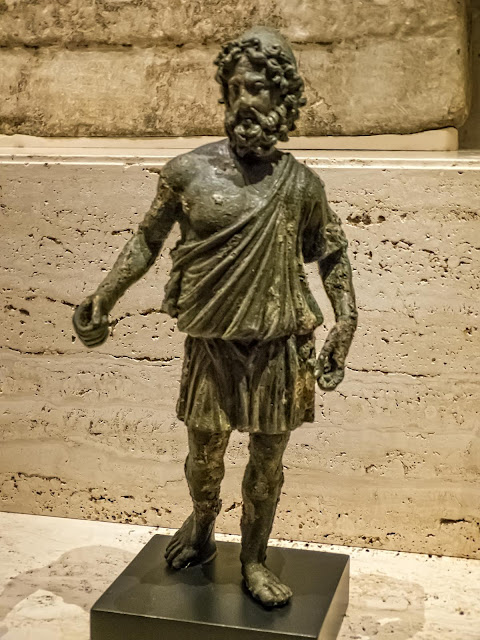
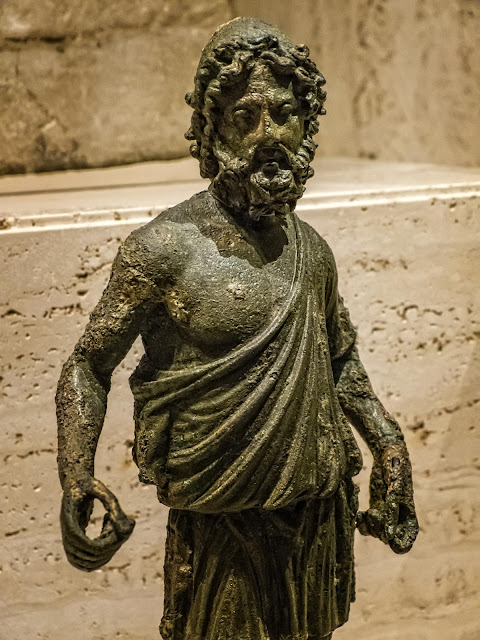
Statuette of Hephaestus the god of fire and patron of jewelers, armorers and blacksmiths Roman copy of a Greek original 1st - 2nd century CE Bronze that I photographed at the Nelson-Atkins Museum of Art in Kansas City, Missouri.

Statuette of Hephaestus the god of fire and patron of jewelers, armorers and blacksmiths Roman copy of a Greek original 1st - 2nd century CE Bronze that I photographed at the Nelson-Atkins Museum of Art in Kansas City, Missouri.

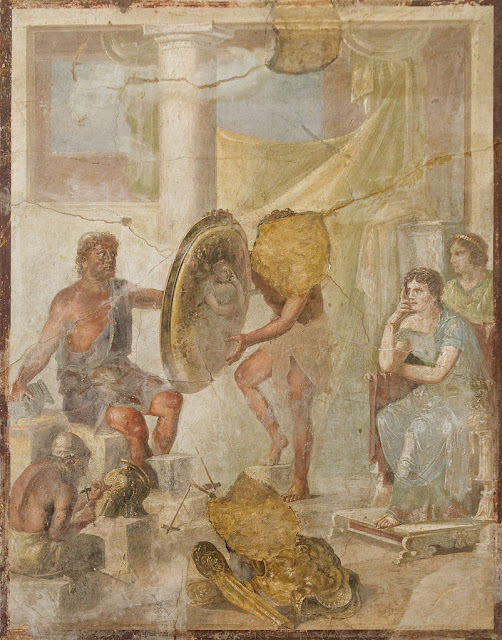
Roman fresco depicting Thetis at Hephaestos' forge waiting to receive Achilles' new weapons from Pompeii (IX I, 7, triclinium e), now in the collections of the National Archaeological Museum in Naples, courtesy of Wikimedia Commons contributor Marie-Lan Nguyen.

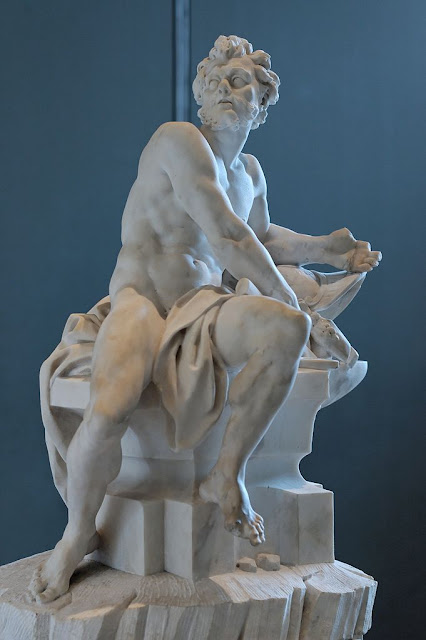
Vulcan by Guillaume Coustou the Younger, 1814, now in the Louvre Museum in Paris, courtesy of Wikimedia Commons contributor Marie-Lan Nguyen.

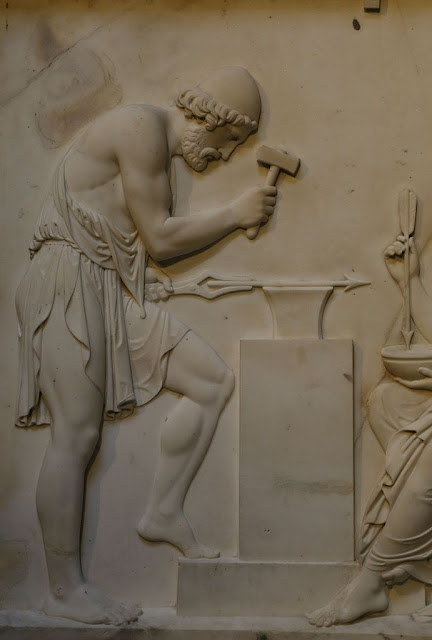
Closeup of Vulcan from a relief depicting Venus, Mars and Vulcan, about 1810, by Bertel Thorvaldsen courtesy of Wikimedia Commons contributor Rufus46.

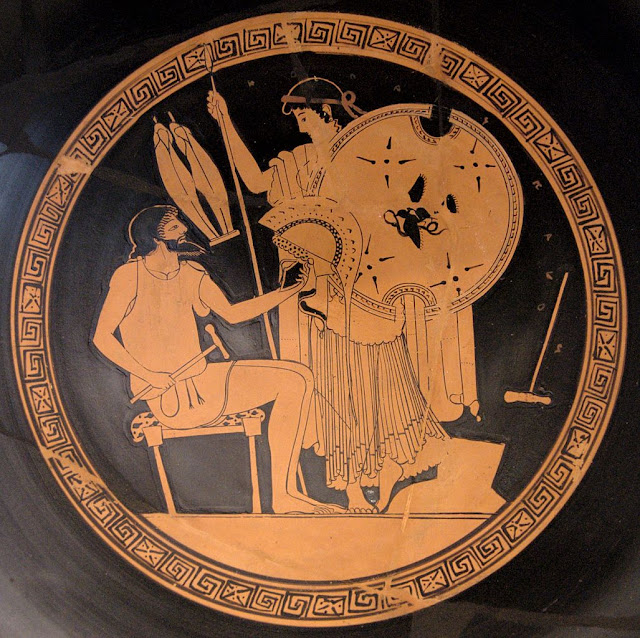
Hephaestus hands in the new Achilles' armor to Thetis (Iliad, XVIII, 617). Attic red-figure Kylix, 490–480 BCE, now in the collections of the Altes Museum in Berlin, courtesy of Wikimedia Commons contributor Bibi Saint-Pol.

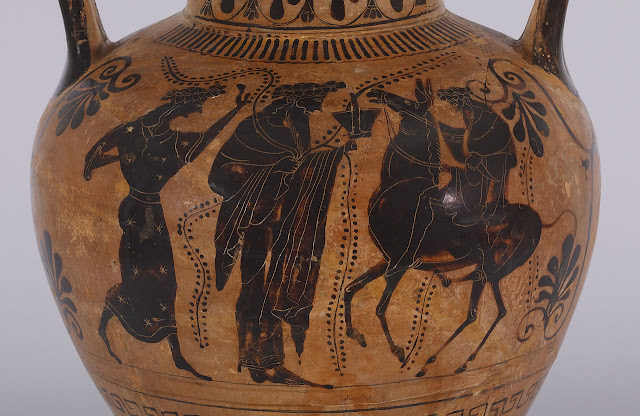
Black-figure Amphora depicting Dionysus who encounters the lame Hephaestus, god of fire and metalworking, riding on a donkey as a maenad looks on, 520 BCE, from Attica, now in the collections of the Walters Art Museum. Image courtesy of the museum.

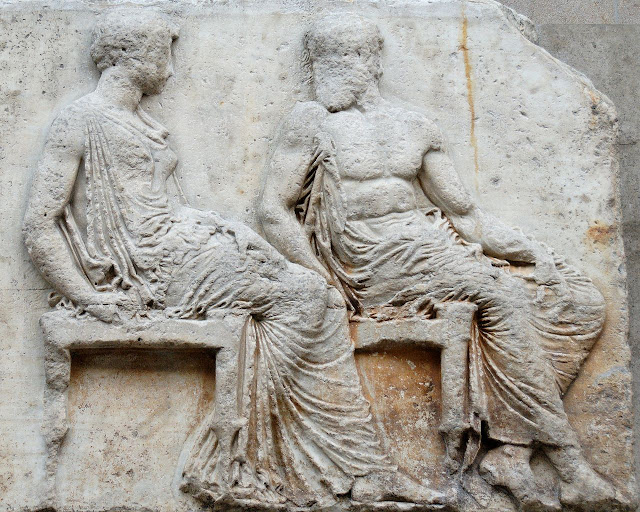
Athena holding a spear (now missing) watches the procession of the Great Panathenaia. Next to here, the lame god Hephaistos leans on a crutch. Block V (fig. 36-37) from the East frieze of the Parthenon, ca. 447–433 BCE, courtesy of Wikimedia Commons contributor Marie-Lan Nguyen.

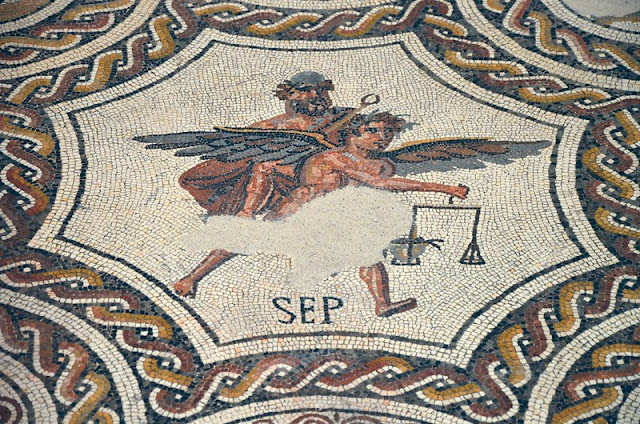
Detail of the mosaic of the seasons and the months, 3rd century AD, found in Hellin (Albacete), National Archaeological Museum of Spain, Madrid. September - Vulcan on winged genius carrying scales, Libra, courtesy of Carole Raddato (CC BY-SA 2.0)

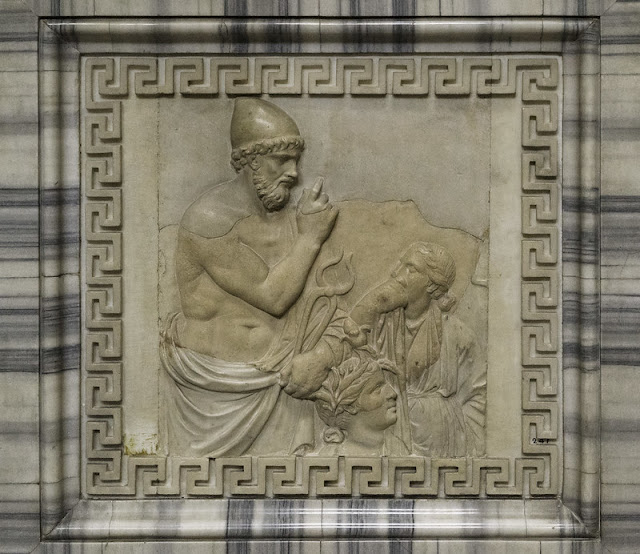
Fragment of a neo-Attic relief representing the birth of Erichthonios. The scene shows Hephaestus with “pileus” and holding tongs in his hands, Gaia, the earth goddess, wearing a crown of olive leaves and ears, and one of the daughters of Cecrops, standing with a hand to her mouth. Gaia is portrayed in the act of offering to Athena her newborn son Erichthonius. Both characters are now missing. This fragment, today inserted in the base of Galba’s statue, was found near Ostia where a famous Hephaisteion is documented. It dates from 50 BCE to the 50 CE. courtesy of Egisto Sani (CC BY-NC-SA 2.0)

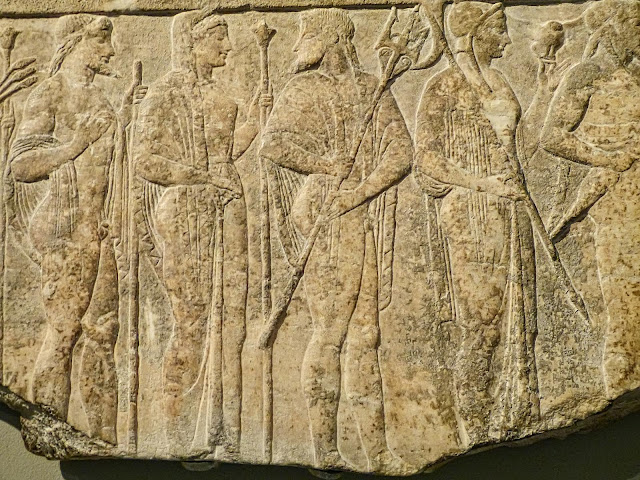
Closeup of Relief depicting twelve deities including Hephaestus (far left) Late Hellenistic or Roman possibly from Tarentum, Italy 1st century BCE that I photographed at the Walters Art Museum in Baltimore, Maryland

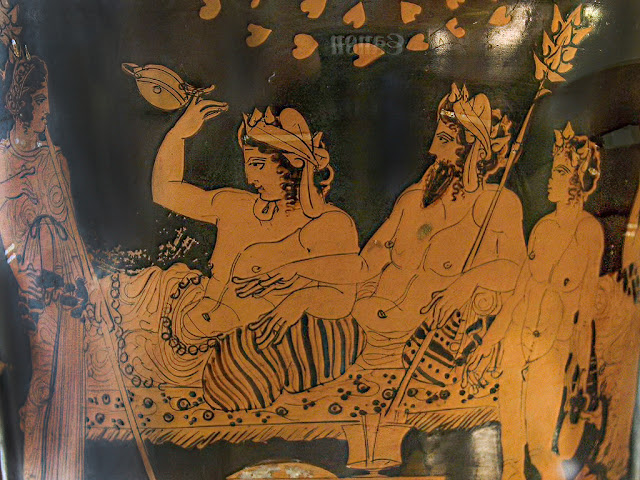
Calyx crater in red figure, 420-400 BCE, Lugano Painter. Side Aː Symposium scene. Bearded Dionysos and Hephaistos, a maenad and satyr. Archaeological Museum of Agrigento courtesy of Wikimedia Commons contributor Zde.

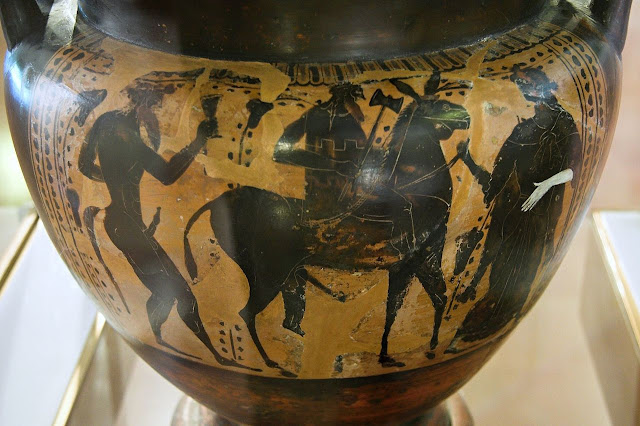
Attic colum crater, Leagros group, 550-500 BCE. Side A: The return of Hephaesos (Hefaistos) to Olympos. Archaeological Museum of Agrigento, courtesy of Wikimedia Commons contributor Zde.)

Vulcan (1838) by Herman Wilhelm Bissen (1798-1868). Sculpture in the Thorvaldsens Museum, Copenhagen, courtesy of Wikimedia Commons contributor James Steakley.


If you enjoyed this post, never miss out on future posts by following me by email!


Sunday, August 8, 2021

The Empire's Physician: Prosperity, Plague, and Healing in Ancient Rome

 The Institute for the Study of the Ancient World at New York University is sponsoring the virtual exhibit "The Empire's Physician: Prosperity, Plague, and Healing in Ancient Rome" (ancient medicine and health as seen through the eyes of Galen). Their exhibit can be explored here:  

https://galen.nyu.yourcultureconnect.com/e/home


Image: Votive relief depicting Asclepius healing a patient in her sleep, with Hygieia standing behind the god. Greek, ca. 400–350 BCE. Marble. Temple of Asclepius (Asclepieion), Piraeus, near Athens. H. 42 cm; W. 79 cm. Archaeological Museum of Piraeus: MP 405. Photo: Sites & Photos / Art Resource, NY.

If you enjoyed this post, never miss out on future posts by following me by email!


Thursday, May 6, 2021

Demon God Protector of Egypt at the NY Carlsberg Glyptotek in Copenhagen, Denmark, May 20 - October 31, 2021

 Say the words ‘Egyptian gods’ and it is usually the sun god Ra, Anubis god of the dead or the goddess Isis that spring to mind. These gods were closely associated with the Pharaoh and the upper echelons of Egyptian society. But in ancient Egypt, it was the demon gods that were inextricably linked to the everyday life of Egyptians. The most important of these was Bes, who provided protection against all manner of ills and ailments in ancient Egypt.

“The exhibition isn’t just a story about the popular, multifaceted deity Bes, whom very few people today know. Bes provides a unique insight into how the people in general lived, and into the thought and faith of ancient Egypt”, says the Egyptologist and exhibition curator Tine Bagh. “Throughout history, humankind has sought safety and security. In today’s Denmark we have a welfare system to look after us. In ancient Egypt they had Bes.”

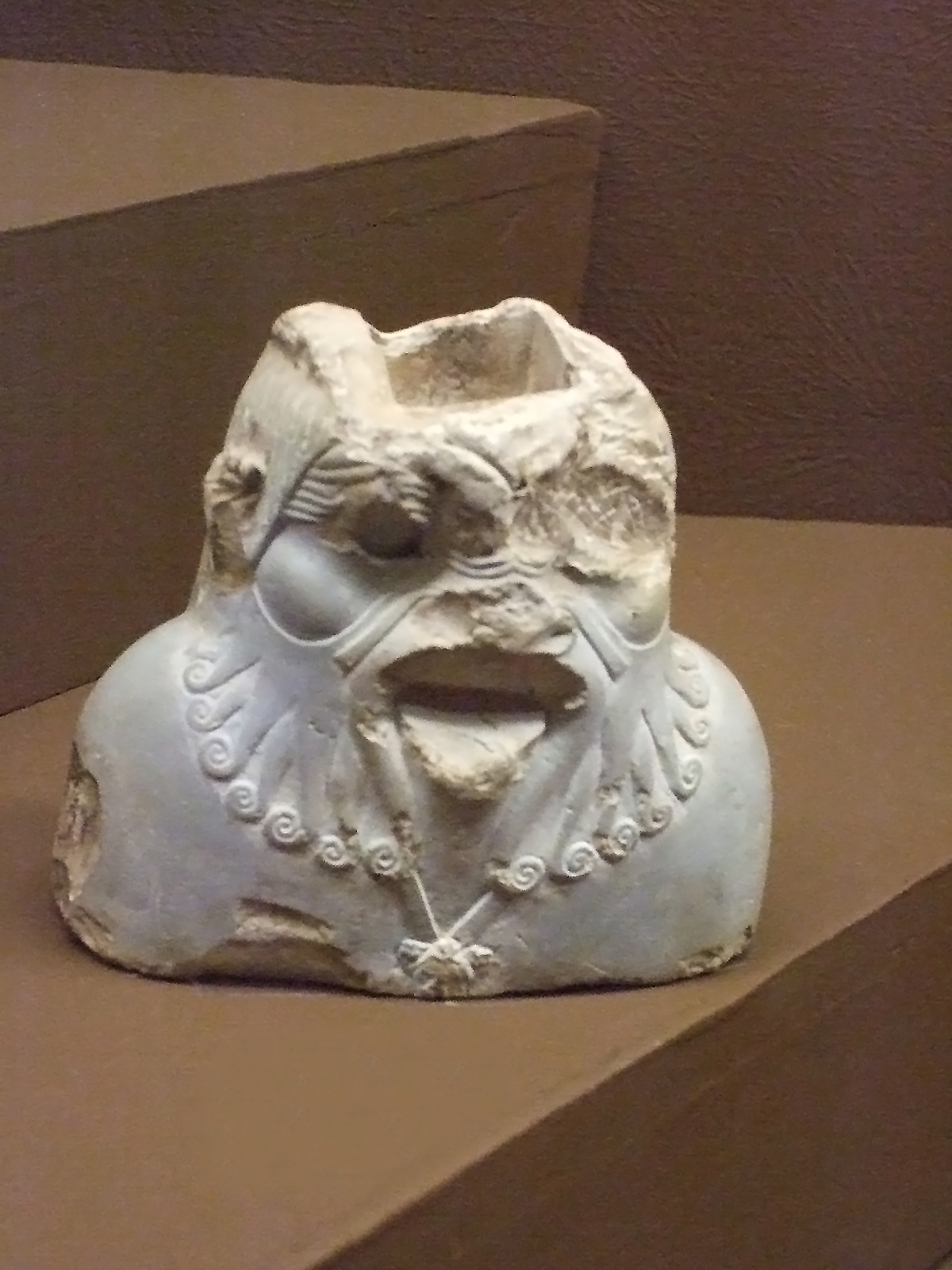
Bes is easily recognisable. He has short, stumpy legs, his tongue pokes out of his mouth, his beard resembles a lion’s mane and he has a feathered ornament on his head. Bes was part of people’s lives at all levels of ancient Egyptian society - a feature in the homes of both pharaohs and slaves. He protected people against diseases, took care of children and pregnant women, warded off snake bites and had the power to scare away enemies.

The exhibition invites visitors into Bes’s universe, where magic and the belief in gods and demons were a natural part of life. The exhibition takes us into Egyptian homes, where Bes played an indispensable role in everyday life. He appeared on beds, cosmetic containers, mirrors, so-called ‘Bes jars’ and magic wands.

Read more about it: https://mailchi.mp/3b8f75614578/new-special-exhibiton-bes-2021

Please note that you must present a corona passport with proof of a negative COVID-19 test (antigen or PCR), taken no more than 72 hours prior to your arrival. Alternatively, visitors can also present proof that they have been fully vaccinated against COVID-19 or that they recovered from a bout of corona within the past 180 days. Face masks or visors must be worn in the museum.

Images: I couldn't find any images of exhibit objects on the museum website yet so here is a selection of objects featuring images of Bes I and others have taken in other venues:


Egyptian relief depicting Bes and Beset, 664-332 BCE, at the Louvre Museum in Paris, courtesy of the museum.

Stela of the God Bes, 4th century BCE - 1st century CE at the Metropolitan Museum of Art in New York, courtesy of the museum.

Bes Furniture Detail Egyptian Blue Ptolemaic Period Egypt that I photographed at the Rosicrucian Egyptian Museum in San Jose, California.

Mirror Support in the form of Bes Egypt Late Period-Ptolemiac Period Faience that I photographed at the Walters Art Museum in Baltimore, Maryland.

Horsehair fly whisk with gold lion handle, chariot yoke saddles with god Bes, and chariot check rowell King Tutankhamun 18th dynasty New Kingdom Egypt 1332-1323 BCE that I photographed at the Discovery of King Tut exhibit at the Oregon Museum of Science and Industry in Portland, Oregon.

Reproduction of a protective sculpture of the god Bes on one of King Tut's six chariots 18th dynasty New Kingdom Egypt that I photographed at the Discovery of King Tut exhibit at the Oregon Museum of Science and Industry in Portland, Oregon.

Bell in the form of Bes, 332-30 BCE, at the Metropolitan Museum of Art, courtesy of the museum.

Relief of the god Bes next to the Roman north gate of the temple complex of Dendera, Egypt, courtesy of Wikimedia Commons contributor Olaf Tausch.

Bronze relief of Bes, 2nd century BCE at the Louvre Museum in Paris, courtesy of the museum.

Bronze statue of Bes, 664-610 BCE at the Louvre Museum courtesy of Wikimedia Commons contributor Aoineko (with glare on the right side and base of the artifact removed)

Fresco from the Temple of Isis in Pompeii depicting the Egyptian god Bes, protector of women and children, North wall of Sacrarium, Naples National Archaeological Museum courtesy of Carole Raddato.


If you enjoyed this post, never miss out on future posts by following me by email!


Wednesday, April 14, 2021

Gigantes

In Greek and Roman Mythology, the Giants, also called Gigantes, were a race of great strength and aggression, though not necessarily of great size. They were known for the Gigantomachy (Gigantomachia), their battle with the Olympian gods for supremacy of the cosmos. Historically, the myth of the Gigantomachy (not to be confused with the Titanomachy) may reflect the "triumph" of the new imported gods of the invading Greek speaking peoples from the north (c. 2000 BCE) over the old gods of the existing peoples of the Greek peninsula. For the Greeks, the Gigantomachy represented a victory for order over chaos—the victory of the divine order and rationalism of the Olympian gods over the discord and excessive violence of the earth-born chthonic Giants. More specifically, for sixth and fifth century BCE Greeks, it represented a victory for civilization over barbarism. 

Archaic and Classical representations show Gigantes as man-sized hoplites (heavily armed ancient Greek foot soldiers) fully human in form. According to Hesiod in his Theogony, the Giants were the offspring of Gaia (Earth), born from the blood that fell when Uranus (Sky) was castrated by his Titan son Cronus. Later representations (after c. 380 BCE) show Gigantes with snakes for legs. In later traditions, the Giants were often confused with other opponents of the Olympians, particularly the Titans, an earlier generation of large and powerful children of Gaia and Uranus. 

In the Odyssey, Homer has Giants among the ancestors of the Phaiakians, a race of men encountered by Odysseus,  Their ruler, Alcinous, compares the Giants to the Cyclopes, saying they are "near kin" to the gods. Homer compares them to the Laestrygonians, who "hurled...rocks huge as a man could lift." Surprisingly, however, Homer does not mention anything about the famous Gigantomachy.

Bacchylides portrays the giants as arrogant and victims of their own hubris.  Pindar describes the Giants as excessively violent and provides some of the earliest details of the Gigantomachy. He says it took place on the plain of Phlegra (the ancient name for Pallene -modern Kassandra) and has the legendary seer Teiresias prophesying that the Giants would be killed by Heracles "beneath his rushing arrows." He tells us that Porphyrion, the king of the Giants is overcome by the bow of Apollo. These events are recalled in Euripedes play "Heracles." In the play, Heracles' son Ion has the chorus describe seeing a depiction of the Gigantomachy on the late sixth century BCE Temple of Apollo at Delphi, with Athena fighting the Giant Enceladus with her "gorgon shield", Zeus burning the Giant Mimas with his "mighty thunderbolt, blazing at both ends", and Dionysus killing an unnamed Giant with his "ivy staff". Apollonius of Rhodes describes how  the sun god Helios takes up Hephaestus, exhausted from the fight in Phlegra, on his chariot.

Apollodorus provides the reason for the war between the giants and the Olympians. Although he mentions the theft of Helios' cattle, he suggests a mother's revenge as the actual motive for the war, saying that Gaia bore the Giants because of her anger over the Titans defeat and imprisonment. 

The vanquished Giants were said to be buried under volcanoes and to be the cause of volcanic eruptions and earthquakes. In his Metamorphoses, Ovid says from the blood of the Giants came a new race of beings in human form. According to Ovid, Earth [Gaia] did not want the Giants to perish without a trace, so "reeking with the copious blood of her gigantic sons", she gave life to the "steaming gore" of the blood soaked battleground. These new offspring, like their fathers the Giants, also hated the gods and possessed a bloodthirsty desire for "savage slaughter".

From the sixth century BCE onwards, the Gigantomachy was a popular and important theme in Greek art, with over six hundred representations cataloged.

Detail of Gigantomachy (the battle between the Greek gods and the Giants portrayed here as Tritons), Hellenistic art of the Roman period, 2nd century CE. From Aphrodisias in the Istanbul Archaeological Museum courtesy of Wikimedia Commons contributor Giovanni Dall'Orto.

Poseidon attacks Polybotes in the presence of Gaia, red-figure cup late fifth century BCE at the Antikensammlung  in Berlin courtesy of Wikimedia Commons contributor Sailko.

Detail of the Sala dei Giganti in the Palazzo del Te, Mantua, c. 1530, Giulio Romano courtesy of Wikimedia Commons.

Poseidon (left) holding a trident, with the island Nisyros on his shoulder, battling a Giant (probably Polybotes), red-figure cup c. 500–450 BCE in the Cabinet des Medailles in Paris courtesy of Wikimedia Commons contributor Bibi Saint-Pol.

Scene from the Gigantomachy on the frieze of the Pergamon Altar depicting Athena and Nike fighting Alkyoneus, as Gaia rises up from the ground, courtesy of Wikimedia Commons contributor Mila Ranta.

Metope from the Temple of Hera in Paestum depicting Hercules killing the giant Alcyoneus, now in the National Archaeological Museum courtesy of Wikimedia Commons contributor Miguel Hermoso Cuesta.

Second century CE Roman sarcophagus depicting the Gigantomachy at the Vatican Pius Clementine Museum courtesy of Wikimedia Commons contributor xiquinhosilva.

Statuette of a Giant Hurling a Rock, 200–175 BCE, Bronze, in the J. Paul Getty Museum, Villa Collection, Malibu, California.

Gigantomachy (the battle between the Greek gods and the Giants portrayed here as Tritons), Hellenistic art of the Roman period, 2nd century CE. From Aphrodisias in the Istanbul Archaeological Museum courtesy of Wikimedia Commons contributor Giovanni Dall'Orto.

Gigantomachy on the north frieze of the Siphnian Treasury at Delphi, 525 BCE, with the gods facing right and the Giants facing left, courtesy of Wikimedia Commons contributor Bgabel.


A serpent-legged giant from a mosaic depicting the Gigantomachy at the Villa Romana del Casale courtesy of Wikimedia Commons contributor Lasterketak.


If you enjoyed this post, never miss out on future posts by following me by email!