Showing posts with label instruments. Show all posts

Monday, January 21, 2008

The Role of Music in Ancient Civilizations Topic of New Exhibit at the Bible Lands Museum in Jerusalem


"...A new exhibit at the Bible Lands Museum in Jerusalem illustrates the role of music in the ancient Near East with an elegant display of musical instruments and iconography. Entitled "Sounds of Ancient Music," the exhibit opened on January 7 and features many noteworthy items, including some from as long ago as 12000 BCE.

As well as covering ancient Rome, Greece, Egypt and Mesopotamia, the display also has a special section examining music during the Second Temple period, and features a cornerstone from the Second Temple compound believed to be from where the priests would blow trumpets to usher in Shabbat. Also on display from the same period is an exquisite flute fragment found in a burial site in Jerusalem; due to its fine workmanship, assistant curator Moshe Piamenta speculates that it may have been actually used in the Temple itself.

ALTHOUGH THE only instruments that have survived the ages are those made from bone or metal like flutes, cymbals and rattles, the exhibit displays modern reproductions of ancient lyres, harps and drums created by closely following iconography found on vases, pottery and other implements. The iconography itself is very interesting, a fascinating gallery of mythological figures and statues playing ancient instruments. Especially noteworthy is the large number of females portrayed playing frame drums, a rare silver bowl from the Roman period showing Eros playing an ancient harp, and a cult item from 10000 BCE (found in Ashdod) depicting a five-person musical ensemble..."

If you enjoyed this post, never miss out on future posts by following me by email!


Monday, December 17, 2007

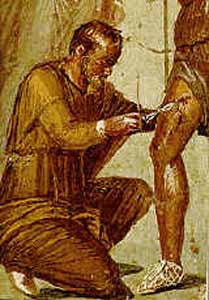
Roman surgical instruments focus of new show


One of the most complete sets of surgical instruments from the ancient world has gone on show in the Italian city of Rimini.

Archaeologists there have been excavating the house of a surgeon who operated nearly 2,000 years ago.

They found more than 150 different surgical instruments, like scalpels, scissors, weighing scales, and forceps.

The house was built in the 2nd Century AD and destroyed by fire in the barbarian invasions a century later.

Painstakingly, for 17 years archaeologists have been digging away in the centre of Rimini, a city on the Adriatic sea, laying bare the ruins of one of the world's oldest doctor's surgeries.

Greek inscriptions

One unique tool, unknown to archaeologists until now, was a device apparently designed to extract arrowheads from wounded soldiers.

They also found a pestle and mortar in which the surgeon most likely mixed compounds of herbal anaesthetics to relieve pain.

A ceramic hot water bottle in the shape of a foot is believed to have been used for treating foot pains.

The consulting rooms included a high backed chair for the doctor, who may have been a Greek, to judge from the Greek language inscriptions found.

An operating room has a bed along one wall and the name Eutyches, which may have been the doctor's name, was scratched upon the wall.

If you enjoyed this post, never miss out on future posts by following me by email!