Showing posts with label mosaics. Show all posts

Saturday, January 30, 2021

Herculaneum reopened!

I belong to the Herculaneum Society and today received a news item from them that the archaeological site of Herculaneum reopened to the public January 18!  I had the wonderful opportunity to visit the site in 2007 and I hope I'll have a chance to revisit it whenever I can travel again.  So today's featured "Antiquities Alive" virtual exhibit is a collection of my images that I took at Herculaneum during about a three hour walkthrough (the site definitely deserves much more time than that) back in 2007.  I've also included some artifacts from Herculaneum I photographed at Pompeii: The Exhibit at the Pacific Science Center in Seattle Washington, the Getty Villa in Pacific Palisades, California, and The Louvre in Paris.  Unfortunately, the day I visited Herculaneum the Villa dei Papiri was closed to the public.

A Roman mosaic in the House of Neptune and Amphitrite, Herculaneum, Italy

Theater mask in a bath complex in Herculaneum

Statue of Heracles or Dionysus with a wineskin in the garden of the House of the Stags in Herculaneum.

Statue of Hounds attacking a Deer in the garden of the House of the Stags in Herculaneum

Black and white mosaiced hallway in the Casa dell'Atrio a Mosaico in Herculaneum

Closeup of A Roman mosaic in the House of Neptune and Amphitrite, Herculaneum, Italy

Atrium with fountain and table in Herculaneum

Bust in the House of the Bronze Herm in Herculaneum

Amphora recovered in a storage area in Herculaneum

A Roman mosaic in the House of Neptune and Amphitrite, Herculaneum, Italy

Fourth style fresco still in situ in Herculaneum

Fresco from the House of the Stags in Herculaneum

Closeup of mosaic in the men's baths in the Terme del Foro, Herculaneum

A romantic stroll through the remains of Herculaneum

Reproduction of a relief from the Temple of the Four Gods (Sacello dei Quattro Dei) in Herculaneum

Oven and grinding mill in a bakery in Herculaneum

Peristyle garden with tondo, pool and puteal in the Casa del Rilievo di Telefo in Herculaneum

Column capital of Casa del Gran Portale in Herculaneum

Thermopolium in Herculaneum

Lernaean Hydra fountain in the Palestra in Herculaneum

Bakery in Herculaneum

Augusteum inscription

Overview of the archaeological site of Herculaneum

Terrace with a (replica) statue of Herculaneum's patron, Nonius Balbus

Herculaneum street

Herculaneum street

Overview of Herculaneum and boat houses where skeletons were found of victims of the Vesuvius eruption


Roman emperor Tiberius dressed as Pontifex Maximus found in Herculaneum 37 CE that was conserved by the Getty Villa in Pacific Palisades, California

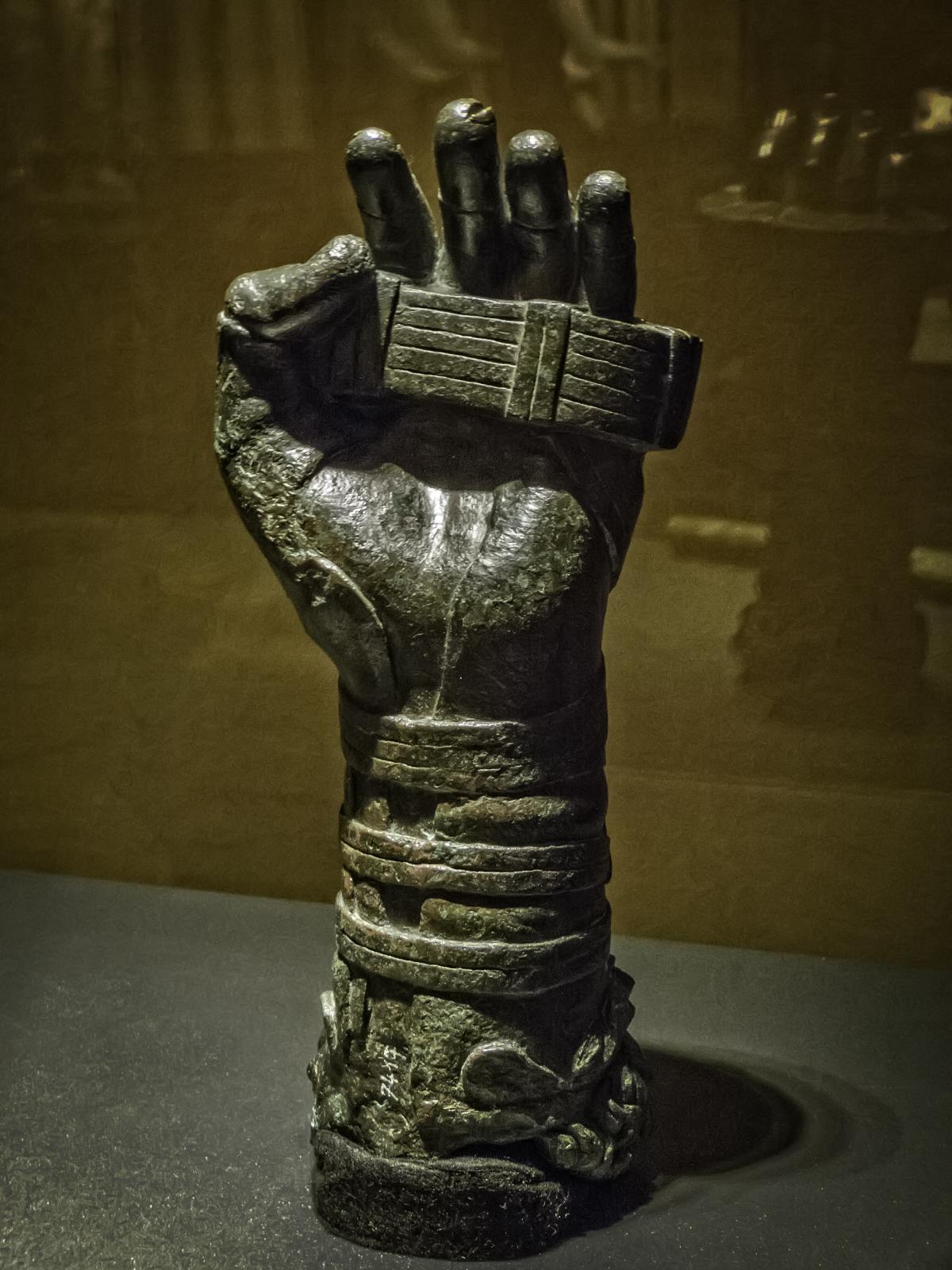
Forearm of a statue of a boxer from Herculaneum Roman 1st century CE Bronze that I photographed at "Pompeii: The Exhibit" at the Pacific Science Center in Seattle, Washington

Iron Gladiator Helmet from Herculaneum Roman 1st century CE that I photographed at "Pompeii: The Exhibit" at the Pacific Science Center in Seattle, Washington

Myrmillo-style bronze gladiator helmet with bas-relief depicting scenes from the Trojan War from Herculaneum Roman 1st Century CE that I photographed at "Pompeii: The Exhibit" at the Pacific Science Center in Seattle, Washington.

Fresco of a man reading a scroll, 1st century CE, from Herculaneum now in the collections of the National Archaeological Museum, Naples.


If you enjoyed this post, never miss out on future posts by following me by email!


Sunday, December 20, 2009

Exploring 1st - 4th century Roman villas in Brescia sounds fascinating!


I received a touristy little news item about the northern Italian town of Brescia that caught my interest.  The article mentioned that the area contained the largest Roman excavation in northern Italy so, of course, I had to read more about it.  I learned that Brescia, was once known as Brixia.

[Image: Mosaic floor of a 1st - 4th century Roman villa preserved at the Brescia Musei, Brescia, Italy.]

"Different mythological versions of the foundation of Brescia exist: one assigns it to Hercules, while another attributes its foundation to Altilia ("the other Ilium") by a fugitive from the siege of Troy. According to a further myth, the founder was the king of the Ligures Cidnus, who had invaded the Padan Plain in the late Bronze Age. Scholars attribute the foundation to the Etruscans." - Wikipedia

The Etruscans fell to the  Gallic Cenomani, allies of the Insubres, in the 4th century BCE.  The Celts succumbed to the Romans in 225 BCE.   But the Celts were not all satisfied with Roman rule and became part of a Celtic confederation allied with the Carthaginians in 202 BCE during the 2nd Punic War.

"...but, after a secret agreement, [Brixia] changed side and attacked the Insubres by surprise, destroying them. Subsequently the city and the tribe entered the Roman world peacefully as faithful allies, maintaining a certain administrative freedom. In 89 BC Brixia was recognized as civitas ("city") and in 41 BC its inhabitants received Roman citizenship. Augustus founded a civil (not military) colony there in 27 BC, and he and Tiberius constructed an aqueduct to supply it. The Roman Brixia had at least three temples, an aqueduct, an amphitheater, a forum with another temple built under Vespasianus, and some baths.

When Constantine advanced against Maxentius in 312, an engagement took place at Brixia in which the enemy was forced to retreat as far as Verona. In 402 the city was ravaged by the Visigoths of Alaric I. During the invasion of the Huns under Attila, the city was again besieged and sacked in 452 while, some forty years later, it was one of the first conquests of the Gothic general Theoderic the Great in his war against Odoacer." - Wikipedia

Republican-era buildings were discovered there in the 19th century under the remnants of the Capitolium, the temple built by the Emperor Vespasian.  Artifacts recovered from these excavations include Celtic arms, Roman portrait sculpture, frescoes and mosaics.  The Santa Giulia City Museum houses these discoveries as well as a collection of preserved Roman townhouses from the 1st to 4th century CE.

I'm also a big fan of armor collections and I see that the castle portion of the Museum houses an arms collection in the keep.  Over 580 swords, firearms and suits of armour, over half of the 1090 items bequeathed by industrialist Luigi Marzoli, are displayed in ten exhibit rooms.  The oldest item is a sword from the 13th century and one of the rarest is a large Venetian helmet and under-helmet with visor in the shape of a dog’s muzzle.

I had a wonderful time photographing the extensive armor collection at the Metropolitan Museum of Art in New York several years ago.  I would love to add images of  Brescia's marvelous collection to my Flickr set! I haven't yet visited Venice and I was really anxious to explore Ravenna someday too.  It looks like I need to plan a major expedition to northern Italy!


Houses, Villas, and Palaces in the Roman World     Roman Villas in Central Italy (Columbia Studies in the Classical Tradition)     Arms & Armor (DK Eyewitness Books)   Medieval Arms and Armor: A Pictorial Archive (Dover Pictorial Archive Series)   Vespasian   The Architecture of Roman Temples: The Republic to the Middle Empire
If you enjoyed this post, never miss out on future posts by following me by email!