Showing posts with label eruption. Show all posts

Saturday, January 30, 2021

Herculaneum reopened!

I belong to the Herculaneum Society and today received a news item from them that the archaeological site of Herculaneum reopened to the public January 18!  I had the wonderful opportunity to visit the site in 2007 and I hope I'll have a chance to revisit it whenever I can travel again.  So today's featured "Antiquities Alive" virtual exhibit is a collection of my images that I took at Herculaneum during about a three hour walkthrough (the site definitely deserves much more time than that) back in 2007.  I've also included some artifacts from Herculaneum I photographed at Pompeii: The Exhibit at the Pacific Science Center in Seattle Washington, the Getty Villa in Pacific Palisades, California, and The Louvre in Paris.  Unfortunately, the day I visited Herculaneum the Villa dei Papiri was closed to the public.

A Roman mosaic in the House of Neptune and Amphitrite, Herculaneum, Italy

Theater mask in a bath complex in Herculaneum

Statue of Heracles or Dionysus with a wineskin in the garden of the House of the Stags in Herculaneum.

Statue of Hounds attacking a Deer in the garden of the House of the Stags in Herculaneum

Black and white mosaiced hallway in the Casa dell'Atrio a Mosaico in Herculaneum

Closeup of A Roman mosaic in the House of Neptune and Amphitrite, Herculaneum, Italy

Atrium with fountain and table in Herculaneum

Bust in the House of the Bronze Herm in Herculaneum

Amphora recovered in a storage area in Herculaneum

A Roman mosaic in the House of Neptune and Amphitrite, Herculaneum, Italy

Fourth style fresco still in situ in Herculaneum

Fresco from the House of the Stags in Herculaneum

Closeup of mosaic in the men's baths in the Terme del Foro, Herculaneum

A romantic stroll through the remains of Herculaneum

Reproduction of a relief from the Temple of the Four Gods (Sacello dei Quattro Dei) in Herculaneum

Oven and grinding mill in a bakery in Herculaneum

Peristyle garden with tondo, pool and puteal in the Casa del Rilievo di Telefo in Herculaneum

Column capital of Casa del Gran Portale in Herculaneum

Thermopolium in Herculaneum

Lernaean Hydra fountain in the Palestra in Herculaneum

Bakery in Herculaneum

Augusteum inscription

Overview of the archaeological site of Herculaneum

Terrace with a (replica) statue of Herculaneum's patron, Nonius Balbus

Herculaneum street

Herculaneum street

Overview of Herculaneum and boat houses where skeletons were found of victims of the Vesuvius eruption


Roman emperor Tiberius dressed as Pontifex Maximus found in Herculaneum 37 CE that was conserved by the Getty Villa in Pacific Palisades, California

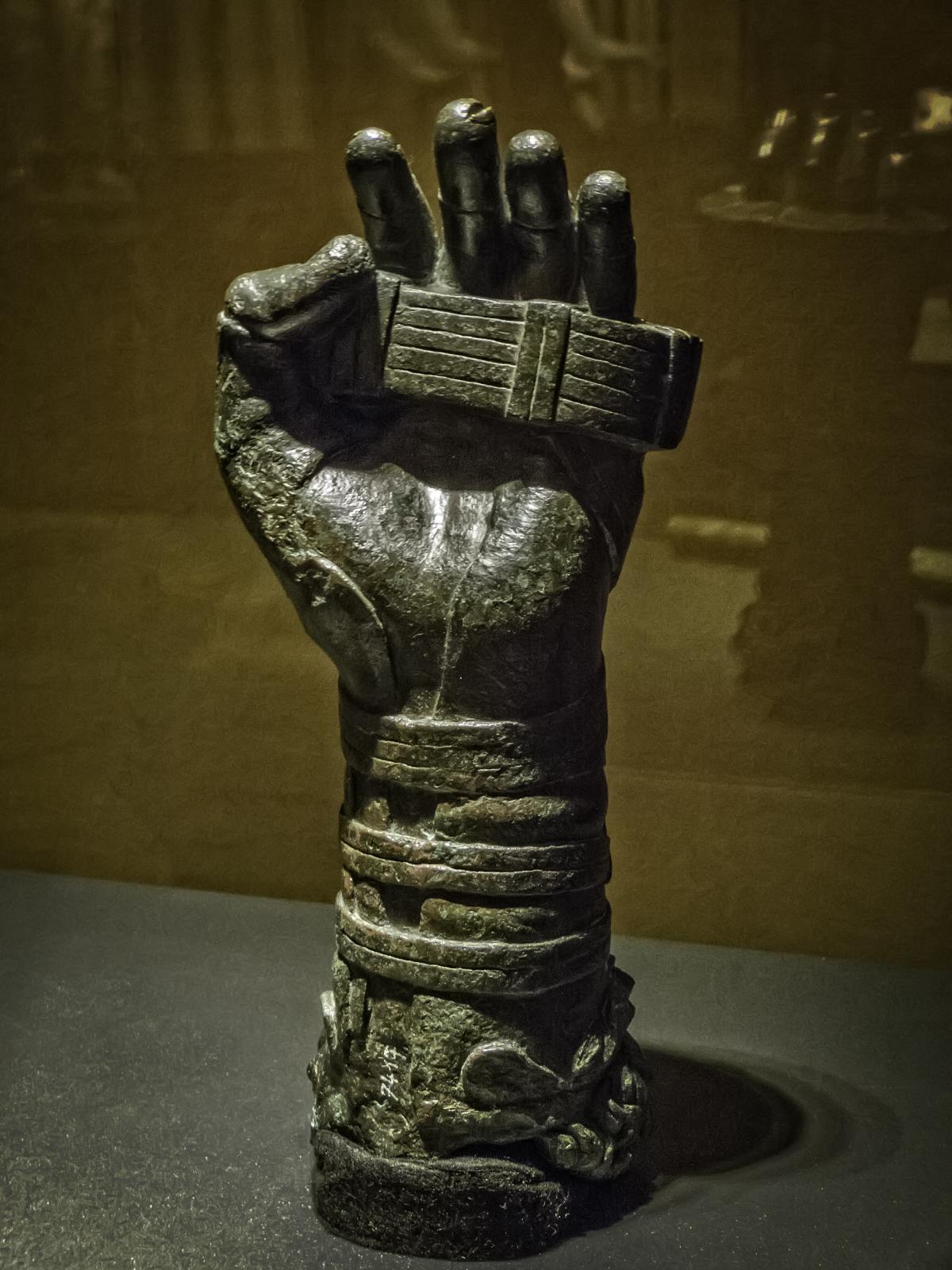
Forearm of a statue of a boxer from Herculaneum Roman 1st century CE Bronze that I photographed at "Pompeii: The Exhibit" at the Pacific Science Center in Seattle, Washington

Iron Gladiator Helmet from Herculaneum Roman 1st century CE that I photographed at "Pompeii: The Exhibit" at the Pacific Science Center in Seattle, Washington

Myrmillo-style bronze gladiator helmet with bas-relief depicting scenes from the Trojan War from Herculaneum Roman 1st Century CE that I photographed at "Pompeii: The Exhibit" at the Pacific Science Center in Seattle, Washington.

Fresco of a man reading a scroll, 1st century CE, from Herculaneum now in the collections of the National Archaeological Museum, Naples.


If you enjoyed this post, never miss out on future posts by following me by email!


Saturday, October 18, 2008

Naples Archaeological Museum Exhibit to Feature Ancient Roman Fabrics

Some of the greatest discoveries pulled from the ruins of the ancient Vesuvian town of Herculaneum have been reunited under one roof for the first time for a major new exhibition that opens here today.

Statues, skeletons, artefacts and textiles go on show from the small seaside town south of Naples, which was destroyed in the same eruption that buried Pompeii on August 24, 79 AD.

''It's an extraordinary collection of 150 works that restores to the world the richest existing testimony of the classical age,'' said Campania President Antonio Bassolino at the show's inauguration.

While Pompeii was covered by hot ash and lava, its less famous neighbour disappeared under an avalanche of molten rock, which mingled with mud and earth and solidified, allowing fragile organic matter like wood, fabrics, wax tablets and papyrus rolls to survive.

Archaeologists began digging at the site at the beginning of the 1700s and continue to make discoveries today. Among the highlights of the show are sacks, little bags, and pieces of material thought to have belonged to tunics and cloaks that were dug from the town and which form part of the museum's little-known collection of 180 ancient Roman fabrics - the largest in the world.

On display for the first time ever is fabric from a mass of organic material discovered in July 2007 on what was once the terrace of a large thermal bath complex. A fragment of cloth made from hemp was among the material, discovered alongside a leather bag, carbonised wood belonging to a boat and a fishing net with lead weights. - ansa.it

The biggest crowd-puller is likely to be the skeletons of ancient Romans in the act of fleeing the town - one of the most extraordinary archaeological discoveries of the last few decades.

Men, women and children were fleeing to the ancient beach when the first volcanic surge hit.

While at Pompeii bodies decomposed in the ash (allowing archaeologists to make plaster casts of the spaces left by the bodies), Herculaneum's solidified mud preserved the skeletons intact, providing a rare treat for researchers because of how frequently ancient Romans cremated their dead.

The exhibition is divided into three sections, focusing first on the magnificent statues of gods, heroes and emperors found among the ruins.

The second section is dedicated to the noble Herculaneum families such as that of the proconsul Marcus Nonius Balbus, one of the town's main benefactors, and showcases many statues found at the Villa of the Papyri.

The villa, the largest and most sumptuous found outside Rome, is thought to have belonged to Lucius Calpurnius Piso, father of Calpurnia, Julius Caesar's wife.

Only partially excavated, the villa has so far yielded 1,800 papyri, half of which have been deciphered to reveal Epicurean philosophy, and some experts say there may still be lost literary treasures of antiquity hidden in the ruins.

In the third section, the skeletons of fleeing townspeople are on show with other objects putting the daily life of the common people under the microscope, while fabrics go on display in the final section.

Herculaneum: Three Centuries of Discoveries runs at the Naples Archaeological Museum until April 2009.Technorati Tags: , , , , , , , , ,
If you enjoyed this post, never miss out on future posts by following me by email!


Monday, August 25, 2008

"Pompeii and the Roman Villa" exhibit opens October 18 in Washington D.C.

In the first century BC, the picturesque Bay of Naples became a
favorite retreat for vacationing emperors, senators, and other
prominent Romans. They built lavish seaside villas in the shadow of
Mount Vesuvius where they could indulge in absolute leisure, read and
write, exercise, enjoy their gardens and the views, and entertain
friends. The artists who flocked to the region to adorn the villas also
created paintings, sculptures, and decorative arts for the residents of
Pompeii and nearby towns. Pompeii and the Roman Villa
presents some 150 works of sculpture, painting, mosaic, and luxury
arts, including recent discoveries on view in the U.S. for the first
time and celebrated finds from earlier excavations. Exquisite objects
from the richly decorated villas reveal the breadth and richness of
cultural and artistic life, as well as the influence of classical
Greece on Roman art and culture in this region. The exhibition also
focuses on the impact that the 18th-century excavations and rediscovery
of Pompeii and Herculaneum had on the art and culture of the modern
world.


Organization

Pompeii and the Roman Villa: Art and Culture around the Bay of Naples is
organized by Museum of Art, with the cooperation of the
Direzione Regionale per i Beni Culturali e Paesaggistici della Campania
and the Soprintendenza Speciale per i Beni Archeologici di the National Gallery of Art, Washington, in association
with the Los Angeles County Napoli e
Pompei.

Schedule

National Gallery of Art, October 19, 2008–March 22, 2009;
Los Angeles County Museum of Art, May 3–October 4, 2009

For those of you that cannot attend either of the venues, a DVD about the exhibit will be released October 28, 2008 from MicrocinemaDVD with a list price of $19.95.

If you enjoyed this post, never miss out on future posts by following me by email!