Showing posts with label Herculaneum. Show all posts

Friday, June 11, 2021

The Painters of Pompeii: Roman Frescoes from the National Archaeological Museum, Naples

The Painters of Pompeii: Roman Frescoes from the National Archaeological Museum, Naples will open June 26, 2021 at the Oklahoma City Museum of Art.  It will be on display until October 17, 2021. Tickets will be available on a timed entry basis with limited capacity to ensure adequate social distancing.  Although masks are encouraged, they are not required for fully vaccinated visitors.  Eighty artifacts and artworks from Pompeii and Herculaneum will be presented.

During the exhibition, the museum plans to host a series of lectures in the Noble Theater with several of the most renowned scholars in the field of Ancient Roman Art and History.  Topics include the rediscovery of Pompeii, Food & Wine in Pompeii, Roman Painting, and Powerful Elite Women in Imperial Rome.

The exhibit notice says its appearance at the Oklahoma City Museum of Art will be its only US presentation.


Image: Polyphemus hears of the arrival of Galatea (or Hercules and Omphale), ancient Roman fresco from a villa in Portici painted in the "Fourth Style" (45–79 CE) courtesy of the NAM Naples. 

If you enjoyed this post, never miss out on future posts by following me by email!


Saturday, January 30, 2021

Herculaneum reopened!

I belong to the Herculaneum Society and today received a news item from them that the archaeological site of Herculaneum reopened to the public January 18!  I had the wonderful opportunity to visit the site in 2007 and I hope I'll have a chance to revisit it whenever I can travel again.  So today's featured "Antiquities Alive" virtual exhibit is a collection of my images that I took at Herculaneum during about a three hour walkthrough (the site definitely deserves much more time than that) back in 2007.  I've also included some artifacts from Herculaneum I photographed at Pompeii: The Exhibit at the Pacific Science Center in Seattle Washington, the Getty Villa in Pacific Palisades, California, and The Louvre in Paris.  Unfortunately, the day I visited Herculaneum the Villa dei Papiri was closed to the public.

A Roman mosaic in the House of Neptune and Amphitrite, Herculaneum, Italy

Theater mask in a bath complex in Herculaneum

Statue of Heracles or Dionysus with a wineskin in the garden of the House of the Stags in Herculaneum.

Statue of Hounds attacking a Deer in the garden of the House of the Stags in Herculaneum

Black and white mosaiced hallway in the Casa dell'Atrio a Mosaico in Herculaneum

Closeup of A Roman mosaic in the House of Neptune and Amphitrite, Herculaneum, Italy

Atrium with fountain and table in Herculaneum

Bust in the House of the Bronze Herm in Herculaneum

Amphora recovered in a storage area in Herculaneum

A Roman mosaic in the House of Neptune and Amphitrite, Herculaneum, Italy

Fourth style fresco still in situ in Herculaneum

Fresco from the House of the Stags in Herculaneum

Closeup of mosaic in the men's baths in the Terme del Foro, Herculaneum

A romantic stroll through the remains of Herculaneum

Reproduction of a relief from the Temple of the Four Gods (Sacello dei Quattro Dei) in Herculaneum

Oven and grinding mill in a bakery in Herculaneum

Peristyle garden with tondo, pool and puteal in the Casa del Rilievo di Telefo in Herculaneum

Column capital of Casa del Gran Portale in Herculaneum

Thermopolium in Herculaneum

Lernaean Hydra fountain in the Palestra in Herculaneum

Bakery in Herculaneum

Augusteum inscription

Overview of the archaeological site of Herculaneum

Terrace with a (replica) statue of Herculaneum's patron, Nonius Balbus

Herculaneum street

Herculaneum street

Overview of Herculaneum and boat houses where skeletons were found of victims of the Vesuvius eruption


Roman emperor Tiberius dressed as Pontifex Maximus found in Herculaneum 37 CE that was conserved by the Getty Villa in Pacific Palisades, California

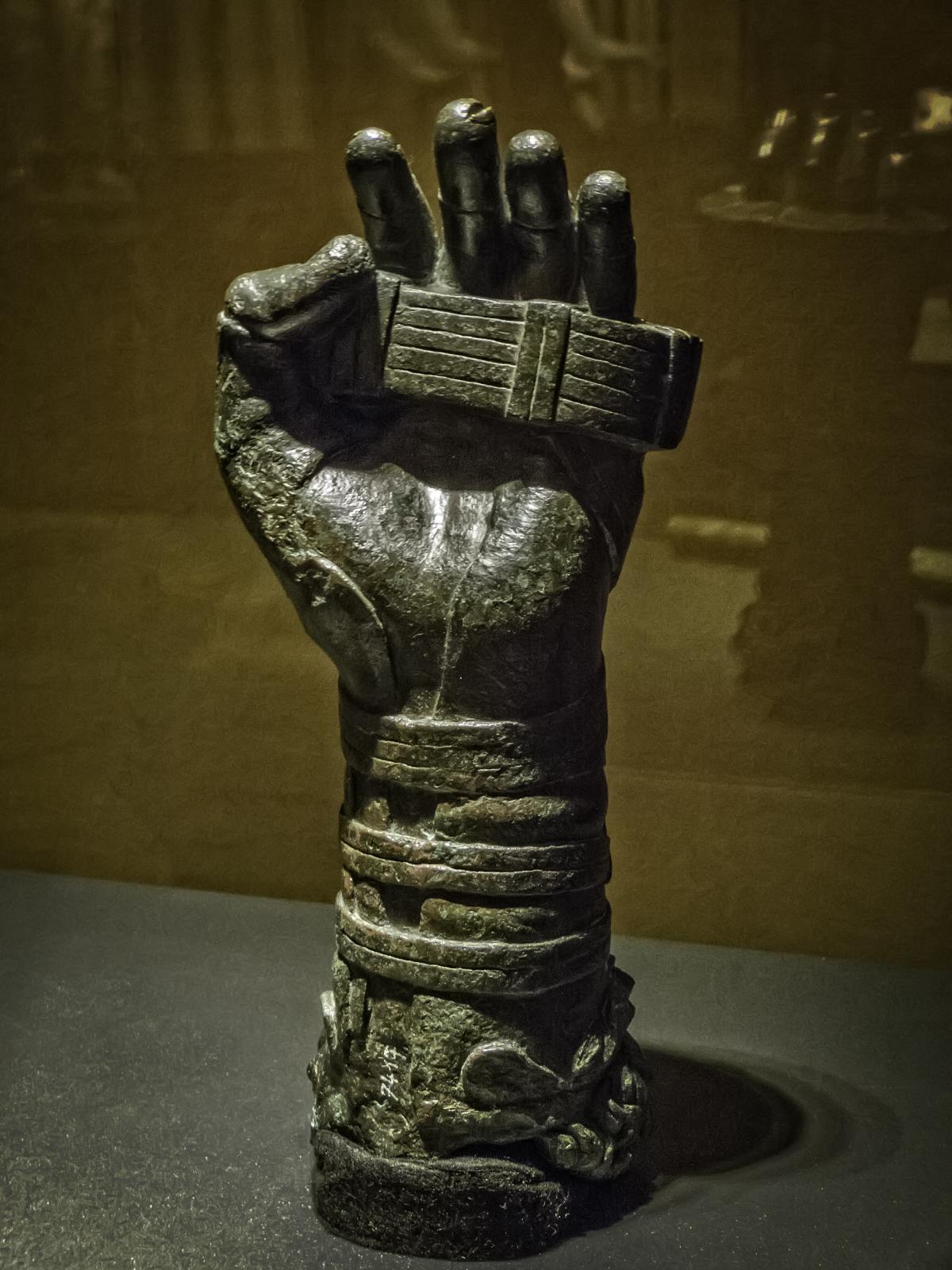
Forearm of a statue of a boxer from Herculaneum Roman 1st century CE Bronze that I photographed at "Pompeii: The Exhibit" at the Pacific Science Center in Seattle, Washington

Iron Gladiator Helmet from Herculaneum Roman 1st century CE that I photographed at "Pompeii: The Exhibit" at the Pacific Science Center in Seattle, Washington

Myrmillo-style bronze gladiator helmet with bas-relief depicting scenes from the Trojan War from Herculaneum Roman 1st Century CE that I photographed at "Pompeii: The Exhibit" at the Pacific Science Center in Seattle, Washington.

Fresco of a man reading a scroll, 1st century CE, from Herculaneum now in the collections of the National Archaeological Museum, Naples.


If you enjoyed this post, never miss out on future posts by following me by email!


Friday, June 26, 2020

Early Excavations of Herculaneum and Pompeii

Last year after attending the "Buried by Vesuvius" exhibit at the Getty Villa and meeting a group from the Herculaneum Society, I joined the organization. This morning in their newsletter, they included this interesting image of Herculaneum's main street, the Decumano in the 1st century CE alongside a modern photograph of the street today:


For years I was under the misconception that Herculaneum was the working port and Pompeii was the resort town but then learned that, in fact, it was just the opposite. Although Herculaneum was discovered first, it was covered by almost 100 feet of volcanic debris so only the "young and nimble" as it was described in an early report I read, were able to descend the deep tunnels to root out the beautiful sculptures and artifacts in demand from the royalty of Europe for their private collections. Pompeii, on the other hand, was only covered by about 11 feet of debris making it much more accessible to excavators in the 18th and 19th centuries than Herculaneum. I've been translating the Pompeianarum Antiquitatum Historia which is the diary of early 19th century excavators working in Pompeii and they complain that flocks of the local sheep wander through the ruins with impunity. After excavators exposed several structures, the tourists started to visit, guided by what were known as cicerones, local tour guides who could even arrange for a wealthier tourist to make their own "discovery."


If you enjoyed this post, never miss out on future posts by following me by email!


Thursday, June 25, 2020

Roman gladiator armor and helmets

Yesterday and today I uploaded a group of my images of gladiator helmets and armor that I photographed at various Pompeii exhibits to Wikimedia Commons and added a gallery of those images to the gladiator Wikipedia page. The images are now freely available for teaching, writing, and research.  Most of the equipment was found at the gladiator barracks in Pompeii although one of the most ornate pieces with a relief depicting scenes from the Trojan war was found in Herculaneum.

Roman gladiator helmet with relief depicting scenes from the Trojan War from Herculaneum
1st century CE

Roman gladiator shin guard depicting Hercules 1st century CE

Roman gladiator helmet with relief depicting scenes from the Trojan War from Herculaneum
1st century CE

Roman gladiator helmet with relief depicting scenes from the Trojan War from Herculaneum
1st century CE

Ornate Roman gladiator shin guards depicting Silenus and swans fighting serpents

Ornate Roman gladiator shin guards depicting Silenus and swans fighting serpents

Ornate Roman gladiator shin guards depicting Silenus and swans fighting serpents

Heart-shaped spear point found in Gladiator barracks in Pompeii 1st century CE

Roman gladiator shin guard depicting venus riding a dolphin-shaped ship 1st century CE

Iron gladiator helmet 1st century CE

Roman gladiator shin guard depicting Athena 1st century CE

Close up of Athena relief on Roman gladiator shin guard

Roman gladiator helmet depicting Priapus and entourage found in gladiator barracks in Pompeii 1st century CE

Roman gladiator helmet found in the gladiator barracks in Pompeii 1st century CE

Spear point found in gladiator barracks in Pompeii 1st century CE

Gladiator shin guard depicting Hercules 1st century CE

Closeup of gladiator shin guard depicting Hercules 1st century CE

Another gladiator shin guard depicting Hercules 1st century CE


If you enjoyed this post, never miss out on future posts by following me by email!