Showing posts with label helmet. Show all posts

Sunday, August 15, 2021

The Getae: The noblest and the just of the Thracian tribes (according to Herodotus)

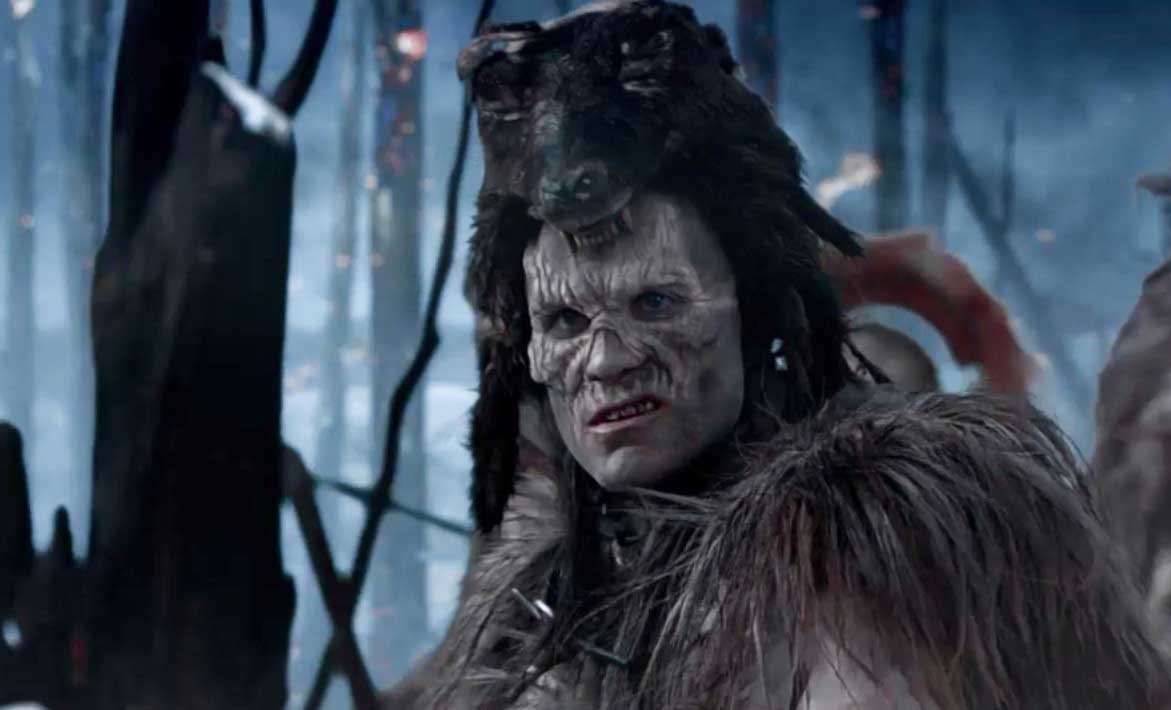
Every time I read something about the Getae, I envision the skull wearing savage warriors depicted in the opening battle scenes of the Starz series "Spartacus." But according to Herodotus, the Getae were "the noblest as well as the most just of all the Thracian tribes."  When Lysimachus tried to subdue the Getae he was defeated by them. The Getae king, Dromichaetes, took him prisoner but he treated him well and convinced Lysimachus there is more to gain as an ally than as an enemy of the Getae and released him. According to Diodorus, Dromichaetes entertained Lysimachus at his palace at Helis, where food was served on gold and silver plates. The discovery of the celebrated tomb at Sveshtari (1982) suggests that Helis, the capital of the Getae, was located perhaps in its vicinity, where remains of a large antique city are found along with dozens of other Thracian mound tombs.

The Getae were several Thracian-related tribes that once inhabited the regions to either side of the Lower Danube, in what is today northern Bulgaria and southern Romania. Their proximity to Greek colonies on the Black Sea coast brought the Getae into contact with the Greeks at an early date. 

There seems to be disagreement among scholars whether the Getae and Dacians were separate peoples. In his Geographic (c. 7 BC – 20 CE), Strabo said the Dacians lived in the western parts of Dacia, "towards Germania and the sources of the Danube", while the Getae lived in the eastern parts, towards the Black Sea, both south and north of the Danube but both cultures spoke the same language as the Thracians. Justin, the 3rd century CE Latin historian, wrote in his "Epitome of Pompeius Trogus" that Dacians are spoken of as descendants of the Getae.  In his Roman History, Cassius Dio observes "I call the people Dacians, the name used by the natives themselves as well as by the Romans, though I am not ignorant that some Greek writers refer to them as Getae, whether that is the right term or not..."  According to Herodotus, the Getae differed from other Thracian tribes in their religion, centered around the god (daimon) Zalmoxis whom some of the Getae called Gebeleizis.

Herodotus says the Getae were one of the conquered tribes of the  Scythian campaign of Darius I in 513 BCE. But by the 5th century BCE through the 3rd century BCE,  the Getae were mostly under the rule of the flourishing Odrysian kingdom. During this time, the Getae provided military services and became famous for their cavalry. 

After the disintegration of the Odrysian kingdom, the Getic principalities began to consolidate themselves. By about 200 BCE, strong Getic princes such as Zalmodegicus had extended their domain as far as Histria near the mouth of the Danube River. They minted their own coins and practiced a ruler cult.

In 72–71 BCE Marcus Terentius Varro Lucullus became the first Roman commander to march against the Getae. This was done to strike at the western Pontic allies of Mithridates VI, but he had limited success. A decade later, a coalition of Scythians, Getae, Bastarnae and Greek colonists defeated C. Antonius Hybrida at Histria. This victory over the Romans allowed Burebista, the leader of this coalition, to organize a kingdom consisting of descendants of those whom the Greeks had called Getae, as well as Dacians, or Daci, the name applied to people of the region by the Romans and he ruled independently from 60–50 BCE.

Meanwhile, Augustus aimed at subjugating the entire Balkan peninsula, and used an incursion of the Bastarnae, a Celtic or Germanic people depending on which ancient source you accept, who crossed the Danube, as a pretext to devastate the Getae and Thracians. He put Marcus Licinius Crassus in charge of the plan. In 29 BCE, Crassus defeated the Bastarnae with the help of the Getic prince Rholes. Crassus promised him help for his support against the Getic ruler Dapyx. After Crassus had reached as far as the Danube Delta, Rholes was appointed king and Crassus returned to Rome. In 16 BCE, the Sarmatae invaded the Getic territory and were driven back by Roman troops. The Getae were placed under the control of the Roman vassal king in Thrace, Rhoemetalces I. In 6 CE, the province of Moesia was founded, incorporating the Getae south of the Danube River. The Getae north of the Danube continued tribal autonomy outside the Roman Empire.

Skull-wearing Getae warrior of Starz series "Spartacus".

Getae warrior (Thracians related to the Dacians) armed with two specimens of the fearsome falx, courtesy of artist Mariusz Kozik.

A Geto-Dacian helmet dating from the 4th century BCE known as the Helmet of Iron Gates, Mehedinţi County, Romania, now in the collections of the Detroit Institute of Arts, courtesy of Wikimedia Commons contributor Codrin B.

Gilded silver Getae-Dacian helmet found in Peretu at the National Museum of Romanian History in Bucharest, courtesy of Wikimedia Commons contributor Sailko.

Detail of a Gilded silver Getae-Dacian helmet found in Peretu at the National Museum of Romanian History in Bucharest, courtesy of Wikimedia Commons contributor Cristian Chirita

Gilded silver Getae-Dacian helmet, part of the Aghighiol treasure of Getae-Dacian artifacts at the National Museum of Romanian History in Bucharest, courtesy of Wikimedia Commons contributor Cristian Chirita.

Detail of Getae-Dacian horseman on a helmet, part of the Aghighiol treasure of Getae-Dacian artifacts at the National Museum of Romanian History in Bucharest, courtesy of Wikimedia Commons contributor Cristian Chirita.

Getae aristocratic portrait in gilded silver from Peretu 5th-4th century BCE now in the National Museum of Romanian History in Bucharest, courtesy of https://romanianhistoryandculture.webs.com/

Beaker with birds and animals, Thraco-Getian, 4th century BC, silver, height: 18.7 cm (7.4 in), Metropolitan Museum of Art in New York, courtesy of Wikimedia Commons contributor, Marie-Lan Nguyen.

Bottom of a Silver Getae-Dacian beaker depicting mythical beasts, part of the Aghighiol treasure of Getae-Dacian artifacts at the National Museum of Romanian History in Bucharest, courtesy of Wikimedia Commons contributor Cristian Chirita.

Gilt silver tableware from the princely burial of Peretu, Getae, 310-290 BCE, at the National Museum of Romanian History in Bucharest, courtesy of Wikimedia Commons contributor Sailko.

Aghighiol treasure of Getae-Dacian artifacts at the National Museum of Romanian History in Bucharest, courtesy of Wikimedia Commons contributor Cristian Chirita.

Tropeum Traiani Metope commemorating the Battle of Adamclisi, Roman, showing Dacian warriors wielding a two-handed falx, , courtesy of Wikimedia Commons contributor Cristian Chirita.

A Geto-Dacian Rhyton dating from the last half of the 4th century or the first half of the 3rd BCE at the National Museum of Romanian History courtesy of Wikimedia Commons contributor Cristian Chirita.

Closeup ​of a gold disc embossed with a helmeted head of Athena recovered from the Great Tumulus of Sveshtari in the Getae Capital, courtesy of https://aktuelarkeoloji.com.tr/kategori/guncel-kazilar/getae-baskenti-buyuk-sveshtari-tumulus

Gold ​applique depicting a female head, Getae, Athena recovered from the Great Tumulus of Sveshtari in the Getae Capital, courtesy of https://aktuelarkeoloji.com.tr/kategori/guncel-kazilar/getae-baskenti-buyuk-sveshtari-tumulus

Gilded Getae-Dacian Greave, part of the Aghighiol treasure of Getae-Dacian artifacts at the National Museum of Romanian History in Bucharest, courtesy of Wikimedia Commons contributor Cristian Chirita.

Getae-Dacian Greave, part of the Aghighiol treasure of Getae-Dacian artifacts at the National Museum of Romanian History in Bucharest, courtesy of Wikimedia Commons contributor Cristian Chirita.

Getae-Dacian animorphic gilt silver disk , part of the Aghighiol treasure of Getae-Dacian artifacts at the National Museum of Romanian History in Bucharest, courtesy of Wikimedia Commons contributor Cristian Chirita.

The Thracian Tomb of Sveshtari, 3rd century BCE, courtesy of Wikimedia Commons contributor Interact-Bulgaria.


If you enjoyed this post, never miss out on future posts by following me by email!

Saturday, January 23, 2021

Armor from the original Pyrrhic victory

Pyrrhus  was born to prince Aeacides of Epirus, and Phthia, a Thessalian noblewoman, the daughter of the Thessalian general Menon. Aeacides was a cousin of Olympias, making Pyrrhus a second-cousin-once-removed to Alexander the Great. When Aecides father died, he left Epirus to the joint rule of Aeacides and his younger half-brother Neoptolemus.

Aeacides supported Olympias in her fight against Cassander and marched on Macedon. When Cassander was ultimately victorious, Epirus became a puppet kingdom of Cassander. Pyrrhus' family fled north and took refuge with Glaukias of the Taulantians, one of the largest Illyrian tribes. Cassander marched against Glaukias, and with his army defeated, Glaukias promised not to act against Cassander, but refused to give up Pyrrhus and his family.

By 313 BCE, Cassander was distracted by his war against Antigonus Monophthalmus so Aeacides returned to Epirus and raised a large army. However, Cassander, not that distracted,  sent an army under his brother Philip, who defeated Aeacides in two battles. Aeacides was wounded in the last battle and died soon after. But young Pyrrhus survived.

In 307 BCE, Glaukias invaded Epirus and put Pyrrhus on the throne. When Pyrrhus was seventeen he travelled to the court of Glaukias in Illyria to attend the wedding of one of Glaukias' sons. While he was in Illyria the Molossians rose in rebellion, drove out Pyrrhus' supporters, and returned his half brother Neoptolemus to the throne. So, Pyrrhus travelled to the Peloponnese and served his brother-in-law Demetrius Poliorcetes who was campaigning against Cassander in southern Greece.  In 302 BCE, Demetrius took his army to Asia Minor to support his father Antigonus Monophthalmus. Although Demetrius and young Pyrrhus fought on the losing side at the Battle of Ipsus, the largest and most important battle of the Wars of the Successors, Demetrius escaped along with Pyrrhus and 9,000 men. 

However, in 298 BCE his brother-in-law gave him over as a hostage to Ptolemy I Soter in Alexandria. He eventually married Ptolemy's stepdaughter, though, and Ptolemy helped restore Pyrrhus to his throne. In the years that followed Pyrrhus struggled against Demetrius and Lysimachus, who had survived the wars of the Diadochi to rule Macedon.

In 280 BCE, the citizens of the Greek city of Tarentum in southern Italy asked Phyrrhus to lead their war against the Romans.  Due to his superior cavalry, his elephants and his deadly palanx infantry he defeated the Romans at the Battle of Heraclea and, in 279 BCE, the Battle of Asculum. It was at the Battle of Asculum that the consul Publius Decius Mus almost managed to break the back of Pyrrhus' Epirot army. In the end, the Romans lost 6,000 men and Pyrrhus 3,500 including many officers. Pyrrhus later famously commented on his victory at Asculum, stating, "If we are victorious in one more battle with the Romans, we shall be utterly ruined".  It is from reports of this semi-legendary event that the term Pyrrhic victory originates.


Images: Bronze muscle cuirass and silvered helmet of King Pyrrhus I of Epirus at the Archaeological Museum of Igoumenitsa in northwest Greece courtesy of Wikimedia Commons contributor Harrygouvas.

If you enjoyed this post, never miss out on future posts by following me by email!


Friday, December 11, 2020

Evolution of the Roman cheekpiece

In his book, The Armour of Imperial Rome, published in 1975, British classicist H. R. Robinson identified 30 different types of cheek guards. However, Robinson's typology has been heavily criticized by other scholars as too rigid and closed to adapt to new discoveries. Thomas Fischer, author of "Army of the Roman Emperors, Archaeology and History," points to the systematic identification of every elaborate ornate cavalry helmet as parade armor that resulted in hardly any of the recovered helmets from the 2nd and 3rd centuries CE as regular cavalry helmets. He observes that on the basis of finds made at Ostrov and Tell Oum Hauran, ornamentation alone was not enough to assign a helmet to parade armor.  

"...these assemblages contained two ornate helmets: one with a face-mask and one without a mask.  It seems logical that the latter was the piece for everyday use and combat."

The oldest recovered Roman helmet dates to the 3rd century BCE.  It was recovered from Pizzighettone near Cremona.  It was so similar to helmets used by the Etruscans, it took some time before it was finally accepted as a piece of Roman armament. It has been designated as a Montefortino type and was relatively unadorned.  This helmet with cheek pieces was used for about 300 years. During Caesar's Gallic Wars, the Montefortino helmet type has been found along with the Mannheim type.  Unfortunately no cheekpieces have been found with the Mannheim type, although holes for cheekpiece attachment are present.  During the Gallic Wars, the Celtic Port-type iron helmet, with higher bowl and separately attached neck guard, was adapted. During the Augustan period the Port-type was transformed into what is now referred to as the Weisenau type. 

Ornamentation became more pronounced with the Weisenau type helmet.  A helmet now known as the Gutmann variant displays an engraved ornamentation on its cheekpiece. Rivets added to cheekpieces for strength were sometimes capped with florets. These florets were sometimes combined with enamel-filled rivet heads, embossed strips, edging and ornamental sheet appliques. The helmet bowl itself began to exhibit what is termed "stylized eyebrows" as well.

As the 1st and 2nd century CE progressed, the cheekpiece became wider and wider, especially those of the cavalry.  They were always decorated and on the part covering the ear was usually an embossed replica of the ear. The earplate itself was perforated to improve hearing. These helmets were so distinctive, scholars gave them the subtype designation of Neiderbieber type.  By the middle of the 4th century CE, cheek pieces covered so much of the facial region they left just the eyes and nose exposed.


A ridged cavalry helmet of the Deurne-Berkasovo type with jewel-studded cheekpieces at the Vojvodina Museum at Novy Sad courtsy of Wikimedia Commons contributor Filip Popovic


Fragment of a Roman cheekpiece, 3rd century CE at the Roman museum Kastell Boiotro ( Passau ) courtesy of Wikimedia Commons contributor Wolfgang Sauber


A cheekpiece from the Hallaton Cavalry Sports Helmet Type 1, cheekpiece courtesy of Wikimedia Commons contributor Prioryman


Part of a Roman cavalry parade helmet with relief of a bacchant at the Archaeological Museum Gunzenhausen in Bavaria courtesy of Wikimedia Commons contributor Wolfgang Sauber


Bronze cheek piece of a Roman officer's helmet 2nd century CE at the Metropolitan Museum of Art courtesy of the museum. This left cheek piece is decorated with the figure of Victory bearing a trophy. It probably belongs to an officer's helmet, since its ornate workmanship would accord with the owner's high rank.
If you enjoyed this post, never miss out on future posts by following me by email!


Tuesday, November 10, 2020

Etruscan panoply of the late 5th to early 4th century BCE

 This panoply comprises a matching ensemble of helmet, cuirass, and greave (shin guard), which are rare Etruscan works exemplifying the finest qualities of the form and decoration that characterize the greatest armors made in Etruria during the Classical period. In addition to exhibiting originality of design and exceptional workmanship, this ensemble occupies an important place in the historical development of Etruscan armor. It includes one of the finest Etruscan cuirasses known to survive and a helmet that has no parallels in the Ancient World. Very few Etruscan panoplies appear to have ever included anatomical cuirasses, and among the few specimen known to remain, many are extensively damaged or restored, unlike this example. The helmet, with its delicate embossed, chased, and engraved ornament, and its striking bronze and silver appliqués, is one of the most luxurious examples of a type found only in Etruria, and by far the best preserved representative of this exclusive group. It is most important, however, for its unparalleled construction with hinged cheekpieces that would have completely enclosed the wearer's face, and for the subtle modeling of the corresponding plates to follow the contours of the nose, cheekbones, and jaw. No other helmet with comparable features is known to exist. - The Metropolitan Museum of Art

This armor could have been worn during the Roman-Etruscan Wars of the early 4th century BCE.  After the Gauls defeated Rome at the Battle of the Allia, the Etruscans, the Volsci and the Aequi all raised armies in hope of exploiting this blow to Roman power. According to Livy the leading men of all of Etruria gathered at the sanctuary of Voltumna to form a hostile alliance against Rome.  Beset by dangers on all sides, the Romans appointed Marcus Furius Camillus dictator. Camillus inflicted crushing victories against the Volsci and the Aequi, then turned his attention to the Etruscans. Livy, Plutarch, and Diodorus Siculus detail the struggle in which the Etruscans laid siege to Sutrium, a Roman ally. The Sutrines sent for aid and Camillus marched to their relief. But, before help could arrive the Sutrines were forced into a conditional surrender, being allowed to leave without weapons and only one garment apiece. Meeting the exiled Sutrines later that same day, Camillus ordered the baggage left behind and marched his now unencumbered army to Sutrium where he found the enemy still dispersed and busy plundering the city. Camillus ordered all the gates closed and attacked before the Etruscans could concentrate their forces. The now trapped Etruscans at first intended to fight to the end, but when hearing that their lives would be spared, they surrendered in great number. Livy says Camillus,  having won three simultaneous wars, returned to Rome in triumph. The Etruscan prisoners were publicly sold. After the gold owed to Rome's matrons had been repaid (they had contributed their gold to ransom Rome from the Gauls), enough was left for three golden bowls inscribed with the name of Camillus and placed in the Temple of Jupiter Optimus Maximus before the feet of the statue of Juno.

In 387, however, Livy tells us the Etruscans again attacked Sutrium and the border stronghold of Nepete. By the time Camillus and his colleague, Valerius, arrived at Sutrium, the Etruscans had taken half the city, the Sutrines desperately defending the rest behind street barricades. Camillus divided his army into two and ordered his colleague to attack the walls on the side the enemy was holding. Attacked from both within and without the city, the Etruscans fled in panic and were killed in great numbers. Having recaptured Sutrium, the Roman army marched to Nepete, which by that time had surrendered to the Etruscans after treachery from some of the townsmen. Camillus first attempted to convince the Nepesines to throw out the Etruscans. When they refused, he captured the city by storm. All the Etruscans and those who had sided with them were killed and a Roman garrison put in place.


Images: Etruscan panoply of the late 5th to early 4th century BCE consisting of a helmet of the Italo-Chalcidian Type, an anatomical cuirass, and a left greave, probably from Vulci, courtesy of the Metropolitan Museum of Art.

If you enjoyed this post, never miss out on future posts by following me by email!


Monday, November 9, 2020

The symbolic Corinthian helmet in Greek, Etruscan, and Roman art

Etruscan culture was influenced by ancient Greek culture, beginning around 750 BCE, during the last phase of the Villanovan period, when the Greeks, who were at this time in their Archaic Orientalizing period, started founding colonies in southern Italy.  It continued during the Classical period from the 5th to the 4th centuries BCE, even though the political balance of power in the region began to shift to the rising Roman Republic after 500 BCE.

The bearded warrior depicted in an Etruscan finial sculpture at the Metropolitan Museum of Art, which originally decorated the top of a tall candelabrum, wears a Greek Corinthian-style helmet tipped back on his head.  This practice gave rise to a series of variant forms in Italy, where the slits were almost closed, since the helmet was no longer pulled over the face but worn cap-like. In the Republican Roman army,  the Corinthian helmet evolved into a jockey-cap style helmet called the Italo-Corinthian, Etrusco-Corinthian or Apulo-Corinthian helmet, with the characteristic nose guard and eye slits becoming mere decorations on its face. The Italo-Corinthian types remained in use until the 1st century CE. 

Although the style gradually gave way to the more open Thracian, Chalcidian, and the much simpler pilos type helmet, which was less expensive to manufacture and did not obstruct the wearer's critical senses of vision and hearing, the Corinthian helmet was depicted on more sculpture than any other helmet as, apparently, the Greeks romantically associated it with glory and the past. The Romans also revered it, depicting it on their copies of Greek original art as well as sculpture of their own. 

Bronze finial of two warriors from a candelabrum ca. 480–470 BCE, Etruscan, courtesy of the Metropolitan Museum of Art.  This finial, which originally decorated the top of a tall candelabrum, is an excellent example of Early Classical sculpture. A bearded warrior wearing a full panoply of armor assists his younger, beardless comrade, who has sustained a wound to his left leg or foot and is supported by the spear he once held in his right hand and by his friend's shoulder. - Metropolitan Museum of Art.


Composite image I created of Greek helmets on display at the Staatliche Antikensammlungen Museum in Munich, Germany.  From left to right: Phrygian, Illyrian, Pileus, Corinthian, and Chalcidian helmets originally photographed by Wikimedia Commons contributor MisterPlus65.


If you enjoyed this post, never miss out on future posts by following me by email!


Saturday, September 26, 2020

Roman auxilia cavalry

 Prior to the Republican period, Rome depended on their non-citizen allies to provide, train, and equip cavalry known as the Foederati. But, when the Republic transitioned into the Empire, Augustus created a regular Auxilia corps. Although still non-citizens, these troops were now a regular part of the Roman army that were paid and trained by the Roman State. A typical cavalryman of an ala would be paid 20 percent more than a typical citizen legionary. Roman auxilia cavalry were usually heavily armored in mail and armed with a short lance, javelins, the spatha long sword, and sometimes bows for specialist horse archer units. These men primarily served as medium missile cavalry for flanking, scouting, skirmish, and pursuit.  Riders and horses were housed together in the same barracks.

Structurally, a cavalry alae of the type ala quingenaria consisted of 480 horseman (ideally) divided into 16 turnmae of 30  men each under a decurio. The ala milliaria, however, contained 1008 horseman divided into 24 turmae of 42 men each.  The overall commander of either type was always a praefectus alae of equestrian rank.

Although commanders of auxilia infantry were appointed by the governors of the provinces in which they served, praefectus alae were appointed directly by the emperor in Rome.  In the middle of the second century another rank was added, the prefectus alae milliariae.  This rank, seldom awarded, was the highest rank an equestrian could attain. It paved the way for a procuratorship, managing the financial administration of an entire province.

From the late 1st century CE onward, a new type of non-citizen force arose in the provinces, the numeri. Numeri, consisting of 100-200 guard and reconnaissance units, were stationed along fixed lengths of frontier and were not sent outside their assigned province on campaign.  Mounted units of numeri were referred to as exploratio and were used to explore and secure areas beyond the frontiers, particularly in remote forest regions such as the Dacian limes.

Technical Reference: Army of the Roman Emperors: Archaeology and History by Thomas Fischer © 2019.

Roman parade helmet from the vicus of Theilenhofen, Bavaria 150-200 CE.  It bears the names of its owners and their troop units: (Turma) PATERCLIANA ATTONIS; behind the left ear protection: (Turma) ATAVLVANI FL(avi) FLAVIANI; on the right side IVLIA ALIQAN; on the forehead: ALIQANDI COHOR(tis) III BRACARAV(gustanorum Turma) NONI.  Image courtesy of Wikimedia Commons contributor Pirkheimer. 


Image:  Much less ornate Type "B" Roman auxiliary cavalry helmet, 1st century CE, at the British Museum courtesy of Wikimedia Commons contributor Michel wal.  


If you enjoyed this post, never miss out on future posts by following me by email!


Thursday, June 25, 2020

Roman gladiator armor and helmets

Yesterday and today I uploaded a group of my images of gladiator helmets and armor that I photographed at various Pompeii exhibits to Wikimedia Commons and added a gallery of those images to the gladiator Wikipedia page. The images are now freely available for teaching, writing, and research.  Most of the equipment was found at the gladiator barracks in Pompeii although one of the most ornate pieces with a relief depicting scenes from the Trojan war was found in Herculaneum.

Roman gladiator helmet with relief depicting scenes from the Trojan War from Herculaneum
1st century CE

Roman gladiator shin guard depicting Hercules 1st century CE

Roman gladiator helmet with relief depicting scenes from the Trojan War from Herculaneum
1st century CE

Roman gladiator helmet with relief depicting scenes from the Trojan War from Herculaneum
1st century CE

Ornate Roman gladiator shin guards depicting Silenus and swans fighting serpents

Ornate Roman gladiator shin guards depicting Silenus and swans fighting serpents

Ornate Roman gladiator shin guards depicting Silenus and swans fighting serpents

Heart-shaped spear point found in Gladiator barracks in Pompeii 1st century CE

Roman gladiator shin guard depicting venus riding a dolphin-shaped ship 1st century CE

Iron gladiator helmet 1st century CE

Roman gladiator shin guard depicting Athena 1st century CE

Close up of Athena relief on Roman gladiator shin guard

Roman gladiator helmet depicting Priapus and entourage found in gladiator barracks in Pompeii 1st century CE

Roman gladiator helmet found in the gladiator barracks in Pompeii 1st century CE

Spear point found in gladiator barracks in Pompeii 1st century CE

Gladiator shin guard depicting Hercules 1st century CE

Closeup of gladiator shin guard depicting Hercules 1st century CE

Another gladiator shin guard depicting Hercules 1st century CE


If you enjoyed this post, never miss out on future posts by following me by email!