Showing posts with label armour. Show all posts

Sunday, August 15, 2021

The Getae: The noblest and the just of the Thracian tribes (according to Herodotus)

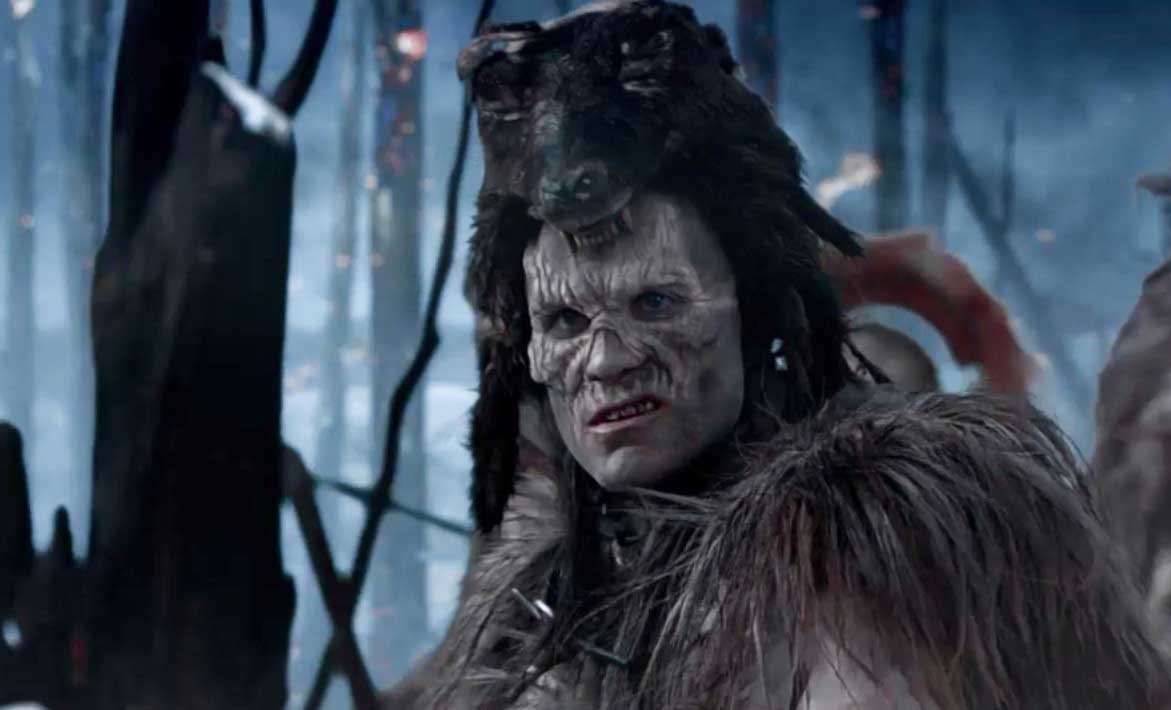
Every time I read something about the Getae, I envision the skull wearing savage warriors depicted in the opening battle scenes of the Starz series "Spartacus." But according to Herodotus, the Getae were "the noblest as well as the most just of all the Thracian tribes."  When Lysimachus tried to subdue the Getae he was defeated by them. The Getae king, Dromichaetes, took him prisoner but he treated him well and convinced Lysimachus there is more to gain as an ally than as an enemy of the Getae and released him. According to Diodorus, Dromichaetes entertained Lysimachus at his palace at Helis, where food was served on gold and silver plates. The discovery of the celebrated tomb at Sveshtari (1982) suggests that Helis, the capital of the Getae, was located perhaps in its vicinity, where remains of a large antique city are found along with dozens of other Thracian mound tombs.

The Getae were several Thracian-related tribes that once inhabited the regions to either side of the Lower Danube, in what is today northern Bulgaria and southern Romania. Their proximity to Greek colonies on the Black Sea coast brought the Getae into contact with the Greeks at an early date. 

There seems to be disagreement among scholars whether the Getae and Dacians were separate peoples. In his Geographic (c. 7 BC – 20 CE), Strabo said the Dacians lived in the western parts of Dacia, "towards Germania and the sources of the Danube", while the Getae lived in the eastern parts, towards the Black Sea, both south and north of the Danube but both cultures spoke the same language as the Thracians. Justin, the 3rd century CE Latin historian, wrote in his "Epitome of Pompeius Trogus" that Dacians are spoken of as descendants of the Getae.  In his Roman History, Cassius Dio observes "I call the people Dacians, the name used by the natives themselves as well as by the Romans, though I am not ignorant that some Greek writers refer to them as Getae, whether that is the right term or not..."  According to Herodotus, the Getae differed from other Thracian tribes in their religion, centered around the god (daimon) Zalmoxis whom some of the Getae called Gebeleizis.

Herodotus says the Getae were one of the conquered tribes of the  Scythian campaign of Darius I in 513 BCE. But by the 5th century BCE through the 3rd century BCE,  the Getae were mostly under the rule of the flourishing Odrysian kingdom. During this time, the Getae provided military services and became famous for their cavalry. 

After the disintegration of the Odrysian kingdom, the Getic principalities began to consolidate themselves. By about 200 BCE, strong Getic princes such as Zalmodegicus had extended their domain as far as Histria near the mouth of the Danube River. They minted their own coins and practiced a ruler cult.

In 72–71 BCE Marcus Terentius Varro Lucullus became the first Roman commander to march against the Getae. This was done to strike at the western Pontic allies of Mithridates VI, but he had limited success. A decade later, a coalition of Scythians, Getae, Bastarnae and Greek colonists defeated C. Antonius Hybrida at Histria. This victory over the Romans allowed Burebista, the leader of this coalition, to organize a kingdom consisting of descendants of those whom the Greeks had called Getae, as well as Dacians, or Daci, the name applied to people of the region by the Romans and he ruled independently from 60–50 BCE.

Meanwhile, Augustus aimed at subjugating the entire Balkan peninsula, and used an incursion of the Bastarnae, a Celtic or Germanic people depending on which ancient source you accept, who crossed the Danube, as a pretext to devastate the Getae and Thracians. He put Marcus Licinius Crassus in charge of the plan. In 29 BCE, Crassus defeated the Bastarnae with the help of the Getic prince Rholes. Crassus promised him help for his support against the Getic ruler Dapyx. After Crassus had reached as far as the Danube Delta, Rholes was appointed king and Crassus returned to Rome. In 16 BCE, the Sarmatae invaded the Getic territory and were driven back by Roman troops. The Getae were placed under the control of the Roman vassal king in Thrace, Rhoemetalces I. In 6 CE, the province of Moesia was founded, incorporating the Getae south of the Danube River. The Getae north of the Danube continued tribal autonomy outside the Roman Empire.

Skull-wearing Getae warrior of Starz series "Spartacus".

Getae warrior (Thracians related to the Dacians) armed with two specimens of the fearsome falx, courtesy of artist Mariusz Kozik.

A Geto-Dacian helmet dating from the 4th century BCE known as the Helmet of Iron Gates, Mehedinţi County, Romania, now in the collections of the Detroit Institute of Arts, courtesy of Wikimedia Commons contributor Codrin B.

Gilded silver Getae-Dacian helmet found in Peretu at the National Museum of Romanian History in Bucharest, courtesy of Wikimedia Commons contributor Sailko.

Detail of a Gilded silver Getae-Dacian helmet found in Peretu at the National Museum of Romanian History in Bucharest, courtesy of Wikimedia Commons contributor Cristian Chirita

Gilded silver Getae-Dacian helmet, part of the Aghighiol treasure of Getae-Dacian artifacts at the National Museum of Romanian History in Bucharest, courtesy of Wikimedia Commons contributor Cristian Chirita.

Detail of Getae-Dacian horseman on a helmet, part of the Aghighiol treasure of Getae-Dacian artifacts at the National Museum of Romanian History in Bucharest, courtesy of Wikimedia Commons contributor Cristian Chirita.

Getae aristocratic portrait in gilded silver from Peretu 5th-4th century BCE now in the National Museum of Romanian History in Bucharest, courtesy of https://romanianhistoryandculture.webs.com/

Beaker with birds and animals, Thraco-Getian, 4th century BC, silver, height: 18.7 cm (7.4 in), Metropolitan Museum of Art in New York, courtesy of Wikimedia Commons contributor, Marie-Lan Nguyen.

Bottom of a Silver Getae-Dacian beaker depicting mythical beasts, part of the Aghighiol treasure of Getae-Dacian artifacts at the National Museum of Romanian History in Bucharest, courtesy of Wikimedia Commons contributor Cristian Chirita.

Gilt silver tableware from the princely burial of Peretu, Getae, 310-290 BCE, at the National Museum of Romanian History in Bucharest, courtesy of Wikimedia Commons contributor Sailko.

Aghighiol treasure of Getae-Dacian artifacts at the National Museum of Romanian History in Bucharest, courtesy of Wikimedia Commons contributor Cristian Chirita.

Tropeum Traiani Metope commemorating the Battle of Adamclisi, Roman, showing Dacian warriors wielding a two-handed falx, , courtesy of Wikimedia Commons contributor Cristian Chirita.

A Geto-Dacian Rhyton dating from the last half of the 4th century or the first half of the 3rd BCE at the National Museum of Romanian History courtesy of Wikimedia Commons contributor Cristian Chirita.

Closeup ​of a gold disc embossed with a helmeted head of Athena recovered from the Great Tumulus of Sveshtari in the Getae Capital, courtesy of https://aktuelarkeoloji.com.tr/kategori/guncel-kazilar/getae-baskenti-buyuk-sveshtari-tumulus

Gold ​applique depicting a female head, Getae, Athena recovered from the Great Tumulus of Sveshtari in the Getae Capital, courtesy of https://aktuelarkeoloji.com.tr/kategori/guncel-kazilar/getae-baskenti-buyuk-sveshtari-tumulus

Gilded Getae-Dacian Greave, part of the Aghighiol treasure of Getae-Dacian artifacts at the National Museum of Romanian History in Bucharest, courtesy of Wikimedia Commons contributor Cristian Chirita.

Getae-Dacian Greave, part of the Aghighiol treasure of Getae-Dacian artifacts at the National Museum of Romanian History in Bucharest, courtesy of Wikimedia Commons contributor Cristian Chirita.

Getae-Dacian animorphic gilt silver disk , part of the Aghighiol treasure of Getae-Dacian artifacts at the National Museum of Romanian History in Bucharest, courtesy of Wikimedia Commons contributor Cristian Chirita.

The Thracian Tomb of Sveshtari, 3rd century BCE, courtesy of Wikimedia Commons contributor Interact-Bulgaria.


If you enjoyed this post, never miss out on future posts by following me by email!


Monday, August 2, 2021

Roman military belts: Symbols of social status and Auctoritas

While browsing the collections of the Museum of Fine Arts Boston, I saw this fragmentary figurine of a Roman soldier from the 3rd century CE found in Naukratis, Egypt by legendary archaeologist Flinders Petrie.  Looking at it I noticed the knotted sash just above the waist and realized this is not just any soldier but a senior officer.

The plated military balteus was not worn with a muscled cuirass.  Instead senior officers wore a fabric belt or sash with fringed ends, a traditional distinction of command worn since the Hellenistic period.

The balteus, also known as the cingulum militare from the 3rd century CE onwards, worn by all legionaries, was often elaborate, too, though.  

"The narrator of Apuleius’ satirical novel ‘The Golden Ass’ describes a man as being recognisably “miles elegione” (a soldier and legionary) and he also tells us how he recognized this: Through his “habitus atque habitude” (dress and manner)," points out archaeologist Stefanie Hoss.  "This and other writings in a similar vein make it quite obvious that soldiers were easily recognizable, even when they were not wearing full armour."

"In Rome, a man’s dress and his social cultural and political identity in Roman society were directly connected. The toga was both the prerogative and the iconic symbol of the Roman male citizen.  In a similar way, other sartorial choices spoke clearly of the status and station in life of the wearer. What then, was the distinguishing dress of the Roman soldier? We know that in Apuleius’ time unarmoured soldiers usually wore a belted tunica, nailed sandals and a long, heavy cloak, fixed on the right shoulder with a fibula. Neither the tunica nor the cloak seem to have differed much from average well-off civilian clothing. The truly distinguishing factor of the military dress were the sandals (caligae) and the military belt."

"It [the military belt] became invested with meaning to such an extent that taking away the military belt of a soldier in public for hours or days was a humiliation used as a dsciplinary measure by their superiors. Taking away the military belt permanently after a capitulation or during a dishonourable discharge from the army seems also to have been practised. The significance of the belt as a symbol of ‘being a soldier’ continued well into the late empire as is demonstrated by the symbolic act of Christian soldier-saints openly refusing to remain in the army by throwing off their military belt in public." 

"The military belt of the Roman soldier can therefore be defined as a symbolic object, both an article of clothing and a piece of military equipment, setting the soldier apart from civilian men and marking him as a "miles."

Hoss tells us the belt was decorated with "elaborate buckles, metal plates, strap-ends and other attachments, which made it heavy, eye-catching and "jingly". 

"Together with the crunch of hob-nailed sandals, the jingling of the metal belt pieces must have given soldiers a distinctive ‘sound’, announcing their presence," she observes.

I found it interesting that experimental archaeology indicates the heaviness of the military belt produced a swaggering, wide-legged manner of standing and walking. It also seemed to hinder running!

Mosaics and wall paintings also depict the military belt as red indicating they were often dyed.

"Most of the metal parts of the belt were made from copper alloys," Hoss observes. "Some were made from silver, gold or ivory, which were more expensive than copper alloys, while the pieces in bone and iron can be seen as cheaper versions. Especially in the 1st century CE, belt pieces were regularly tinned or silvered ,later it is more of an exception. "

"On the whole, the metal belt pieces were made with two different techniques, casting (lost mould or two-part mould) or embossing, or a combination of both. Ivory or bone would be simply cut. The surface of the metal plates could then be further decorated by engraving and cutting or by using niello or enamel decorations."

"The military belt of the ‘typical’ infantryman during the pre-Flavian 1st century consisted of two rather narrow belts worn crossing at mid-body, ‘cowboy-fashion’...Except for centurions and standard-bearers, the soldier wore one sidearm on each belt: his short sword on the right hip and a dagger on the left."

Hoss reports that experimental archaeology has indicated that the "apron" of leather straps (baltea) with decorated studs (bullae), supposedly designed to protect the groin of the soldier, proved to be more of a risk to the groin during violent movement like running. So researchers propose that it was merely a mark of status that maximized the characteristic jingling. 

I've always considered the Romans to be quite practical, especially when it comes to their military prowess. But Hoss points out that the "apron" disappears by the Antonine Period so perhaps the archaeologists are correct in this assumption.

Hoss goes into great detail about the evolution of belt decoration over the centuries and how iconography changed based on the cultural influences the Romans encountered in their empirical expansion. Although belt decoration changed across the centuries and provided the best opportunity for a soldier to express his individualism, Hoss says the archaeological record provides evidence that there was a surprising degree of homogeneity in belt decoration across the Roman empire as a whole from Hadrian's Wall in the west to Dura Europos in the east.

"According to a theory developed by Pierre Bourdieu, “[taste] functions as a sort of social orientation, a ‘sense of one’s place’, guiding the occupants of a given […] social space towards the social positions adjusted to their properties, and towards the practices or goods which befit the occupants of that position”, Hoss observes. "In Bourdieu’s theory, symbolic capital (e.g. prestige, honour) is a crucial source of power, enabling the holder to exercise symbolic violence over non-holders. To attain this symbolic power, one must be able to conform to certain social expectations (the ‘right’ manner of speaking, walking, eating, dressing, etc.). While Bourdieu explored how parents would teach their children to conform to these expectations, it seems convincing that similar mechanisms take place in other social groups than the family. Tight-knit hierarchical groups like army units also constitute a group in which a certain set of rules is passed from a group of older and/or higher ranking men to a group of younger men. This set of rules naturally includes the ‘technical’ knowledge of the job: knowledge of arms, warfare, camp building and other necessities of army life, but it also includes ‘the right way’ of walking, talking, eating, dressing, etc. In a outwardly traditional society as the Roman, the older and/or higher ranking soldiers would ‘set the tone’ in their unit, establishing which fashions were acceptable and which were not, the verdict then being ‘executed’ by peer pressure. The surprising ‘uniformity’ of Roman military belts was thus not forced on the soldiers from above, but rather a product of their own desire for conformity.

Hoss' full article is available here:  

https://www.academia.edu/212354/The_Roman_Military_Belt

Terracotta figurine of a Roman soldier, 3rd century CE, from Naukratis, Egypt, now in the collections of the Museum of Fine Arts Boston, courtesy of the museum.

A bronze statue of Gaius Julius Caesar beside the Via Foro Imperiali in front of the Forum Julia that I photographed in Rome, Italy. Notice the command sash knotted just above his waist.

Armored statue of the Roman emperor Hadrian, 2nd century CE, with the fringed command sash, at the Antalya Archeological Museum , courtesy of Wikimedia Commons contributor Wolfgang Sauber.

Roman relief depicting two baltei criss-crossed in the "cowboy" fashion, pre-Flavian 1st century CE. Image courtesy of Stephanie Hoss.

Modern reconstruction of lorica squamata with military belt at the 2013 Cricău Festival courtesy of Wikimedia Commons contributor Saturnian.

Modern reconstruction of lorica segmentata with military belt by LEGIO XXX ULPIA TRAIANA VICTRIX ONLUS courtesy of Wikimedia Commons contributor Marten253.

Historical reenactor wearing Lorica Hamata armor with military belt courtesy of Wikimedia Commons contributor Greatbeagle.

Detail of a display depicting a Roman centurion wearing a plated military belt at the exhibition "Romans on the Limes" courtesy of Wikimedia Commons contributor RömerWelt

Hardware from an ancient Roman military belt from Lower Bavaria, courtesy of Wikimedia Commons contributor Wolfgang Sauber.

Sketches of recovered decorations from Roman military belts across the centuries courtesy of Stephanie Hoss.

Bronze plates from a Roman balteus at the National Museum of Denmark, image courtesy of the museum and Wikimedia Commons.

Closeup of a bronze plate from a Roman balteus at the National Museum of Denmark, image courtesy of the museum and Wikimedia Commons.


If you enjoyed this post, never miss out on future posts by following me by email!

Saturday, June 19, 2021

Pompeii's Regio V: Vibrant gladiator frescos and proof of October eruption date

This fresco of gladiatorial combat, unearthed in Pompeii in 2019, was found in a basement room of a building that scholars think was a tavern frequented by gladiators in the city.  The tavern was found not far from the gladiators' barracks in Regio V.

The wounded Thraex, bleeding profusely from injuries on his wrist and chest, raises a finger to indicate his submission and request for mercy. The victorious Murmillo, wearing a plumed, wide-brimmed helmet with visor, holds aloft his large rectangular shield in his left hand while gripping his short sword in his right.

For historians, probably the most significant find from Regio V was unearthed in 2018.  Excavators uncovered an inscription proving the city was destroyed after October 17, 79 CE instead of August 24 as previously thought.  The August date had been suspect for some time as a number of the 1,150 victims recovered from the ruins were discovered wearing heavier clothing than the light summer clothes typical of August. Fresh fruit and vegetables in the shops were typical of October – and conversely the summer fruit typical of August was already being sold in dried, or conserved form. Nuts from chestnut trees were found at Oplontis which would not have been mature before mid-September. Wine fermenting jars had been sealed, which would have happened around the end of October. Coins found in the purse of a woman buried in the ash include one with a 15th imperatorial acclamation among the emperor's titles. These coins could not have been minted before the second week of September.

Victorious Murmillo from Gladiator fresco found in Regio V of Pompeii in a tavern near the gladiator barracks

Defeated and badly wounded Thraex from Gladiator fresco found in Regio V of Pompeii in a tavern near the gladiator barracks


Gladiator fresco found in Regio V of Pompeii in a tavern near the gladiator barracks


Images courtesy of @DrJEBall and @pompeii_sites (digitally enhanced)


If you enjoyed this post, never miss out on future posts by following me by email!


Thursday, March 25, 2021

Lorica squamata

Lorica squamata, was  a type of scale armor used during the Roman Republic and in subsequent periods. It was made up of small metal scales sewn together to form the armor. It is commonly seen in illustrations of banner bearers , musicians, centurions , cavalry troops, and even auxiliary infantry images, although it could have also been worn by regular legionaries. This type of armor was the same length as lorica hamata, with the same doubled shoulder straps.

The individual scales were made of iron or bronze , and sometimes both metals were alternated in the same armor.  Some scholars have also suggested the use of hardened leather as well.  The scales were tied with wires in horizontal rows, these being in turn sewn or tied to the inner lining.  A complete example of lorica squamata has never been found.  Loose scales, on the other hand, have been found in numerous excavations including those in a non-military context.

While looking through my images from the Capitoline Museum I found this beautiful relief of a cavalryman wearing lorica squamata. I can only assume it is from the Republican period because I did not photograph any identity cards, could not find it using the Capitoline Museum's collections search or find it among Wikimedia Commons reliefs in the collections of the Capitoline Museums. 

The second image is a reconstruction of a centurion wearing lorica squamata photographed by Wikimedia Commons contributor Wolfgang Sauber at the Museum Quintan, an archaeological museum in Kuenzing, Germany.


If you enjoyed this post, never miss out on future posts by following me by email!


Monday, March 8, 2021

Lorica Segmentata

Despite the armor being commonly associated with the Romans, lorica segmentata-type armor was used by other civilizations before the Romans. The armor was used by the Parthians and possibly the Dacians, Scythians, or Sarmatians before the Romans used it. Some sets of armor similar to the lorica segmentata dating back to the 4th century BCE have been found in archaeological sites located in the steppe. 

Although, the exact time in which the Romans adopted the armor remains unknown, some say it was after Crassus' defeat at Carrhae in 53 BCE. Others say the armor was adopted in 21 CE after the Revolt of Julius Sacrovir and Julius Florus. One form of the armor was used as early as 9 BCE because the soldiers at the Battle of Teutoberg Forest wore it.  

Around the middle of the third century CE lorica segmentata fell out of favor with the Roman army. Some scholars point to soldiers wearing the lorica segmentata depicted on the Arch of Constantine, a monument erected in 315 CE. However, it has been argued that these depictions are from an earlier monument by Marcus Aurelius, from which Constantine incorporated portions into his Arch.

The question as to precisely who used the armor is also debated. On Trajan's Column, auxilia are generally shown wearing mail, cuirasses, and carrying oval shields. Legionaries are uniformly depicted wearing the lorica segmentata and carrying the curved rectangular shield. On this basis, it has been supposed that lorica segmentata was exclusively used by legionaries and praetorians. However, the discovery of parts of the lorica segmentata at areas where auxiliary soldiers would have been stationed implies that auxiliary troops used the lorica segmentata as well. It is entirely possible, though, that the reason behind the presence of the lorica segmentata in these areas could be because these areas had a small amount of legionaries stationed there, too.  So, the common viewpoint is that soldiers' attire on Trajan's column is stereotyped in order to distinguish clearly between different types of troops. 

Bronze statuette of a legionary (foot soldier), perhaps a praetorian guard, 2nd century CE. The soldier wears a tunic, with an outer skirt of leather straps, and on his upper body, lorica segmentata. He is also wearing strapped sandals, breeches, and a crested helmet.  Courtesy of the British Museum.


Closeup of Legionnaire wearing lorica segmentata serves a carroballista (cart-mounted field artillery) on Trajan's Column, 113 CE, sculpture attributed to Apollodorus of Damascus, photo by Conrad Cichorius (1896) courtesy of Wikimedia Commons.


If you enjoyed this post, never miss out on future posts by following me by email!


Saturday, January 23, 2021

Armor from the original Pyrrhic victory

Pyrrhus  was born to prince Aeacides of Epirus, and Phthia, a Thessalian noblewoman, the daughter of the Thessalian general Menon. Aeacides was a cousin of Olympias, making Pyrrhus a second-cousin-once-removed to Alexander the Great. When Aecides father died, he left Epirus to the joint rule of Aeacides and his younger half-brother Neoptolemus.

Aeacides supported Olympias in her fight against Cassander and marched on Macedon. When Cassander was ultimately victorious, Epirus became a puppet kingdom of Cassander. Pyrrhus' family fled north and took refuge with Glaukias of the Taulantians, one of the largest Illyrian tribes. Cassander marched against Glaukias, and with his army defeated, Glaukias promised not to act against Cassander, but refused to give up Pyrrhus and his family.

By 313 BCE, Cassander was distracted by his war against Antigonus Monophthalmus so Aeacides returned to Epirus and raised a large army. However, Cassander, not that distracted,  sent an army under his brother Philip, who defeated Aeacides in two battles. Aeacides was wounded in the last battle and died soon after. But young Pyrrhus survived.

In 307 BCE, Glaukias invaded Epirus and put Pyrrhus on the throne. When Pyrrhus was seventeen he travelled to the court of Glaukias in Illyria to attend the wedding of one of Glaukias' sons. While he was in Illyria the Molossians rose in rebellion, drove out Pyrrhus' supporters, and returned his half brother Neoptolemus to the throne. So, Pyrrhus travelled to the Peloponnese and served his brother-in-law Demetrius Poliorcetes who was campaigning against Cassander in southern Greece.  In 302 BCE, Demetrius took his army to Asia Minor to support his father Antigonus Monophthalmus. Although Demetrius and young Pyrrhus fought on the losing side at the Battle of Ipsus, the largest and most important battle of the Wars of the Successors, Demetrius escaped along with Pyrrhus and 9,000 men. 

However, in 298 BCE his brother-in-law gave him over as a hostage to Ptolemy I Soter in Alexandria. He eventually married Ptolemy's stepdaughter, though, and Ptolemy helped restore Pyrrhus to his throne. In the years that followed Pyrrhus struggled against Demetrius and Lysimachus, who had survived the wars of the Diadochi to rule Macedon.

In 280 BCE, the citizens of the Greek city of Tarentum in southern Italy asked Phyrrhus to lead their war against the Romans.  Due to his superior cavalry, his elephants and his deadly palanx infantry he defeated the Romans at the Battle of Heraclea and, in 279 BCE, the Battle of Asculum. It was at the Battle of Asculum that the consul Publius Decius Mus almost managed to break the back of Pyrrhus' Epirot army. In the end, the Romans lost 6,000 men and Pyrrhus 3,500 including many officers. Pyrrhus later famously commented on his victory at Asculum, stating, "If we are victorious in one more battle with the Romans, we shall be utterly ruined".  It is from reports of this semi-legendary event that the term Pyrrhic victory originates.


Images: Bronze muscle cuirass and silvered helmet of King Pyrrhus I of Epirus at the Archaeological Museum of Igoumenitsa in northwest Greece courtesy of Wikimedia Commons contributor Harrygouvas.

If you enjoyed this post, never miss out on future posts by following me by email!


Wednesday, January 6, 2021

Sasanian military organization

 When Ardashir I (r. 224-241 CE) founded the Sasanian Empire, he created a  standing army which was under his personal command and whose officers were separate from satraps, local princes and nobility. He restored the Achaemenid military organizations, retained the Parthian cavalry model, and employed new types of armor and siege warfare techniques. 

Organizationally, the Shahanshah (the King of Kings) served as the head of the military and there were four military commanders under his authority. Initially, the offices of the Great King of Armenia, King of Meshan, King of Gilan, and King of Sakastan fulfilled these roles. After the reforms of Khosrow I, there were four spahbeds (Army Commanders), each for a cardinal direction.

In the character of their warfare, the Persians of the Sasanian period differed greatly, though, from their forebears under the Achaemenid kings. The war chariot was no longer used, the  elephant corps was advanced to a very prominent and important position, and cavalry on the Parthian model, including both heavy cataphracts and horse-archers became pre-eminent. Therefore, the strategic components became the elephants, the horse, the archers, and the ordinary footmen.

The Sasanian army employed foreign mercenary troops from many different regions. The most frequently used types of mercenaries were Kurdish mercenaries from the northern boundary of the Zagros, who begin to appear in 6th-century sources, tribal people from Gilan and Daylam, Caucasian Albanians (regarded as elite soldiers equal to Huns in the 4th-century), and Sakastanis.

The Parthian Azadan nobility continued to serve the Sasanian state, forming a minor aristocracy of lower-ranking administrators, mostly living on their small estates and providing the cavalry backbone of the Sasanian army. Most prestigious among them were the armored Asvaran, sometimes referred to as Savaran, who were the forerunners of  the later Arabian Faris, the Caucasian horsemen, the Indian Sowar (derived from Persian Savar), and the Turkish Tarkhans.

During the early Sasanian period, these fiercesome warriors battled forces of the Roman emperors Valerian, Galerius, and Julian and later the forces of the Byzantine emperors Justin I and II and Justinian directed by his famous general Belisarius.

Sasanian helmet, 4th century CE at the Metropolitan Museum of Art. Surviving examples of Sasanian armor are extremely rare, particularly in such stunning condition as this helmet. It consists of a bronze band forming a rim and supporting two arched bands that cross over the top. Between these arched bands there are triangular plates of iron that are overlaid with sheets of silver worked in scale patterns. Sasanian silversmiths were renowned for their craftsmanship.

Iranian Bronze Silver and Iron Helmet 225 to 650 CE that I photographed at the Los Angeles County Museum of Art in Los Angeles, California

Reconstruction of a Sasanian cataphract in Oxford courtesy of Wikimedia Commons contributor John Tremelling

Remnants of a Sasanian gold sword with two-point suspension, 600-650 CE at the Sackler Gallery of Asian Art at the Smithsonian in Washington D.C. courtesy of Wikimedia Commons contributor Quadell.

Sasanian silver plate depicting an equestrian single combat scene at the Azerbaijan Museum in Tabriz, Iran courtesy of Wikimedia Commons contributor Alborz Fallah.  Some scholars think this plate, although in the style of Sasanian plates usually featuring hunt scenes, was likely  manufactured in the late 1920s or 1930s when Iranian national awareness was enhanced by modern archaeological research.

Shahnameh illustration of the Sasanian general Sukhra fighting the Hephthalites (484 CE) attributed to Bashdan Qara ca. 1530-35, courtesy of Wikimedia Commons contributor Abu'l Qasim Firdausi.


If you enjoyed this post, never miss out on future posts by following me by email!


Monday, January 4, 2021

Byzantine warriors of the 4th - 5th centuries BCE

The Byzantine army evolved from that of the late Roman Empire, but it became considerably more sophisticated in strategy, tactics and organization over time. The language of the army was still Latin, until the 6th century when Greek became the official language of the entire empire. Unlike the Roman legions, though, the Byzantines' strength was in its cavalry, especially the armored cataphracts, which evolved from the clibanarii of the late empire. 

The Romans introduced armored cavalry after clashing with cataphracts at the battles of Magnesia in 190 BCE against the Seleucids, Trigranocerta in 69 BCE against the Armenians, and the disastrous Carrhae in 53 BCE against the Parthians. Parthian cataphracts became a constant threat from the 1st - 2nd centuries CE then their threat was replaced by the cataphracts of the Sassanian Persians in the 3rd century CE.

Marc Antony and Cleopatra employed contarii (from the Greek kontarioi meaning lancers) in the 1st century BCE and, when Thracia became a Roman province in 45 CE, the Thracian aristocracy provided Rome with heavy armored lancers.  According to Josephus, cavalrymen with long spears were used by Flavian troops in 69 CE, too, although scholars have not been able to determine if Vespasian raised regular units of contarii.  However, by the reigns of Trajan and Hadrian (98-138 CE) armored cavalrymen and, sometimes , completely armored horses, began to appear in allied cavalry recruited in the Eastern provinces. 

Contarii wielded the contus ( Greek kontos), using it two-handed.  The later Byzantine kontarion used by Byzantine cataphracts, from about 1100 CE onwards, was used single-handed couched under the armpit.

The kontarioi were supported by heavy infantry, the armored skutatoi (a name derived from the scutum, the classic rectangular Roman shield) and the psiloi, light infantry who usually acted as skirmishers and missile troops, including archers and slingers, and who fought irregularly in a loose formation and wore little armor.  The skutatoi were armed with the deadly, three metre-long kontarion, derived from the kontos lance favored by cataphracts. Some skutatoi were positioned on the front lines to repel cavalry, with their sword-armed counterparts behind them, ready for the melee that followed the initial charge. 

The Byzantines valued intelligence and discipline in their soldiers far more than bravery or brawn. The "Romaíoi stratiótai" were a loyal force composed of citizens willing to fight to defend their homes and their state to the death, augmented by mercenaries. The training was very much like that of the legionaries, with the soldiers taught close combat techniques with their swords, spears and axes, along with the extensive practice of archery. The Byzantine army's reliance on heavier cavalry, more archers and other missile troops, and fewer Foederati may have been contributing factors to the eastern empire's survival after the fall of the Western Empire in 476 CE. 


Bronze Byzantine Warrior of the 4th-5th century CE at the Metropolitan Museum of Art in New York.


Image: Illustration of Roman Heavy Cavalry by Andrey Negin for Osprey Publishing's title, "Roman Heavy Cavalry (1): Cataphractarii and Clibanarii, 1st century BCE-5th century CE.


If you enjoyed this post, never miss out on future posts by following me by email!


Monday, December 21, 2020

Autonomy differences between Carthaginian and Roman commanders

Competition among the elites of Rome in both the political and military spheres is well known. It was also used by one of Rome's most fiercesome opponents as well.  In Carthage, command was sometimes shared between two or even three generals and sometimes commanders were expected to seek approval from the council of 104 and the two suffetes (roughly equivalent to Rome's consuls) for important decisions such as declaring a truce, to sue for peace, or withdraw from a conflict altogether.

Furthermore, punishment of command officers was draconian (in every sense of that word!). It ranged from large fines to crucifixion of the offending general.  Even the families of those committing suicide were not spared humiliation.  Ancient sources record that the council crucified the corpse of one commander named Mago (out of the many men named Mago in the history of Carthage) in 344 BCE.  Scholars think these severe punishments rather than simply a loss of command may have made some Carthaginian generals over-cautious, although that could hardly apply to some of the spectacular risks taken by Hannibal Barca during the Second Punic War.

Although Carthage was known for employing mercenaries rather than raising citizen levies like the Romans, Carthage actually did have an elite group of 2,500-3000 infantry soldiers drawn from their own citizenry known as the Sacred Band.  Known by their iconic white shields, the Sacred Band, named after the famous unit from Greek Thebes, was barracked within Carthage itself and not relied upon for foreign campaigns.

In his excellent article on the Carthaginian Army in the Ancient History Encyclopedia, Mark Cartwright points out that Carthaginian officers dressed up for battle with plenty of gold jewelry and animal skins.

"Shields were decorated with motifs related to Punic religion, classic motifs such as Medusa, the Evil eye, or even personalised – Hasdrubal Barca had his own portrait on his silver shield." Cartwright observes, "Carthaginian officers would have further stood out in the heat of battle due to their impressive helmet plumes and glinting precious-metal armour. Generals often had expensive scale armour, such as that worn by Hannibal made from gilded bronze scales and inherited from his father."

You can read Mark's full article here:

https://www.ancient.eu/Carthaginian_Army/


Image: Punic cuirass courtesy of Alexander van Loon (CC BY - digitally enhanced)

If you enjoyed this post, never miss out on future posts by following me by email!