Showing posts with label Persians. Show all posts

Thursday, June 26, 2014

The Persians by Aeschylus to be presented at the Getty Villa

A history resource article by  © 2014
A Persian soldier depicted in the mosaic of the Battle of Issus from the House of the Faun in Pompeii, 1st century BCE - 1st century CE.  Photographed at the Archaeological Museum of Naples, Italy by  © 2007
I see that "The Persians" by Aeschylus is slated to be the annual outdoor production in the Greek-style theater at the Getty Villa this year:

Persians by Aeschylus

September 4–27: Tickets on sale July 1 | The Getty Villa

Tickets for the Getty Villa's Annual Outdoor Theater Production go on sale July 1!

Directed by Anne Bogart
Created and Performed by SITI Company
Translated by Aaron Poochigian

This emotional story of war, victory, and loss experienced by an imagined Persian court is not only the earliest Greek tragedy to survive, but also the sole surviving play centered on a historic battle. Persians glorifies the Athenian victors, yet humanizes the defeated Persians, emphasizing the universal impact of war on family and community.


If you enjoyed this post, never miss out on future posts by following me by email!


Saturday, April 3, 2010

Do new discoveries disprove sacred sex in ancient temples?

It seems that scholars are never quite sure if they should embrace the reports of ancient historian Herodotus or not. Now a controversy has arisen over his statements that the "ugliest of customs", prostitution, actually took place as part of the sacred rituals inside the Temple of Ishtar.

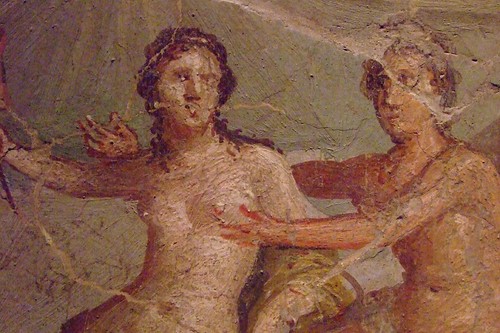
[Image: Ertoic fresco excavated from Pompeii displayed in the 'Secret Room' of the Naples Archaeological Museum.  Photo by Mary Harrsch]

If you've ever visited the "Secret Room" inside the Museo Archaeologico di Napoli in Naples, you will have no doubt that the ancients definitely enjoyed their carnal pleasure. But did they go so far as to make the deflowering of virgins part of their worship of their respective goddesses of love?

The Greek geographer Strabo thought so claiming that Persians living along the shores of the Black Sea dedicated their "virgin daughters," hardly 12 years old, to cult prostitution.

But, a small group of female gender researchers led by American scholar Julia Assante claim it's all the product of overactive male imaginations. (After all, I saw a program this week on Good Morning America about the differences in the male and female brain where a doctor was discussing how the male brain is "marinated" in testoterone!)

More moderate scholars, however, think disavowing all sacred sexual practices goes a bit too far and have expressed their opinions that there were once:

* Temples that operated brothels on the side;

* Temples in which girls held the highest offices of the priesthood, even before their first menstruation;

* Professional harlots who donated their own money to cult sites, such as a site devoted to the goddess "Aphrodite Porne."

But with all those huge buildings dedicated to Ishtar, the goddess of love, there was not a single instance of ritual depravity?

Gernot Wilhelm, an Orientalist at Julis Maximilian University in Würzburg, Germany discovered a 3,300 year-old legal document that recounts how a man delivered his own daughter to the Temple of Ishtar to serve as a Harimtu.

According to the document, the man wanted a loan from the priests and was offering his daughter as collateral.

But what exactly did the pawned daughter do for her new employers? Wilhelm speculates that the young girl worked as a prostitute, "but outside the temple."

As evidence, the professor cites the "Book of Baruch" in the Old Testament. It describes prostitutes standing "along the paths" between the dusty houses of Babylon. They too were somehow associated with a sacred organization. - "Did Prostitution Really Exist in the Temples of Antiquity? by Matthius Schulz
Assante and her colleagues dispute this interpretation, however.  She says a Harimtu was not a prostitute but just a single woman serving as a cult official.

Her reinterpretation of the word Harimtu doesn't make semantic sense, says economic historian Morris Silver. He insists that the Harimtu were clearly "professional prostitutes with cultic connections," who offered a "sexual service" on behalf of the temple. Priests acted as pimps and collected some of the profits. - "Did Prostitution Really Exist in the Temples of Antiquity? by Matthius Schulz
Other scholars point to the accounts of prostitution surrounding the Temple of Aphrodite in Corinth.  Strabo reports the temple owned a stable of over 1,000 prostitutes (I thought he was supposed to be interested in geography?)  Tanja Scheer, a professor of ancient history at the University of Oldenburg in northern Germany blames it all on an ode to Pindar.

"Pindar writes that a wealthy Olympic champion dedicated the temple to a "hundred-limbed" throng of prostitutes in 464 B.C.," Scheer points out,  "It is unlikely that the prostitutes lounged directly at the altar. Instead the wealthy athlete probably offered the temple financial assistance in the form of female slaves."

Scheer bases her theory on the fact that the Athenian statesman Solon taxed prostitutes working in government houses of pleasure in Athens around 590 B.C.. The revenues were subsequently used to build a temple for worshipers of the goddess of love.  Then somehow the construction of the temple became entangled with the source of the money used to build it in subsequent oral histories .
 
Besides, if you take Pindar literally, a "hundred-limbed" throng of prostitutes would have been only a mere 25 if you count all four limbs or 50 if you count just their arms - that seems a far cry from 1,000.

Strabo's sexual fantasies didn't end there, though, either.  He went on to claim that loose women also inhabited the Temple of Amun in Thebes (Egypt) where they served as godly consorts.

Strabo writes, "a maiden of greatest beauty and most illustrious family prostitutes herself, and cohabits with whatever men she wishes until the natural cleansing of her body takes place" (menstruation). 


 Researchers do admit that a recently translated papyrus fragment does refer to young girls in service to the god.

According to the text, girls are permitted to work in the temple until their first menstruation. After that, however, "they are cast out from their duties." - "Did Prostitution Really Exist in the Temples of Antiquity? by Matthius Schulz
So, as they say on that tabloid TV show, "What side are you on?"

 The Myth of Sacred Prostitution in Antiquity   Prostitutes and Courtesans in the Ancient World (Wisconsin Studies in Classics)   Trying Neaira: The True Story of a Courtesan's Scandalous Life in Ancient Greece   Courtesans & Fishcakes: The Consuming Passions of Classical Athens   Courtesans at Table: Gender and Greek Literary Culture in Athenaeus  
If you enjoyed this post, never miss out on future posts by following me by email!


Friday, January 16, 2009

Chemical Warfare in Roman Syria


Interesting article about chemical warfare in Roman Syria was posted by the University of Leicester:

"A re­search­er has iden­ti­fied what he says may be the old­est ar­chae­o­log­i­cal ev­i­dence for chem­i­cal war­fare: a poison-gas at­tack that killed about 20 Ro­man sol­diers in the wan­ing years of their Em­pire.

The grim events occurred in a mine at the city of Du­ra-Europos, Syr­ia, around 256 A.D., ac­cord­ing to ar­chae­o­lo­g­ist Si­mon James of the Uni­ver­s­ity of Leices­ter, U.K.

The city, on the riv­er Eu­phra­tes, had been con­quered by the Ro­mans, who in­stalled a large gar­ri­son. The city lat­er suf­fered a fe­ro­cious siege by an ar­my from the pow­er­ful new Sasa­nian Per­sian em­pire. The dra­mat­ic sto­ry is known en­tirely from ar­chae­o­log­i­cal re­mains; no an­cient text de­scribes it, James said.

Ex­cava­t­ions dur­ing the 1920s-30s, re­newed in re­cent years, have re­sulted in spec­tac­u­lar and grue­some dis­cov­er­ies, he added.

The Sasa­nians used the full range of an­cient siege tech­niques to breach the city. These in­clud­ed build­ing “mi­nes” or tun­nels un­derneath the city walls in an at­tempt to make them col­lapse.

Ro­man de­fend­ers re­sponded by build­ing “counter-mines” to thwart the at­tackers, James said. In one of these nar­row, low gal­ler­ies, a pile of bod­ies—a­bout 20 Ro­man sol­diers still with their weapon­s—turned up in the 1930s. James re­cently re­vis­ited the site to un­der­stand how the war­riors died.

“It is ev­i­dent that, when mine and coun­ter­mine met, the Ro­mans lost the en­su­ing strug­gle,” he said. “Care­ful anal­y­sis of the dis­po­si­tion of the corpses shows they had been stacked at the mouth of the coun­ter­mine by the Per­sians,” he added. The Per­sians had used their vic­tims “to cre­ate a wall of bod­ies and shields, keep­ing Ro­man counterat­tack at bay while they set fire to the coun­ter­mine, col­laps­ing it.”

“This ex­plains why the bod­ies were where they were found. But how did they die? For the Per­sians to kill 20 men in a space less than two me­ters high or wide, and about 11 me­ters long, re­quired su­per­hu­man com­bat pow­ers—or some­thing more in­sid­i­ous.”

Finds from the Ro­man tun­nel re­vealed that the Per­sians used and sul­fur crys­tals and bi­tu­men, a nat­u­ral, flam­ma­ble, tar-like sub­stance, to get it burn­ing, he added. These chem­i­cals pro­vid­ed the vi­tal clue, James said: when ig­nit­ed, they give off dense clouds of chok­ing gas­es.

The Per­sians evidently “heard the Ro­mans tun­nelling,” said James, “and pre­pared a nas­ty sur­prise for them.” When the Ro­mans broke through, the Sasa­nians ap­par­ently set fire to the chem­i­cals and pumped the gases in the Ro­mans’ di­rec­tion us­ing bel­lows, he added.

“The Ro­man as­sault par­ty were un­con­scious in sec­onds, dead in min­utes. Use of such smoke gen­er­a­tors in siege-mines is ac­tu­ally men­tioned in clas­si­cal texts, and it is clear from the ar­chae­o­log­i­cal ev­i­dence at Du­ra that the Sasa­nian Per­sians were as knowl­edge­a­ble in siege war­fare as the Ro­mans; they surely knew of this grim tac­tic.”

Iron­ic­ally, this Per­sian mine failed to de­stroy the walls, but the Sasa­nians some­how broke in­to the city an­y­way, James said. He has ex­ca­vat­ed a row of cat­a­pult bolts, ready to use by the wall of the Ro­man camp in­side the city, rep­re­sent­ing the gar­ri­son’s last stand dur­ing fi­nal street fight­ing.

The de­fend­ers and in­hab­i­tants were slaugh­tered or de­ported to Per­sia, the city aban­doned for­ev­er, leav­ing its grue­some se­crets un­dis­turbed un­til mod­ern ar­chae­o­log­i­cal re­search be­gan to re­veal them. James pre­sented his find­ings at the meet­ing of the Ar­chae­o­log­i­cal In­sti­tute of Amer­i­ca in Phil­a­del­phia last week.

I found this bit about Dr. James paper on the subject as well:

"
Death in the Dark, Blood in the Streets: New Insights into the Siege and Fall of Dura-Europos
Simon James, University of Leicester

Around A.D. 254, anticipating renewed invasion of Syria by the Sasanians, the Roman garrison of Dura-Europos massively strengthened the city’s defences, intending to hold it at all costs. The Sasanian attack came c. 256, in a ferocious siege known entirely through archaeology: no historical account survives. This involved the full range of known siege techniques, including artillery, an assault ramp, mines, and countermines. The mine complex around Tower 19 has provided especially gruesome testimony of underground combat, which the speaker argues included the earliest archaeological evidence for “gas warfare.” Other recent research has identified evidence for street fighting during the fall of the city to the Persians, and of the fate of the civil population. Permanent abandonment of the site meant these dramatic remains lay undisturbed until its rediscovery in 1920. Dura exemplifies the potential of archaeology for investigating ancient warfare. Continuing work by the speaker and others also illustrates the value of archival reexamination of early excavations, and of new, limited-scale, targeted fieldwork at “old” sites.

Some additional info on the study of the Roman base:

"Building on his recently-completed study of the spectacular finds of Roman and Sasanian military equipment from Dura, Simon James is now studying other aspects of the Roman military presence in the city. This includes some further work on the remains from the siege itself, and a primarily archaeological study of the Roman military base in the city. In contrast to the West where the imperial armies were normally housed in custom-built fortified bases, in the East urban basing of garrisons was routine. Dura provides the only archaeologically accessible, and reasonably well explored example of such an urban base from the principate." - More

And a nice image of a fresco discovered at Dura-Europos:

If you enjoyed this post, never miss out on future posts by following me by email!


Friday, August 17, 2007

Lebanese play "Zenobia" draws cultural and historical parallels

A history resource article by  © 2007

Queen Zenobia's Last Look Upon Palmyra, by Herbert Gustave Schmalz
Image courtesy of Wikimedia Commons
This play sounds fascinating! I am presently reading The Chronicle of Zenobia by Judith Weingarten so the characters portrayed in this performance are known to me. Zenobia's leadership in a culture where women were seldom seen and not officially heard is nothing short of miraculous. Her adaptability is even more amazing as, unlike her distant relation Cleopatra, Zenobia endured being the captured prize in a Roman triumph and even later married a Roman senator. I wish I could see this play. I wonder if anyone has thought about filming it?

"History is a mirror of the future," says Oussama Rahbani. "If you don't have a history, you don't have a future." It was with this notion of embracing the past in order to greet the future that Lebanese composer Mansour Rahbani, in collaboration with his sons Marwan, Oussama, and Ghady Rahbani, created the epic musical "Zenobia," which opened a five-night run on Wednesday evening for the Byblos International Festival, in the old port city north of Beirut.

Though in many ways a tragedy, ending in defeat and suicide, the play is at heart a celebration - of culture, music and freedom, and, perhaps more forcefully, of the strength, determination and ferocity of the female spirit.

What makes "Zenobia" enveloping and believable is the plot's adherence to the play's historical foundation. Zenobia was the third-century queen of Palmyra, an oasis in the desert of central Syria fueled by caravans snaking along the Silk Road. Sandwiched between the two great powers of the day, the Persians to the east and the Romans to the west, the city was caught between two empires jockeying for position. Palmyra became a Roman province in the first century.

A head said to represent Odenathus in the Palmyra
Museum.  Image courtesy of Wikimedia Commons.
When her husband Odenathus was murdered along with his heir, Zenobia, ruling in the stead of her young son Vaballathus, rebelled against Rome. She was eventually defeated and hauled off to answer for her defiance but not before liberating greater Syria, Palestine and parts of Egypt.

With this historic episode as a reference, the Rahbanis succeed in fabricating a performance of savory meaning and depth. This is not to say that they do it alone - close to 100 actors and actresses took the stage on Wednesday night, with a supporting army of technicians, designers, choreographers and assistants - but the creative energy behind the production is exemplary of the quality of theater Lebanese audiences have come to expect from a Rahbani production.

The play opens with a dream sequence in which Zenobia, played by Carole Samaha, receives a prophecy from Cleopatra that she will be ruler of the East. In reality Cleopatra was Zenobia's idol - she even claimed to have descended from her as Zenobia's mother hailed from Egypt. But in the play, Cleopatra takes on the additional role of Zenobia's subconscious, mentor and, at times, tormentor.

Odenathus, the king of Palmyra, returns with the army from a victorious battle against the Persians. While Zenobia asserts that the victory belongs to Palmyra and not Rome, her counselor Longinus - modeled after the queen's real-life advisor, the philosopher and rhetorician Cassius Dionysius Longinus - tries to convince her to break away from Rome. Zenobia is reluctant to cut the alliance, even though she remains intensely tethered to the East.

This state of affairs does not last long, however. Odenathus travels to Emesa (modern day Homs in Syria) against the advice of Zabdai (played by Ghassan Saliba), the leader of Palmyra's army. There the king is betrayed by his nephew Ismail Maeonus, who, after killing Odenathus and his son, declares himself "the king of kings."

Zenobia, who now fears that her city will be trampled underfoot by the Persians and Romans alike, takes charge and vows to extend her territory into Asia Minor and up to the gates of Rome itself."

More about Zenobia:

A Kindle preview:


More suggested reading:

If you enjoyed this post, never miss out on future posts by following me by email!