Showing posts with label Thracian. Show all posts

Sunday, August 15, 2021

The Getae: The noblest and the just of the Thracian tribes (according to Herodotus)

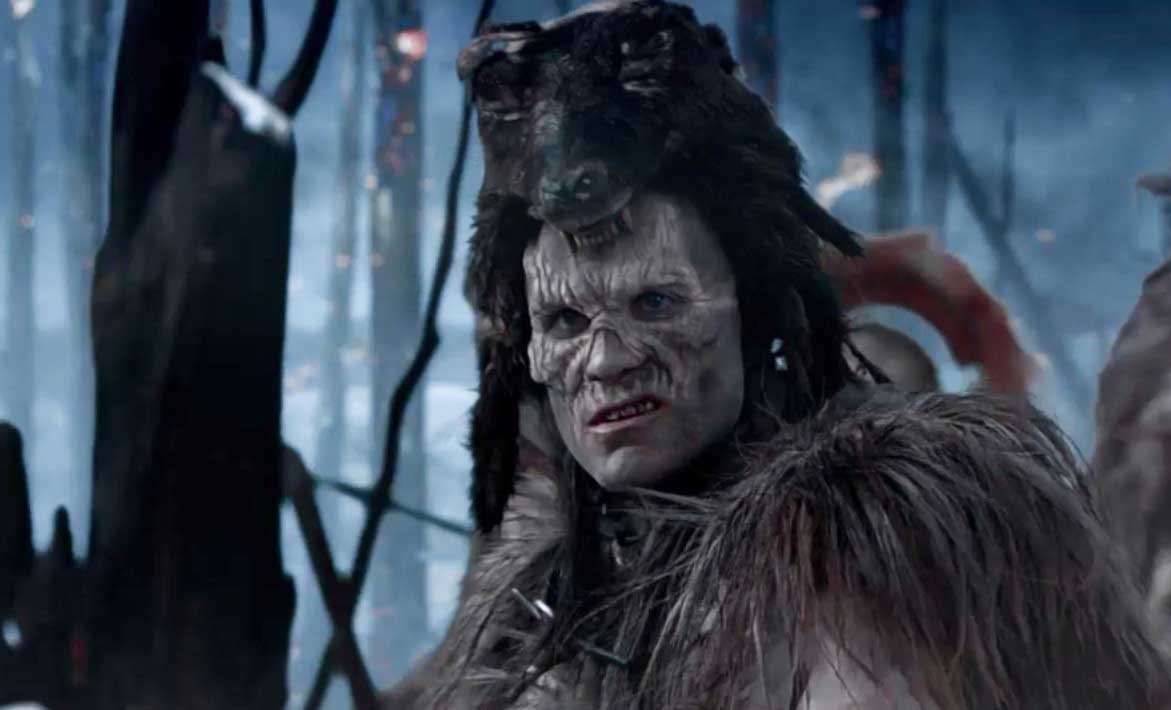
Every time I read something about the Getae, I envision the skull wearing savage warriors depicted in the opening battle scenes of the Starz series "Spartacus." But according to Herodotus, the Getae were "the noblest as well as the most just of all the Thracian tribes."  When Lysimachus tried to subdue the Getae he was defeated by them. The Getae king, Dromichaetes, took him prisoner but he treated him well and convinced Lysimachus there is more to gain as an ally than as an enemy of the Getae and released him. According to Diodorus, Dromichaetes entertained Lysimachus at his palace at Helis, where food was served on gold and silver plates. The discovery of the celebrated tomb at Sveshtari (1982) suggests that Helis, the capital of the Getae, was located perhaps in its vicinity, where remains of a large antique city are found along with dozens of other Thracian mound tombs.

The Getae were several Thracian-related tribes that once inhabited the regions to either side of the Lower Danube, in what is today northern Bulgaria and southern Romania. Their proximity to Greek colonies on the Black Sea coast brought the Getae into contact with the Greeks at an early date. 

There seems to be disagreement among scholars whether the Getae and Dacians were separate peoples. In his Geographic (c. 7 BC – 20 CE), Strabo said the Dacians lived in the western parts of Dacia, "towards Germania and the sources of the Danube", while the Getae lived in the eastern parts, towards the Black Sea, both south and north of the Danube but both cultures spoke the same language as the Thracians. Justin, the 3rd century CE Latin historian, wrote in his "Epitome of Pompeius Trogus" that Dacians are spoken of as descendants of the Getae.  In his Roman History, Cassius Dio observes "I call the people Dacians, the name used by the natives themselves as well as by the Romans, though I am not ignorant that some Greek writers refer to them as Getae, whether that is the right term or not..."  According to Herodotus, the Getae differed from other Thracian tribes in their religion, centered around the god (daimon) Zalmoxis whom some of the Getae called Gebeleizis.

Herodotus says the Getae were one of the conquered tribes of the  Scythian campaign of Darius I in 513 BCE. But by the 5th century BCE through the 3rd century BCE,  the Getae were mostly under the rule of the flourishing Odrysian kingdom. During this time, the Getae provided military services and became famous for their cavalry. 

After the disintegration of the Odrysian kingdom, the Getic principalities began to consolidate themselves. By about 200 BCE, strong Getic princes such as Zalmodegicus had extended their domain as far as Histria near the mouth of the Danube River. They minted their own coins and practiced a ruler cult.

In 72–71 BCE Marcus Terentius Varro Lucullus became the first Roman commander to march against the Getae. This was done to strike at the western Pontic allies of Mithridates VI, but he had limited success. A decade later, a coalition of Scythians, Getae, Bastarnae and Greek colonists defeated C. Antonius Hybrida at Histria. This victory over the Romans allowed Burebista, the leader of this coalition, to organize a kingdom consisting of descendants of those whom the Greeks had called Getae, as well as Dacians, or Daci, the name applied to people of the region by the Romans and he ruled independently from 60–50 BCE.

Meanwhile, Augustus aimed at subjugating the entire Balkan peninsula, and used an incursion of the Bastarnae, a Celtic or Germanic people depending on which ancient source you accept, who crossed the Danube, as a pretext to devastate the Getae and Thracians. He put Marcus Licinius Crassus in charge of the plan. In 29 BCE, Crassus defeated the Bastarnae with the help of the Getic prince Rholes. Crassus promised him help for his support against the Getic ruler Dapyx. After Crassus had reached as far as the Danube Delta, Rholes was appointed king and Crassus returned to Rome. In 16 BCE, the Sarmatae invaded the Getic territory and were driven back by Roman troops. The Getae were placed under the control of the Roman vassal king in Thrace, Rhoemetalces I. In 6 CE, the province of Moesia was founded, incorporating the Getae south of the Danube River. The Getae north of the Danube continued tribal autonomy outside the Roman Empire.

Skull-wearing Getae warrior of Starz series "Spartacus".

Getae warrior (Thracians related to the Dacians) armed with two specimens of the fearsome falx, courtesy of artist Mariusz Kozik.

A Geto-Dacian helmet dating from the 4th century BCE known as the Helmet of Iron Gates, Mehedinţi County, Romania, now in the collections of the Detroit Institute of Arts, courtesy of Wikimedia Commons contributor Codrin B.

Gilded silver Getae-Dacian helmet found in Peretu at the National Museum of Romanian History in Bucharest, courtesy of Wikimedia Commons contributor Sailko.

Detail of a Gilded silver Getae-Dacian helmet found in Peretu at the National Museum of Romanian History in Bucharest, courtesy of Wikimedia Commons contributor Cristian Chirita

Gilded silver Getae-Dacian helmet, part of the Aghighiol treasure of Getae-Dacian artifacts at the National Museum of Romanian History in Bucharest, courtesy of Wikimedia Commons contributor Cristian Chirita.

Detail of Getae-Dacian horseman on a helmet, part of the Aghighiol treasure of Getae-Dacian artifacts at the National Museum of Romanian History in Bucharest, courtesy of Wikimedia Commons contributor Cristian Chirita.

Getae aristocratic portrait in gilded silver from Peretu 5th-4th century BCE now in the National Museum of Romanian History in Bucharest, courtesy of https://romanianhistoryandculture.webs.com/

Beaker with birds and animals, Thraco-Getian, 4th century BC, silver, height: 18.7 cm (7.4 in), Metropolitan Museum of Art in New York, courtesy of Wikimedia Commons contributor, Marie-Lan Nguyen.

Bottom of a Silver Getae-Dacian beaker depicting mythical beasts, part of the Aghighiol treasure of Getae-Dacian artifacts at the National Museum of Romanian History in Bucharest, courtesy of Wikimedia Commons contributor Cristian Chirita.

Gilt silver tableware from the princely burial of Peretu, Getae, 310-290 BCE, at the National Museum of Romanian History in Bucharest, courtesy of Wikimedia Commons contributor Sailko.

Aghighiol treasure of Getae-Dacian artifacts at the National Museum of Romanian History in Bucharest, courtesy of Wikimedia Commons contributor Cristian Chirita.

Tropeum Traiani Metope commemorating the Battle of Adamclisi, Roman, showing Dacian warriors wielding a two-handed falx, , courtesy of Wikimedia Commons contributor Cristian Chirita.

A Geto-Dacian Rhyton dating from the last half of the 4th century or the first half of the 3rd BCE at the National Museum of Romanian History courtesy of Wikimedia Commons contributor Cristian Chirita.

Closeup ​of a gold disc embossed with a helmeted head of Athena recovered from the Great Tumulus of Sveshtari in the Getae Capital, courtesy of https://aktuelarkeoloji.com.tr/kategori/guncel-kazilar/getae-baskenti-buyuk-sveshtari-tumulus

Gold ​applique depicting a female head, Getae, Athena recovered from the Great Tumulus of Sveshtari in the Getae Capital, courtesy of https://aktuelarkeoloji.com.tr/kategori/guncel-kazilar/getae-baskenti-buyuk-sveshtari-tumulus

Gilded Getae-Dacian Greave, part of the Aghighiol treasure of Getae-Dacian artifacts at the National Museum of Romanian History in Bucharest, courtesy of Wikimedia Commons contributor Cristian Chirita.

Getae-Dacian Greave, part of the Aghighiol treasure of Getae-Dacian artifacts at the National Museum of Romanian History in Bucharest, courtesy of Wikimedia Commons contributor Cristian Chirita.

Getae-Dacian animorphic gilt silver disk , part of the Aghighiol treasure of Getae-Dacian artifacts at the National Museum of Romanian History in Bucharest, courtesy of Wikimedia Commons contributor Cristian Chirita.

The Thracian Tomb of Sveshtari, 3rd century BCE, courtesy of Wikimedia Commons contributor Interact-Bulgaria.


If you enjoyed this post, never miss out on future posts by following me by email!


Wednesday, February 3, 2021

Thracian funerary silverware

"From the mid-first millennium, such objects as ceremonial helmets, armor, cups, and ornamental gear for horses—worked from silver and sometimes gilded—have been discovered in graves and in finds that must have been the buried hoards of Thracian princes and chiefs. This silver beaker is a fine example of fourth century B.C. Thracian workmanship. It probably was made in the region of present-day Romania or Bulgaria, as similar beakers have been found in a princely tomb at Agighiol, near the delta of the Danube in eastern Romania. The beaker is raised from a single piece of silver with a stamped, chased, and repoussé design." - The Metropolitan Museum of Art  

This view of the beaker features a stag-like creature with eight legs, although it may indicate the presence of two stags side by side. Its antlers extend into a border of tines ending in bird heads that circle the upper portion of the cup. The opposite side of the beaker depicts a horned bird of prey holding a fish in its beak and clutching what seems to be a hare in its claws. The bird is flanked by one horned and two antlered animals, and, facing the large bird, a tiny bird of prey hovers over the horned animal.  The museum also describes a winged, griffin-like monster chewing an animal leg and grasping a small beast in its clawed feet on the bottom of the vessel that is visible when the beaker is used but unfortunately the museum did not include images from these viewpoints.

"Although certain contemporary Scythian and Iranian stylistic influences can be seen, the iconography of these scenes is clearly Thracian and probably refers to a native myth or legend. The monstrous bird of prey with land and water creatures in its grasp appears to symbolize dominance over land and water. Though a precise interpretation of the iconography remains uncertain, scholars have suggested that these animals were symbols associated with a heroic ruler and served as protective spirits, avatars, and tribal totems." - The Metropolitan Museum of Art 


Image: Silver Beaker with birds and animals, Thracian, 4th century BCE, courtesy of the Metropolitan Museum of Art in New York.


If you enjoyed this post, never miss out on future posts by following me by email!


Monday, April 27, 2020

Becoming Roman: The Thracians Part 2.

Suetthes III bronze portrait head, 4th century BCE at the National Archaeological Museum in Sofia, Bulgaria
The son of the first king of the Odrysian Kingdom,  Sitalces, proved to be a good military leader and built roads to develop trade and a powerful army.  In 429 BCE.  Sitalces allied himself with the Athenians and  the Greek alphabet was adopted as a new Thracian script.  Sitalces also organized a vast army from independent Thracian and Paeonian tribes that, according to Thucydides, included as many as 150,000 men to defend Thrace against the Macedonians, now led by the ambitious Philip II of Macedon.

But, Odrysian military strength was based on intra-tribal elites, making the kingdom prone to fragmentation and as a result of the intertribal unrest, the Odrysian kingdom split into three parts.  Philip II of Macedon then invaded and conquered much of Thrace. Some Odrysian kings and other Thracian tribes submitted and paid taxes at times during different periods to Philip II, Alexander the Great and Philip V.

Two of the three kingdoms were forced into vassal status by Philip II in 352 BCE. Then in 342–341 BCE Philip conquered the Odrysian heartland deposing reigning kings and rebel vassals. Seuthes III (341-300 BCE) was one of the Odrysian kings that retained power. But, in 325 BCE, after Alexander's governor of Thrace, Zopyrion, was killed in battle against the Getae, Seuthes revolted against Macedon.  Then when Alexander died in 323 BCE, Seuthes took up arms against the new governor, Lysimachus, but they fought each other to a draw and withdrew from battle. Ultimately, though, Suethes was forced to acknowledge Lysimachus until 313 BCE during the Third War of the Diadochi, (Alexander's successor generals) when he threw his support behind Antigonus I and occupied the passes of Mount Haemus. But again, Seuthes was defeated and forced to submit. In 300 BCE, Seuthes died.

In 281 BCE, the Odrysian capital was sacked by the Celts, who had formed their own kingdom with its capital at Tylis near the eastern edge of the Haemus Mountains. In 212 BCE, an army led by an Odrysian king Pleuratus destroyed the Celtic kingdom and its capital. But, the restored Odrysian hegemony was short lived as the kingdom was conquered by the Romans in 146 BCE.  By then, Thracia had broken up into several kingdoms.  In 100 BCE, a Thracian kingdom under the leadership of a son of Beithys, one of the last Odrysian kings, arose but it is unclear if it was a vassal of Rome or independent.  Thracians under Odrysian leadership overran the southern Balkans, Epirus, Dalmatia and northern Greece, and penetrated the Peloponnese.

It was during this time that the famous Spartacus was born, according to some scholars, into the Maedi tribe which occupied the area on the southwestern fringes of Thrace, along its border with the Roman province of Macedonia. Both Appian and Florus state Spartacus became a Roman soldier but for unstated reasons was eventually enslaved and became a gladiator along with his Maedi prophetess wife. Five out of twenty kings of the Thracian Spartocid dynasty of the Cimmerian Bosporus and Pontus are known to have borne the name, and a Thracian "Sparta" "Spardacus" or "Sparadokos", was the father of Seuthes I of the Odrysae. But, there are no ancient sources connecting the Roman slave to this lineage. The gladiator Spartacus, though of Thracian origin, trained as a murmillo and not a Thraex. He was assumed killed in the final battle of the Third Servile War in 71 BCE at the hands of the legions of Marcus Licinius Crassus.

In 11 BCE, an uncle of Augustus was placed on the Odrysian throne and Romanization of the region began in earnest, although Greek rather than Latin remained the predominant language.  Then in 46 CE, the Roman emperor Claudius designated the region of Thrace as two new Roman provinces of Thracia and Moesia Inferior. Members of Thracian aristocracy were granted the right of Roman citizenship. Epigraphic evidence show a large increase in such naturalizations especially in the times of Trajan and Hadrian.  Then all Thracians gained Roman citizenship through Caracalla's constitutio Antoniniana.  Thrace was once more a central battleground during Rome's Gothic Wars of 376-382 CE. But, that's another tale!

More Thracian archaeology:   Professor Bogdan Filov, the Director of the National Archaeological Museum in Sofia, figured prominently in early Thracian archaeology.  Filov  conducted the first studies of the ancient city of Kabile, near Yambol, in 1912.  In 1918, he discovered Trebenishta, a necropolis of Peresadyes, rich with gold and iron artifacts. His find of a large ritual-funeral complex near the village of Douvanlii proved to be the royal necropolis of the Odrysian dynasty. Dating from the 6th-5th centuries BCE, finds included gold breastplates, gold rings and other jewelry, gilded siver armor and chariot trappings, shields, horse harness, and kantharos-like vessels.  Some of the finds reflected Achaemenid influence and made some scholars question if there had been a Persian princess among the deceased but others think the items were still obviously made in Odrysian workshops.

A wealth of Thracian discoveries have occurred in a steady stream ever since including the:

Valchitran Treasure in 1924 - consisting of 13 gold Kantharos-type vessels and discs dating clear back to the 14th century BCE.  Scholars think the treasure was a set of scred vessels related to the worship of nature and a sun cult.

Panagyurishte Treasure in 1949 - items thought to be the product of a Hellenic colony on the souther Black Sea in the mid 4th century BCE that included 4 gold rhytons, 3 gold decanters, 1 vial and a rhtyton-style amphora decorated with scenes from Greek mythology and Homer's Iliad. Now in the Archaeological Museum in Plovdiv. Now in the Archaeological Museum in Varna.

Loukovit Treasure in 1953, 1955, 1986 - 15 silver vessels, 23 appliques for horse harness, 200 silver rings, and buttons, tubules and other adornments.  Images of the Great Thracian Goddess in both her main hypostases have indicated to researchers that the find is related to annual change of seasons (or the nundial years) and the cults of the 'Mother-Earth' and her daughter, the Goddess-Virgin.

Varna Treasure in 1961 - Nine items including massive bracelets, a diadem, necklace fragments, a cross and two belt applications dating to the early Byzantine period in Odesos.

Letnitsa Treasure in 1963 - A bronze vessel full of gilt silver horse trappings depicting heroic hunt scenes and animals from the 4th century BCE.

Mogilanska Mound Treasure in 1964-65 - In the town of Bratsa, three graves, one sacked in antiquity but the other two containing a chariot with ritually killed horses, silver horse trappings, and the skeleton of a young woman thought to be a servant ritually killed to serve her master in the afterlife.  Another skeleton of a young girl was found wearing a golden wreath and wearing massive gold earrings and holding a mirror.  She was accompanied by the remains of a young Triball warrior, fully armed and thought to have died during Alexander the Great's campaign against the Triball King Syrmos in 335 BCE. Now in the Regional History Museum in Vratsa.

Borovo Treasure in 1974 - Dating to the end of the 5th century to the beginning of the 4th century BCE, this find included four gilt silver rhytons and a large bowl with inscriptions referring to the Thracian king Kotis (383-359 BCE).

Preslav Treasure in 1977 - Byzantine coins and jewelry, hair needles and button from the second half of the 10th century CE.

Rogozen Treasure in 1985 - 165 silver, gold, and gilt silver vessels depicting plants, animals and the Thracian Great Goddess dating to the middle of the 4th century BCE thought to have been buried because of threat from Macedonian forces of Philip II and Alexander the Great.  Now in the Vratsa History Museum.

Ravnogor Silver Suite in 1987 - Near the village of Ravnogor archaeologist George Kitov excavated a burial of silver applications for a horse harness, several pieces adorned with busts of Athena. and animorphic gilt silver rhytons.

Teres' Golden Mask  in 2004 - Found during the excavations of Svetitsata Mound near Shipka in the Valley of the Thracian Rulers led by Professor Georgi Kitov. In addition to the golden mask thought to be the burial mask of the first Odrysian king Teres I, archaeologists found silver and bronze vessels and adornments depicting Hercules, Menadius, and Priapus as ell as swords and arrows.

Sboryanovo Treasure in 2012 - Excavated by Professor Diana Gergova from the Omurtag Mound, the monumental Dorian-style tomb from the end of the 4th to the beginning of the 3rd century BCE contained 264 gold appliques from horse tack and personal adornments including a gold diadem adorned with depictions of animals and mythical beasts, four gold spiral bracelets, a gold ring with a relief of Eros and number of gold threads, beads, and clothing adornments.

Most of these objects are now displayed in Bulgaria's National Archaeological Museum in Sofia unless otherwise stated. For more information See:

http://trakia-tours.com/find-your-treasures-thracian-treasures.html

https://www.bulgaria-guide.com/guide/The_oldest_processed_gold_in_the_world/202167/
Thracian breastplate from Moushovitsa Mogila of the Odryses' royal necropolis near the village Douvanliy 5th century BCE
Gilt-silver rhyton from the Rogozen Treasure 4th century BCE


Gilt silver applique depicting a lion attacking a deer from the Loukovit Treasure Late 5th century BCE

Gold pitcher with chariot scene from the Mogilanska Mound 4th century BCE

Athena on a gilt silver disk from the Ravnogor silver hoard.

Gold offering dish from the Borovo Treasure 5th-4th century BCE

Gilt silver applique of a warrior from the Loukovit Treasure Late 5th century BCE

Gilt silver greave from the Mogilanska Mound 4th century BCE

Gilt silver vessel from the Borovo Treasure 5th-4th century BCE

Gilt-silver vessel from the Rogozen Treasure 4th century BCE

Gilt-silver rhytons from the Borovo Treasure 5th-4th century BCE

Silver plate with bulls from the Rogozen Treasure 4th century BCE

Gilt Silver rhyton with bull protome from the Borovo Treasure 5th-4th century BCE


Gilt-silver plate with mythological scene of Heracles from the Rogozen Treasure 4th century BCE

Gilt-silver pitcher from the Rogozen Treasure 4th century BCE

Gilt-silver relief from the Letnitsa Treasure 4th century BCE

If you enjoyed this post, never miss out on future posts by following me by email!


Saturday, April 25, 2020

Before they were Roman: The Thracians Part 1

Ancient Thrace was a region bounded by the Balkan Mountains to the north, the Aegean Sea to the south, and the Black Sea to the east. Today it comprises southeastern Bulgaria (Northern Thrace), northeastern Greece (Western Thrace), and the European part of Turkey (East Thrace). It's name was based on Greek mythology, derived from the heroine and sorceress Thrace, who was the daughter of Oceanus and Parthenope, and sister of Europa. Greek mythology also provided the Thracians with a mythical ancestor Thrax, the son of the war-god Ares, who was said to reside in Thrace. The Thracians appear in Homer's Iliad as Trojan allies, led by Acamas and Peiros. Later in the Iliad, Rhesus, another Thracian king, makes an appearance. Cisseus, father-in-law to the Trojan elder Antenor, is also given as a Thracian king. In fact, Greek mythology is replete with Thracian kings, including Diomedes, Tereus, Lycurgus, Phineus, Tegyrius, Eumolpus, Polymnestor, Poltys, and Oeagrus (father of Orpheus). In Roman times, Ovid populates his Metamorphoses with Thracians in the episode of Philomela, Procne, and Tereus: Tereus, the King of Thrace, lusts after his sister-in-law, Philomela. He kidnaps her, holds her captive, rapes her, and cuts out her tongue. Philomela manages to get free, however. She and her sister, Procne, plot to get revenge, by killing her son Itys (by Tereus) and serving him to his father for dinner.

Culturally, as early as the 2nd millenium BCE, the Thracians, previously roaming tribal bands, formed a hierarchical society dominated by soldiers and priests. Beginning with the Iron Age, Thracian society coalesced into religious states headed by itinerant priest-kings who led troops of aristocratic cavalry and free peasant-warriors who resided in a series of fortified cities. Beginning in the 6th century BCE, Thracians became trading partners of the Greek city-states, who established colonies on the shores of the Aegian Sea and Pont-Euxine Sea. Thracians are first mentioned in the historical record by Herodotus who pointed out that if they had only one king and the various tribes could get along with each other, the Thracians would be invincible.

Thrace was incorporated into the Persian empire in 516 BCE during the rule of Darius the Great, and was re-subjugated by Mardonius in 492 BCE. During Persian rule, it was made part of the Skudra satrapy (province) with parts occupied by Scythians and Greek colonists. After the Persian defeat in Greece, however, Thracian tribes united under a single ruler, King Teres. But, sovereignty was never exercised over all of its lands as it varied in relation to tribal politics. Historian Z.H. Archibald tells us, "The Odrysians created the first state entity which superseded the tribal system in the east Balkan peninsula. Their kings were usually known to the outside world as kings of Thrace, although their power did not extend by any means to all Thracian tribes. Even within the confines of their kingdom the nature of royal power remained fluid, its definition subject to the dictates of geography, social relationships, and circumstance."

According to the Greek historians Herodotus and Thucydides, a royal dynasty emerged from among the Odrysian tribe in Thrace around the end of the 5th century BCE, which came to dominate much of the area and peoples between the Danube and the Aegean for the next century. Later writers, royal coin issues, and inscriptions indicate the survival of this dynasty into the early 1st century CE, although its overt political influence declined progressively first under Persian, Macedonian, later Roman, encroachment. Despite their demise, the period of Odrysian rule was of decisive importance for the future character of south-eastern Europe, under the Roman Empire and beyond.

The Thracians left a wealth of archaeological material in over 19,000 tombs. The first recorded discovery of Thracian treasure occured In 1851, near the village of Rozovets in the Kazanlak valley when a local resident moved a large marble block in his field. It covered a vault containing a gold wreath, dinner sets and royal accoutrements. The graves were older by three millennia than the Trojan War. The earliest gold finds, from the end of the 5th millennium BCE, were discovered in the necropolises in the villages of Hotnitsa, Varna and Dourankoulak. Then the burial of gold grave goods seemed to cease for three millenia until discoveries dated to the 1st millennium BCE, were made in Belene, the village of Kazichene and Valchitran in 1924.
Thracian gold rhyton depicting a Thracian ruler with rampant lion handle
Thracian pitcher with repousse relief of a chariot with winged horses

Thracian inscription on gold artifact
Thracian vessel with animorphic handles

Thracian gold rhyton with goat protome

Thracian cup with gilded animal motifs


Thracian gold applique depicting a lion attacking a griffin

Thracian gold vessel with relief depicting two chariots

Eagle-handled swords of Odrysian King Suethes III 331-300 BCE courtesy of Wikimedia Commons

Thracian peltast warrior 


If you enjoyed this post, never miss out on future posts by following me by email!