Showing posts with label gold. Show all posts

Sunday, August 15, 2021

The Getae: The noblest and the just of the Thracian tribes (according to Herodotus)

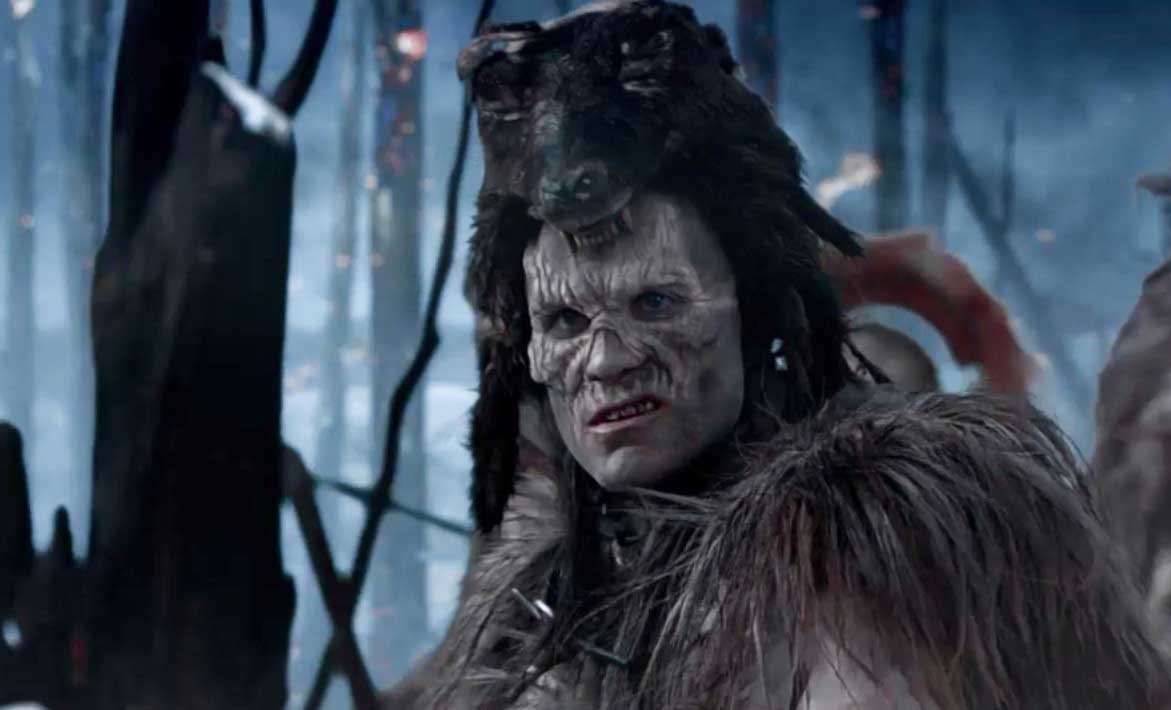
Every time I read something about the Getae, I envision the skull wearing savage warriors depicted in the opening battle scenes of the Starz series "Spartacus." But according to Herodotus, the Getae were "the noblest as well as the most just of all the Thracian tribes."  When Lysimachus tried to subdue the Getae he was defeated by them. The Getae king, Dromichaetes, took him prisoner but he treated him well and convinced Lysimachus there is more to gain as an ally than as an enemy of the Getae and released him. According to Diodorus, Dromichaetes entertained Lysimachus at his palace at Helis, where food was served on gold and silver plates. The discovery of the celebrated tomb at Sveshtari (1982) suggests that Helis, the capital of the Getae, was located perhaps in its vicinity, where remains of a large antique city are found along with dozens of other Thracian mound tombs.

The Getae were several Thracian-related tribes that once inhabited the regions to either side of the Lower Danube, in what is today northern Bulgaria and southern Romania. Their proximity to Greek colonies on the Black Sea coast brought the Getae into contact with the Greeks at an early date. 

There seems to be disagreement among scholars whether the Getae and Dacians were separate peoples. In his Geographic (c. 7 BC – 20 CE), Strabo said the Dacians lived in the western parts of Dacia, "towards Germania and the sources of the Danube", while the Getae lived in the eastern parts, towards the Black Sea, both south and north of the Danube but both cultures spoke the same language as the Thracians. Justin, the 3rd century CE Latin historian, wrote in his "Epitome of Pompeius Trogus" that Dacians are spoken of as descendants of the Getae.  In his Roman History, Cassius Dio observes "I call the people Dacians, the name used by the natives themselves as well as by the Romans, though I am not ignorant that some Greek writers refer to them as Getae, whether that is the right term or not..."  According to Herodotus, the Getae differed from other Thracian tribes in their religion, centered around the god (daimon) Zalmoxis whom some of the Getae called Gebeleizis.

Herodotus says the Getae were one of the conquered tribes of the  Scythian campaign of Darius I in 513 BCE. But by the 5th century BCE through the 3rd century BCE,  the Getae were mostly under the rule of the flourishing Odrysian kingdom. During this time, the Getae provided military services and became famous for their cavalry. 

After the disintegration of the Odrysian kingdom, the Getic principalities began to consolidate themselves. By about 200 BCE, strong Getic princes such as Zalmodegicus had extended their domain as far as Histria near the mouth of the Danube River. They minted their own coins and practiced a ruler cult.

In 72–71 BCE Marcus Terentius Varro Lucullus became the first Roman commander to march against the Getae. This was done to strike at the western Pontic allies of Mithridates VI, but he had limited success. A decade later, a coalition of Scythians, Getae, Bastarnae and Greek colonists defeated C. Antonius Hybrida at Histria. This victory over the Romans allowed Burebista, the leader of this coalition, to organize a kingdom consisting of descendants of those whom the Greeks had called Getae, as well as Dacians, or Daci, the name applied to people of the region by the Romans and he ruled independently from 60–50 BCE.

Meanwhile, Augustus aimed at subjugating the entire Balkan peninsula, and used an incursion of the Bastarnae, a Celtic or Germanic people depending on which ancient source you accept, who crossed the Danube, as a pretext to devastate the Getae and Thracians. He put Marcus Licinius Crassus in charge of the plan. In 29 BCE, Crassus defeated the Bastarnae with the help of the Getic prince Rholes. Crassus promised him help for his support against the Getic ruler Dapyx. After Crassus had reached as far as the Danube Delta, Rholes was appointed king and Crassus returned to Rome. In 16 BCE, the Sarmatae invaded the Getic territory and were driven back by Roman troops. The Getae were placed under the control of the Roman vassal king in Thrace, Rhoemetalces I. In 6 CE, the province of Moesia was founded, incorporating the Getae south of the Danube River. The Getae north of the Danube continued tribal autonomy outside the Roman Empire.

Skull-wearing Getae warrior of Starz series "Spartacus".

Getae warrior (Thracians related to the Dacians) armed with two specimens of the fearsome falx, courtesy of artist Mariusz Kozik.

A Geto-Dacian helmet dating from the 4th century BCE known as the Helmet of Iron Gates, Mehedinţi County, Romania, now in the collections of the Detroit Institute of Arts, courtesy of Wikimedia Commons contributor Codrin B.

Gilded silver Getae-Dacian helmet found in Peretu at the National Museum of Romanian History in Bucharest, courtesy of Wikimedia Commons contributor Sailko.

Detail of a Gilded silver Getae-Dacian helmet found in Peretu at the National Museum of Romanian History in Bucharest, courtesy of Wikimedia Commons contributor Cristian Chirita

Gilded silver Getae-Dacian helmet, part of the Aghighiol treasure of Getae-Dacian artifacts at the National Museum of Romanian History in Bucharest, courtesy of Wikimedia Commons contributor Cristian Chirita.

Detail of Getae-Dacian horseman on a helmet, part of the Aghighiol treasure of Getae-Dacian artifacts at the National Museum of Romanian History in Bucharest, courtesy of Wikimedia Commons contributor Cristian Chirita.

Getae aristocratic portrait in gilded silver from Peretu 5th-4th century BCE now in the National Museum of Romanian History in Bucharest, courtesy of https://romanianhistoryandculture.webs.com/

Beaker with birds and animals, Thraco-Getian, 4th century BC, silver, height: 18.7 cm (7.4 in), Metropolitan Museum of Art in New York, courtesy of Wikimedia Commons contributor, Marie-Lan Nguyen.

Bottom of a Silver Getae-Dacian beaker depicting mythical beasts, part of the Aghighiol treasure of Getae-Dacian artifacts at the National Museum of Romanian History in Bucharest, courtesy of Wikimedia Commons contributor Cristian Chirita.

Gilt silver tableware from the princely burial of Peretu, Getae, 310-290 BCE, at the National Museum of Romanian History in Bucharest, courtesy of Wikimedia Commons contributor Sailko.

Aghighiol treasure of Getae-Dacian artifacts at the National Museum of Romanian History in Bucharest, courtesy of Wikimedia Commons contributor Cristian Chirita.

Tropeum Traiani Metope commemorating the Battle of Adamclisi, Roman, showing Dacian warriors wielding a two-handed falx, , courtesy of Wikimedia Commons contributor Cristian Chirita.

A Geto-Dacian Rhyton dating from the last half of the 4th century or the first half of the 3rd BCE at the National Museum of Romanian History courtesy of Wikimedia Commons contributor Cristian Chirita.

Closeup ​of a gold disc embossed with a helmeted head of Athena recovered from the Great Tumulus of Sveshtari in the Getae Capital, courtesy of https://aktuelarkeoloji.com.tr/kategori/guncel-kazilar/getae-baskenti-buyuk-sveshtari-tumulus

Gold ​applique depicting a female head, Getae, Athena recovered from the Great Tumulus of Sveshtari in the Getae Capital, courtesy of https://aktuelarkeoloji.com.tr/kategori/guncel-kazilar/getae-baskenti-buyuk-sveshtari-tumulus

Gilded Getae-Dacian Greave, part of the Aghighiol treasure of Getae-Dacian artifacts at the National Museum of Romanian History in Bucharest, courtesy of Wikimedia Commons contributor Cristian Chirita.

Getae-Dacian Greave, part of the Aghighiol treasure of Getae-Dacian artifacts at the National Museum of Romanian History in Bucharest, courtesy of Wikimedia Commons contributor Cristian Chirita.

Getae-Dacian animorphic gilt silver disk , part of the Aghighiol treasure of Getae-Dacian artifacts at the National Museum of Romanian History in Bucharest, courtesy of Wikimedia Commons contributor Cristian Chirita.

The Thracian Tomb of Sveshtari, 3rd century BCE, courtesy of Wikimedia Commons contributor Interact-Bulgaria.


If you enjoyed this post, never miss out on future posts by following me by email!

Monday, July 12, 2021

Sarmatians: Descendants of the Amazons?

Herodotus (4.110–117) tells us some Amazons were captured in battle by Greeks in Pontus (northern Turkey) near the river Thermodon, and the captives were loaded into three boats. They overcame their captors while at sea, but were not able sailors. The boats were blown north to the Maeotian Lake (the Sea of Azov) onto the shore of Scythia near the cliff region (today's southeastern Crimea). After encountering the Scythians and learning the Scythian language, the Amazons agreed to marry Scythian men, but only on the condition that they move away from Scythia and not be required to follow the customs of Scythian women.

Hippocrates described these warlike women.

"Their women, so long as they are virgins, ride, shoot, throw the javelin while mounted, and fight with their enemies. They do not lay aside their virginity until they have killed three of their enemies, and they do not marry before they have performed the traditional sacred rites. A woman who takes to herself a husband no longer rides, unless she is compelled to do so by a general expedition. They have no right breast, for while they are yet babies their mothers make red-hot a bronze instrument constructed for this very purpose and apply it to the right breast and cauterize it, so that its growth is arrested, and all its strength and bulk are diverted to the right shoulder and right arm."

Their descendants settled beyond the Tanais (Don) river and became the cultural group known to the Romans as Sarmatians. Strabo said the Sarmatians extended from above the Danube eastward to the Volga, and from north of the Dnieper River into the Caucasus and at some point had intermarried with the Thracians (7.3.2).

These "wagon-dwellers" and "milk eaters" wore long flowing robes similar to those of the Persians according to Tacitus and by the third century BCE, the Sarmatian name appears to have supplanted the Scythian in the plains of what now is south Ukraine.

With iron a rare commodity on the steppes, the eastern Sarmatians used bone and wood for weapons and armor made of horse's hooves. Pausanius, who found a Sarmatian breastplate among votive offerings near the Athenian Acropolis in the 2nd century CE, describes the process:

"Each man keeps many mares, since the land is not divided into private allotments, nor does it bear any thing except wild trees, as the people are nomads. These mares they not only use for war, but also sacrifice them to the local gods and eat them for food. Their hoofs they collect, clean, split, and make from them as it were python scales. Whoever has never seen a python must at least have seen a pine-cone still green. He will not be mistaken if he liken the product from the hoof to the segments that are seen on the pine-cone. These pieces they bore and stitch together with the sinews of horses and oxen, and then use them as breastplates that are as handsome and strong as those of the Greeks. For they can withstand blows of missiles and those struck in close combat."

They also used lassos during combat in which they would lasso an enemy then turn quickly to unseat the rider. Their weapons and tactics were formidable enough to defeat two Roman legions in Pannonia in late 374 CE as recorded by Ammianus Marcellinus. This was in spite of the fact that Sarmatians had previously served in the Roman army. In the fourth and fifth centuries when the Huns expanded and conquered both the Sarmatians and the Germanic tribes living between the Black Sea and the borders of the Roman Empire, the Sarmatians fought with the Huns against a combination of Roman and Germanic troops but their alliance was shattered at the brutal  Battle of the Catalaunian Plains in 451 CE followed by the death of Attila two years later.  The Sarmatians returned to their traditional homeland and were eventually assimilated and absorbed by Proto-Slavic tribes during the early Middle Ages.

I have greatly condensed key points in the rise and fall of the Sarmatians. I highly recommend reading much more about them here:  https://weaponsandwarfare.com/2017/10/14/the-sarmatians/

Gold diadem with amethyst, almandine, garnets, turquoise, coral and glass inlays, Sarmato-Alanian Culture, 1st century CE, found near the modern city of city of Novocherkassk, Russia, now in the collections of the Hermitage Museum, St. Petersburg, Russia, image courtesy of the museum.

Gold bridle ornament depicting a stag, Sarmatian, 5th-3rd century BCE, now in the collections of the Cleveland Museum of Art, image courtesy of the museum.

Reconstruction of Sarmatian chieftain. Araltobe mount, Kazakhstan, III-II cc. BC. Excavation of Z. Samashev. "Heritage of the Great Steppe" exhibition, courtesy of Wikimedia Commons contributor АОЌаОМа хОкарО.

Disc brooch, Sarmatian, c. 150-100 BC, gold, chalcedony, carnelian, courtesy of Wikimedia Commons contributor Daderot.

Sarmatian cataphracts (who fought for the Dacians) during the Dacian Wars as depicted on Trajan's Column, 113 CE, courtesy of Wikimedia Commons.

Oval brooch with intaglio of Athena, Sarmatian, c. 100 BC, gold, carnelian, garnet, rock crystal, glass, courtesy of Wikimedia Commons contributor Daderot.

Battle between the Slavs and the Scythians (Sarmatians) — painting by Viktor Vasnetsov (1881), courtesy of Wikimedia Commons.


If you enjoyed this post, never miss out on future posts by following me by email!


Wednesday, June 16, 2021

The Galloway Hoard Exhibit through September 12, 2021 at the National Museum of Scotland

Discovered by a metal detectorist in Dumfries and Galloway, Scotland in 2014, the Galloway Hoard, buried around 900 CE, contains over 100 diverse objects, from silver, gold and jewelled treasures to rarely surviving textiles, including wool, linen and Scotland’s earliest examples of silk. 

 It is thought that the hoard was buried some time in the mid-ninth or tenth century, though it is not known why it was buried. The hoard consists of a variety of gold and silver objects including armbands, a silver pectoral cross, brooches, ingots, and what is possibly the largest silver Carolingian pot ever discovered. The pot was one of the older items in the hoard and may have been more than 100 years old by the time it was deposited. It is made of a silver alloy and was found wrapped in the remains of a cloth, with its lid still in place. It contained a collection of silver Anglo-Saxon disc brooches, an Irish silver brooch, Byzantine silk from the area around Constantinople, a gold ingot and gold and crystal objects wrapped in cloth. 

Five of the silver armbands have runic inscriptions scratched on them. Although the hoard is considered to be a Viking hoard, the inscriptions are written in Anglo-Saxon runes, and they record Anglo-Saxon names, possibly some of the original owners of part of the hoard. The items among the treasure originated across a wide geographic area that includes Ireland, Scandinavia, and central Europe. 

The hoard was buried in two discrete levels. The more valuable objects – the gold items and the Carolingian pot – were more deeply buried, while the upper level consisted of smaller and less valuable items which would have been the equivalent of "loose change" in the Viking bullion economy.

After the exhibition ends at the National Museum of Scotland, it will tour on to Kirkcudbright Galleries from 9 October to 2021 to 10 July 2022 then on to Aberdeen Museum and Art Gallery from 30 July to 23 October 2022.

Selection of objects from the Galloway Hoard, 9th - 10th century CE, courtesy of Wikimedia Commons and the National Museum of Scotland.

Ornamented silver pectoral cross with wire chain. The cross is decorated with what appears to be gilding and niello, each arm ornamented with a motif and there appears to be an ornamentation missing from the centre. A chain of coiled silver wire is wrapped around the arms. The cross is from the Galloway Hoard, 9th - 10th century CE, courtesy of Wikimedia Commons and the National Museum of Scotland.

An Anglo-Saxon disc brooch from the Galloway Hoard, , 9th - 10th century CE, courtesy of Wikimedia Commons and the National Museum of Scotland.

A hinged mount with Anglo-Saxon Trewhiddle-style decoration from the Galloway Hoard, , 9th - 10th century CE, courtesy of Wikimedia Commons and the National Museum of Scotland.

A gold bird pin thought to be unique from the Galloway Hoard, , 9th - 10th century CE, courtesy of Wikimedia Commons and the National Museum of Scotland.

A selection of beads, including a large 'melon' style bead with ribbed edge, clear glass, slightly yellowed, from the Galloway Hoard, 9th - 10th century CE, courtesy of Wikimedia Commons and the National Museum of Scotland.

Anglo-Saxon quatrefoil brooch from the Galloway Hoard, , 9th - 10th century CE, courtesy of Wikimedia Commons and the National Museum of Scotland.


If you enjoyed this post, never miss out on future posts by following me by email!


Saturday, March 13, 2021

Etruscan chariots


Silver panel, perhaps from a parade chariot or piece of furniture, overlaid with electrum and decorated in repoussé relief with two riders, perhaps taking part in a horse-race, with a fallen comrade below, Etruscan, 540-520 BCE, found in the Castel San Mariano near the city of Perugia.

Perguia, first called Perusia in the ancient sources, was one of the 12 confederate cities of Etruria.  The league was mostly an economic and religious league, or a loose confederation, similar to the Greek states.  The historical Etruscans had achieved a state system of society, with only remnants of the chiefdom and tribal forms used by surrounding Italics. The government was viewed as being a central authority, ruling over all tribal and clan organizations and wielding the power of life and death. The gorgon was revered as an ancient symbol of that power, and frequently appeared as a motif in Etruscan decoration.

The individual referred to as a "fallen comrade" in this Archaic period relief appears to somewhat resemble a gorgon and, as such, may represent the presence of death in such competitions or victory over death. (only my humble opinion, though)

Perusia was not mentioned in the ancient sources until, Q. Fabius Pictor's account, utilized by Livy, of the expedition carried out against the Etruscan League by Fabius Maximus Rullianus in 310 or 309 BCE. At that time a thirty-year indutiae (truce) was agreed upon. However, in 295 BCE Perusia took part in the Third Samnite War.

At the decisive Roman victory at Sentinum, the enemy fielded over 1,000 chariots (although I doubt any of these were plated with silver) along with 60,000 infantry and 40,000 cavalry.  The Roman consuls Quintus Fabius Maximus Rullianus who commanded the right and Publius Decius Mus who commanded the left were ultimately victorious after Publius Decius decided to devote himself to galvanize the troops. This term refers to a military commander offering prayers to the gods and launching himself into the enemy lines, effectively sacrificing himself, when his troops are in dire straits. His father had done the same at the Battle of Vesuvius (340 BCE). 

If you enjoyed this post, never miss out on future posts by following me by email!


Friday, February 12, 2021

Cypriot gold spiral earrings: Local fashion or the result of Achaemenid influence?

 According to the Metropolitan Museum of Art, spirals with ornate animal-head terminals are frequently found in Cypriot tombs of the Classical period. Terracotta and limestone votive statues illustrate that from the Archaic through the Classical period it was customary for Cypriot men and women to wear such ornaments in large holes pierced through their earlobes.

When I saw these earrings, I wondered if this Cypriot practice of making large holes in their earlobes to accommodate these ornaments was a local fashion or adopted as a result of Persian rule beginning in 545 BCE, especially since most examples I have seen  are dated between the late 6th century to the 5th century BCE. I managed to find images of Achaemenid bracelets similarly made of gold tubing but each example of similar earrings I found in my research were all labeled Cypriot. Since the Cypriots were ruled by the Assyrians and even the Egyptians for a short time, I researched the jewelry of those cultures as well but found nothing similar. 


Cypriot Earrings or spiral with lion-griffin terminals, Gold and Silver, 400-350 BCE and Lion headed spirals from mid-5th century BCE, at the Metropolitan Museum of Art


Cypriot Gold and copper alloy spiral with lion-head terminal, 2nd half of the 5th century B.C.E. at the Metropolitan Museum of Art. The lion-head is made in two halves (left and right) from sheet gold.


Cypriot Earrings or spiral with lion-griffin terminals, Gold and Silver, 400-350 BCE, at the Metropolitan Museum of Art.


Cypriot Earrings or spiral with lion-griffin terminals, Gold and Silver, 400-350 BCE, at the Metropolitan Museum of Art.

Pair of gold spiral earrings with terminals in the form of a crested griffins head. Cypriot, 475-400 B.C.E. British Museum

Gilt bronze spiral with griffin terminal. Period: Classical. Date: ca. 400–350 B.C.E. Culture: Cypriot. Medium: Gold, bronze. British Museum

Cypriot Gold allow spiral earings with Griffin terminals 5th century BCE at the British Museum courtesy of Wikimedia Commons contributor Paul Hudson. (digitally enhanced and recomposed)

Cypriot Gold alloy spiral earring with horned mythological creature terminal and floret, 5th century BCE, at the Antikensammlung Museum in Berlin courtesy of Wikimedia Commons contributor Marsupium

Achaemenid Gold Bracelet with Inlaid Termini in the Form of Duck's Heads, Gold with lapis lazuli, agate, and carnelian inlay, mid-6th-4th century B.C.E. at the Miho Museum in Kyoto, Japan. The ducks are reduced to protomes with their heads turned back in a typical Achaemenid fashion. The bracelet is constructed of hollow gold tubing, and the duck protomes were formerly elaborately inlayed with colored stones. One duck bill is made of agate, the other of carnelian. The ducks were both made separately and were in all likelihood originally joined together at their breasts. In order to put on the bracelet, the birds could be separated from the circlet by removing the rivets.

The bracelet type is preserved in much simpler versions of bronze or golden wire, and details like the turned heads resting on the animals' backs seem truly Achaemenid, but a certain naturalistic tendency along with the concept of a removable part may point to a later period and attribute this piece to the circle of Achaemenizing art fashioned in the Hellenistic period. It must be stressed, however, that at the moment, this is nothing but a hypothesis. - Miho Museum, Kyoto, Japan

Achaemenid Gold Bracelet with Inlaid Termini in the Form of Seated Ducks, Gold with lapis lazuli, turquoise, onyx, and rock crystal inlay, mid-6th-4th century B.C.E. at the Miho Museum in Kyoto, Japan. The jeweler of this bracelet chose ducks as terminal figures and combined them with a rather heavy looking circlet that can be opened. The ducks were fashioned separately, and all the feathers and the eyes were originally characterized by inlays. The ducks' bills are not preserved. The birds are fixed to a single massive tubular circlet, which originally had colored inlays at the junction between the ducks. The use of colored inlays for the details of the feathering is a feature of Egyptianizing tendencies in Achaemenid craftsmanship. Though the "Great Kings" are known to have employed Egyptian craftsmen, the use of this technique does not necessarily imply that the jeweler was an Egyptian, because the technique was widely used on objects of truly Achaemenid style. 
If you enjoyed this post, never miss out on future posts by following me by email!


Thursday, February 11, 2021

Burial of a Celtic Prince

The Hochdorf Chieftain's Grave is a richly-furnished Celtic burial chamber dating from 540 BCE near Hochdorf an der Enz (municipality of Eberdingen) in Baden-WÃŒrttemberg, Germany. Beginning in 1968, a volunteer at the State Antiquities and Monuments Office in Baden-WÃŒrttemberg, Renate Leibfried, kept coming across stone fragments plowed up in the field. She reported her observations and the Archaeological Preservation Office identified what had been a large burial mound.  Dr. Jörg Biel led a complete excavation of the site between 1978 to 1979.

The grave contained a Celtic prince, roughly 40 years of age and 6 ft 2 in tall, who was laid out on a bronze recliner with eight wheels.  He wore a gold-plated torc on his neck, a bracelet on his right arm, a hat made of birch bark, a gold-plated dagger made of bronze and iron, rich clothing, amber jewelry and the remains of thin embossed gold plaques which once decorated his now-disintegrated shoes. Other grave goods included a razor knife, a nail clipper, a comb, fishing hooks, and arrows. At the foot of the funerary couch was a large cauldron decorated with three lions around the rim. This cauldron was originally filled with about 100 gallons of mead. The east side of the tomb contained an iron-plated wooden four-wheeled wagon holding a set of bronze dishes.  A collection of drinking horns hung on the walls was enough to serve nine people.  

A reconstruction of the burial can be viewed at the Hochdor/Enz Celtic Museum which opened in 1991.  The original finds of the Hochdorf princely burial are to be found in the WÃŒrttemberg State Museum in Stuttgart’s Old Palace although both are currently closed due to the pandemic. 

Reconstruction of the Celtic Hochdorf Chieftain's Grave in the museum nearby the location of the original grave courtesy of Wikimedia Commons contributor, Magnus Hagdorn

Celtic-style bronze lion replacement on the Hochdorf cauldron, 540 BCE, courtesy of Wikimedia Commons contributor Xuan Che.

Hochdorf cauldron with drinking horns courtesy of Wikimedia Commons contributor Dr. Bernd Gross.

Greek-style Bronze lion on the Hochdorf cauldron, 540 BCE, courtesy of Wikimedia Commons contributor Xuan Che.

Gold fibulae of the Hochdorf Celtic Prince courtesy of Harry Meinhardt. Two identical brooches, one of which has been slightly compressed, are composed of seven parts. The body is of solid gold, the hoops have been hammered out in a square cross-section. The garment hooks were joined with a piece of fluted sheet metal.

Reconstruction of the Hochdorf Celtic prince with his gold burial goods courtesy of Pinterest.

Gilded in preparation for the afterlife, this 42cm long, bronze and iron dagger was carried by the prince in life. The blade was protected by a richly decorated sheath. The gold coating made for the burial consisted of 16 parts, all precisely fitted onto the dagger without any fold, courtesy of Wikimedia Commons contributor Rosemania.

Gold shoe plaques from the Hochdorf Chieftain's Grave, Germany, c. 540 BCE, courtesy of Wikimedia Commons contributor Rosemania

Hochdorf gilded drinking horn, 540 BCE, courtesy of Wikimedia Commons contributor Xuan Che.

Reconstruction of the grave good chariot of a Celtic prince in Hochdorf, Germany, courtesy of Wikimedia Commons contributor NobbiP

I saw this beautiful miniature of a Celtic prince riding into battle in a chariot accompanied by his body guard and hound in my image search. The Celtic Chieftain Chariot is in 75mm scale and it is a scrathbuilt, the sculptor of this figure is Andrea Jula while the painter is Fabrizio Russo. Image courtesy of https://sergeantblackart.wordpress.com/.../showcase.../


If you enjoyed this post, never miss out on future posts by following me by email!