Showing posts with label tomb. Show all posts

Sunday, August 15, 2021

The Getae: The noblest and the just of the Thracian tribes (according to Herodotus)

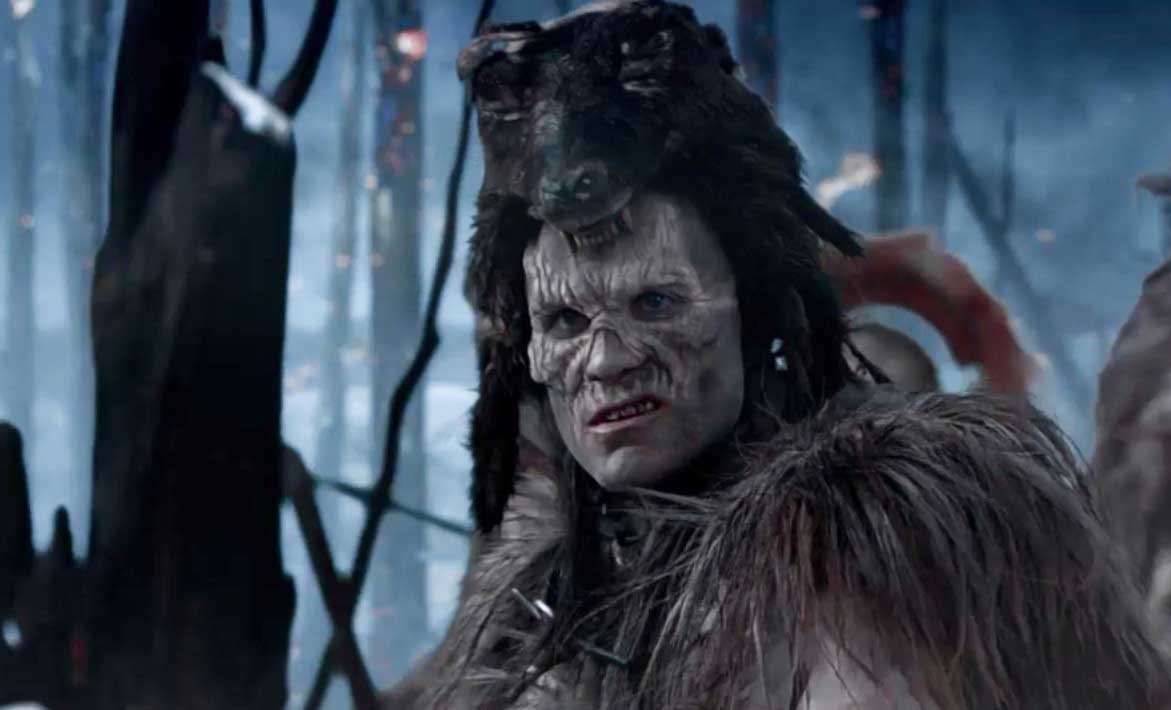
Every time I read something about the Getae, I envision the skull wearing savage warriors depicted in the opening battle scenes of the Starz series "Spartacus." But according to Herodotus, the Getae were "the noblest as well as the most just of all the Thracian tribes."  When Lysimachus tried to subdue the Getae he was defeated by them. The Getae king, Dromichaetes, took him prisoner but he treated him well and convinced Lysimachus there is more to gain as an ally than as an enemy of the Getae and released him. According to Diodorus, Dromichaetes entertained Lysimachus at his palace at Helis, where food was served on gold and silver plates. The discovery of the celebrated tomb at Sveshtari (1982) suggests that Helis, the capital of the Getae, was located perhaps in its vicinity, where remains of a large antique city are found along with dozens of other Thracian mound tombs.

The Getae were several Thracian-related tribes that once inhabited the regions to either side of the Lower Danube, in what is today northern Bulgaria and southern Romania. Their proximity to Greek colonies on the Black Sea coast brought the Getae into contact with the Greeks at an early date. 

There seems to be disagreement among scholars whether the Getae and Dacians were separate peoples. In his Geographic (c. 7 BC – 20 CE), Strabo said the Dacians lived in the western parts of Dacia, "towards Germania and the sources of the Danube", while the Getae lived in the eastern parts, towards the Black Sea, both south and north of the Danube but both cultures spoke the same language as the Thracians. Justin, the 3rd century CE Latin historian, wrote in his "Epitome of Pompeius Trogus" that Dacians are spoken of as descendants of the Getae.  In his Roman History, Cassius Dio observes "I call the people Dacians, the name used by the natives themselves as well as by the Romans, though I am not ignorant that some Greek writers refer to them as Getae, whether that is the right term or not..."  According to Herodotus, the Getae differed from other Thracian tribes in their religion, centered around the god (daimon) Zalmoxis whom some of the Getae called Gebeleizis.

Herodotus says the Getae were one of the conquered tribes of the  Scythian campaign of Darius I in 513 BCE. But by the 5th century BCE through the 3rd century BCE,  the Getae were mostly under the rule of the flourishing Odrysian kingdom. During this time, the Getae provided military services and became famous for their cavalry. 

After the disintegration of the Odrysian kingdom, the Getic principalities began to consolidate themselves. By about 200 BCE, strong Getic princes such as Zalmodegicus had extended their domain as far as Histria near the mouth of the Danube River. They minted their own coins and practiced a ruler cult.

In 72–71 BCE Marcus Terentius Varro Lucullus became the first Roman commander to march against the Getae. This was done to strike at the western Pontic allies of Mithridates VI, but he had limited success. A decade later, a coalition of Scythians, Getae, Bastarnae and Greek colonists defeated C. Antonius Hybrida at Histria. This victory over the Romans allowed Burebista, the leader of this coalition, to organize a kingdom consisting of descendants of those whom the Greeks had called Getae, as well as Dacians, or Daci, the name applied to people of the region by the Romans and he ruled independently from 60–50 BCE.

Meanwhile, Augustus aimed at subjugating the entire Balkan peninsula, and used an incursion of the Bastarnae, a Celtic or Germanic people depending on which ancient source you accept, who crossed the Danube, as a pretext to devastate the Getae and Thracians. He put Marcus Licinius Crassus in charge of the plan. In 29 BCE, Crassus defeated the Bastarnae with the help of the Getic prince Rholes. Crassus promised him help for his support against the Getic ruler Dapyx. After Crassus had reached as far as the Danube Delta, Rholes was appointed king and Crassus returned to Rome. In 16 BCE, the Sarmatae invaded the Getic territory and were driven back by Roman troops. The Getae were placed under the control of the Roman vassal king in Thrace, Rhoemetalces I. In 6 CE, the province of Moesia was founded, incorporating the Getae south of the Danube River. The Getae north of the Danube continued tribal autonomy outside the Roman Empire.

Skull-wearing Getae warrior of Starz series "Spartacus".

Getae warrior (Thracians related to the Dacians) armed with two specimens of the fearsome falx, courtesy of artist Mariusz Kozik.

A Geto-Dacian helmet dating from the 4th century BCE known as the Helmet of Iron Gates, Mehedinţi County, Romania, now in the collections of the Detroit Institute of Arts, courtesy of Wikimedia Commons contributor Codrin B.

Gilded silver Getae-Dacian helmet found in Peretu at the National Museum of Romanian History in Bucharest, courtesy of Wikimedia Commons contributor Sailko.

Detail of a Gilded silver Getae-Dacian helmet found in Peretu at the National Museum of Romanian History in Bucharest, courtesy of Wikimedia Commons contributor Cristian Chirita

Gilded silver Getae-Dacian helmet, part of the Aghighiol treasure of Getae-Dacian artifacts at the National Museum of Romanian History in Bucharest, courtesy of Wikimedia Commons contributor Cristian Chirita.

Detail of Getae-Dacian horseman on a helmet, part of the Aghighiol treasure of Getae-Dacian artifacts at the National Museum of Romanian History in Bucharest, courtesy of Wikimedia Commons contributor Cristian Chirita.

Getae aristocratic portrait in gilded silver from Peretu 5th-4th century BCE now in the National Museum of Romanian History in Bucharest, courtesy of https://romanianhistoryandculture.webs.com/

Beaker with birds and animals, Thraco-Getian, 4th century BC, silver, height: 18.7 cm (7.4 in), Metropolitan Museum of Art in New York, courtesy of Wikimedia Commons contributor, Marie-Lan Nguyen.

Bottom of a Silver Getae-Dacian beaker depicting mythical beasts, part of the Aghighiol treasure of Getae-Dacian artifacts at the National Museum of Romanian History in Bucharest, courtesy of Wikimedia Commons contributor Cristian Chirita.

Gilt silver tableware from the princely burial of Peretu, Getae, 310-290 BCE, at the National Museum of Romanian History in Bucharest, courtesy of Wikimedia Commons contributor Sailko.

Aghighiol treasure of Getae-Dacian artifacts at the National Museum of Romanian History in Bucharest, courtesy of Wikimedia Commons contributor Cristian Chirita.

Tropeum Traiani Metope commemorating the Battle of Adamclisi, Roman, showing Dacian warriors wielding a two-handed falx, , courtesy of Wikimedia Commons contributor Cristian Chirita.

A Geto-Dacian Rhyton dating from the last half of the 4th century or the first half of the 3rd BCE at the National Museum of Romanian History courtesy of Wikimedia Commons contributor Cristian Chirita.

Closeup ​of a gold disc embossed with a helmeted head of Athena recovered from the Great Tumulus of Sveshtari in the Getae Capital, courtesy of https://aktuelarkeoloji.com.tr/kategori/guncel-kazilar/getae-baskenti-buyuk-sveshtari-tumulus

Gold ​applique depicting a female head, Getae, Athena recovered from the Great Tumulus of Sveshtari in the Getae Capital, courtesy of https://aktuelarkeoloji.com.tr/kategori/guncel-kazilar/getae-baskenti-buyuk-sveshtari-tumulus

Gilded Getae-Dacian Greave, part of the Aghighiol treasure of Getae-Dacian artifacts at the National Museum of Romanian History in Bucharest, courtesy of Wikimedia Commons contributor Cristian Chirita.

Getae-Dacian Greave, part of the Aghighiol treasure of Getae-Dacian artifacts at the National Museum of Romanian History in Bucharest, courtesy of Wikimedia Commons contributor Cristian Chirita.

Getae-Dacian animorphic gilt silver disk , part of the Aghighiol treasure of Getae-Dacian artifacts at the National Museum of Romanian History in Bucharest, courtesy of Wikimedia Commons contributor Cristian Chirita.

The Thracian Tomb of Sveshtari, 3rd century BCE, courtesy of Wikimedia Commons contributor Interact-Bulgaria.


If you enjoyed this post, never miss out on future posts by following me by email!


Saturday, June 26, 2021

Ancient Amber

 Despite fanciful descriptions by some ancient sources like Nicias (470-415 BCE) that amber "is a liquid produced by the rays of the sun, and that these rays, at the moment of the sun's setting, striking with the greatest force upon the surface of the soil, leave upon it an unctuous sweat, which is carried off by the tides of the Ocean, and thrown up upon the shores of Germany", Roman naturalist Pliny the Elder cited sources who were well aware of amber's actual origin from tree resin.

In Book 37, section XI of Natural History, Pliny wrote:

"Amber is produced from a marrow discharged by trees belonging to the pine genus, like gum from the cherry, and resin from the ordinary pine. It is a liquid at first, which issues forth in considerable quantities, and is gradually hardened [...] Our forefathers, too, were of opinion that it is the juice of a tree, and for this reason gave it the name of "succinum" and one great proof that it is the produce of a tree of the pine genus, is the fact that it emits a pine-like smell when rubbed, and that it burns, when ignited, with the odour and appearance of torch-pine wood."

Pliny says that the German name of amber was glÊsum, "for which reason the Romans, when Germanicus Caesar commanded the fleet in those parts, gave to one of these islands the name of GlÊsaria, which by the barbarians was known as Austeravia". 

As an important commodity, sometimes dubbed "the gold of the north", amber was transported from the North Sea and Baltic Sea coasts overland by way of the Vistula and Dnieper rivers to Italy, Greece, the Black Sea, Syria and Egypt over a period of thousands of years. The oldest trade in amber in antiquity originated from Sicily. The Sicilian amber trade was directed to Greece, North Africa and Spain. Sicilian amber was also discovered in Mycenae by the archaeologist Heinrich Schliemann. This amber also appeared in sites in southern Spain and Portugal and its distribution is similar to that of ivory, so it is possible that amber from Sicily reached the Iberian Peninsula through contacts with North Africa. After a decline in the consumption and trade of amber at the beginning of the Bronze Age, around 2,000 BCE, the influence of Baltic amber gradually took the place of the Sicilian one throughout the Iberian peninsula starting around 1000 BCE. 

From at least the 16th century BC, amber was moved from Northern Europe to the Mediterranean area. The breast ornament of the Egyptian pharaoh Tutankhamen (c. 1333–1324 BCE) contains large Baltic amber beads. Amber was also sent from the North Sea to the temple of Apollo at Delphi as an offering.

In Roman times, a main route ran south from the Baltic coast (modern Lithuania), the entire north–south length of modern-day Poland (likely through the Iron Age settlement of Biskupin), through the land of the Boii (modern Czech Republic and Slovakia) to the head of the Adriatic Sea (Aquileia by the modern Gulf of Venice). Along with amber, other commodities such as animal fur and skin, honey and wax were exported to Rome in exchange for Roman glass, brass, gold, and non-ferrous metals such as tin and copper. As this road was a lucrative trade route connecting the Baltic Sea to the Mediterranean Sea, Roman military fortifications were constructed along the route to protect merchants and traders from Germanic raids.

Amber occurs in a range of different colors. As well as the usual yellow-orange-brown that is associated with the color "amber", amber itself can range from a whitish color through a pale lemon yellow, to brown and almost black. Other uncommon colors include red amber (sometimes known as "cherry amber"), green amber, and even blue amber, which is rare and highly sought after. As amber ages, however, it often becomes opaque and crackled. 

Amber has been crafted into jewelry and pendants since the Stone Age, from 13,000 years ago. Amber ornaments have been found in Mycenaean tombs.  However, it has also been used in folk medicine for its purported healing properties. Hippocrates and other ancient physicians used amber extracts for a wide variety of treatments. In ancient China amber was heated under specific conditions to produce oil of amber that, when combined with nitric acid, was used to produce artificial musk.


Amber head of a woman or goddess, Roman, 1st - 2nd century CE, now in the collections of the National Archaeological Museum of Aquileia, courtesy of Wikimedia Commons contributor Sailko.


Amber figurine of a dog, Roman, from a tomb in Aquileia, 90-110 CE, now in the collections of the National Archaeological Museum of Aquileia, courtesy of Wikimedia Commons contributor Sailko.


Amber ring with the form of a female bust, 1st century CE, in the collections of the National Archaeological Museum of Aquileia, courtesy of Wikimedia Commons contributor Sailko.


Amber figural sculpture from a tomb in Aquileia, 90 CE, now in the collections of the National Archaeological Museum of Aquileia, courtesy of Wikimedia Commons contributor Sailko.

Amber figural sculpture of a woman with a melon hairstyle from a tomb in Aquileia, 90 CE, now in the collections of the National Archaeological Museum of Aquileia, courtesy of Wikimedia Commons contributor Sailko.

Amber head of a satyr, Roman, 1st - 2nd century CE, now in the collections of the National Archaeological Museum of Aquileia, courtesy of Wikimedia Commons contributor Sailko.

Amber sculpture of winged figures, Roman, 1st - 2nd century CE, now in the collections of the National Archaeological Museum of Aquileia, courtesy of Wikimedia Commons contributor Sailko.

Carved amber bow of a fibula depicting a couple reclining on a couch, with attendant and bird at the Metropolitan Museum of Art in New York. While numerous details are Etruscan, it is impossible to identify where the artist came from and whether the figures are mortal or divine.

Amber pendant in the form of a sphinx, from south Italy, Taranto, late 6th century BCE now in the collections of the Cleveland Museum of Art.

Weight with Ram and Tiger, Early Western Han Dynasty, 3rd-2nd century BCE, Bronze inlaid with gold silver and amber that I photographed at the Portland (Oregon) Art Museum.

Amber amulet depicting a boar between two lion heads, Italic, 500-400 BCE, that I photographed at the Getty Villa.

Amber Amulet depicting a Boar's Head, Italic about 500 BCE that I photographed at the Getty Villa.

Amber amulet depicting a woman holding a child (Kourotrophos), Italic or Etruscan, 500-400 BCE, that I photographed at the Getty Villa.

Amber pendant in the form of a Satyr Head in profile, Etruscan, 525-480 BCE now in the collections of the J. Paul Getty Museum, image courtesy of the museum.

Amber bead and pendant necklace, Italic, 700-475 BCE, BCE now in the collections of the J. Paul Getty Museum, image courtesy of the museum.

Amber Gorgoneion (Medusa Head), Roman, 1st - 2nd century CE now in the collections of the J. Paul Getty Museum, image courtesy of the museum.
If you enjoyed this post, never miss out on future posts by following me by email!


Sunday, March 21, 2021

Etruscan funerary banquet figurines

"The banquet was one of the most popular and consistent funerary motifs in ancient Etruria. The earliest banquet scenes depict people sitting, whereas later representations show banqueters reclining on couches. The deceased is either depicted at a meal or ancestor figures are shown welcoming the newly deceased to the banquet. The characterization of the deceased at a meal is a funerary theme that also finds expression in the earlier tomb groups of the Villanovan period." - Anthony S. Tuck, The Etruscan Seated Banquet: Villanovan Ritual and Etruscan Iconography

One of the earliest representations of a seated banquet was found in the Tomb of the Five Chairs at Cerveteri. A terracota figure was originally placed on each of five rock-carved thrones in a side chamber of the cruciform tomb.  Two stone tables were placed in front of the chairs  and classicist F. Prayon further describes the setting as including a large basket, libation table, and a rectangular base used for two additional cylindrical thrones.

The five figures were identified as three males and two females based on the style of the fibula worn by them. All figurines are constructed in the ritual pose, however, with the left arm hidden beneath a cloak or shroud and only the hand visible.  The right arm is extended with the palm up. Archaeologist Anthony S. Tuck states that this common gesture suggests that the scene represents more than just a simple scene of people eating and should be construed as one of welcoming and acceptance representing the induction and elevation of the newly deceased to the honorific status of the ancestors themselves.

The garments worn by the figures are quite similar to the robes of figures from a slightly earlier Tomb of the Statues at nearby Ceri. Although not well preserved these figurines hold a scepter topped with a lotus palmette which parallel enthroned figures from Asia Minor depicted on ivory plaques from Nimrud.   So scholars conclude that these works were created by Near Eastern immigrant artisans or copied by Etruscan carvers familiar with Near Eastern imports but manipulated to convey a specifically Etruscan idea.

Banquet figurine from the Tomb of the Five Chairs at Cerveteri, Etruscan, 625-600 BCE, terracotta, at the British Museum.

Banquet figurine from the Tomb of the Five Chairs at Cerveteri, Etruscan, 625-600 BCE, terracotta, at the Capitoline Museum in Rome


If you enjoyed this post, never miss out on future posts by following me by email!


Wednesday, February 17, 2021

Cremation or Inhumation?

During the Ptolemaic period a distinctive type of subterranean tomb for multiple burials proliferated in the cemeteries around the city of Alexandria. Underground chambers cut into the living rock radiated from a central courtyard open to the sky. Most chambers contained a number of loculi, long narrow niches cut into the walls, which served as burial slots. Some loculi were sealed with painted limestone slabs in the form of small shrines. - Metropolitan Museum of Art

Roman columbaria were often built partly or completely underground as well. Most columbaria were managed by funeral societies and used by the lower and middle-classes. Niches could be quite simple or elaborately decorated with inscriptions, paintings, and mosaics depending on each family's economic means.  

The Columbarium of Pomponius Hylas is a 1st-century CE Roman columbarium, situated near the Porta Latina on the Via Appia, Rome, Italy. It was discovered and excavated in 1831 by Pietro Campana. Though its name derives from Pomponius Hylas, who lived in the Flavian period (69-96 CE), the building itself has been dated to between 14 and 54 CE due to inscriptions on two of its niches (one dedicated to a freedman of Tiberius and the other to a freedman of Claudia Octavia, daughter of Claudius and Messalina). It was later bought by Pomponius Hylas for himself and his wife.

 Inhumation was practiced regularly in archaeic Rome although cremation was gaining acceptance and a practice known as os resectum ("cut-off bone") was developed to satisfy both economy and spiritual traditions. According to Plutarch, King Numa Pompilius (r. 715-673 BCE) had forbidden cremation so perhaps in at least partial obedience to this prohibition, and perhaps on the understanding that "a part implies the whole", a complete finger was sometimes cut from the corpse before cremation and buried separately, unburnt, to complete the household's purification, return the deceased to mother Earth and make the grave inviolable. 

But, cremation became the most common burial practice in the Mid- to Late Republic and the Empire into the 1st and 2nd centuries. Interestingly, this appears to correspond to the military expansion of Rome and the increasing lack of ability to return intact war dead from distant battlefields.

Patrician members of the gens Cornelia seem to have resisted this change, though, and continued inhumating their dead until the first century BCE. In 79 BCE, the dictator Sulla was the first patrician Cornelius to be cremated, perhaps because he feared his body would be defaced by his former enemies.

Eventually, however, cremation remained a feature of imperial deification funerals, and very few others.  Building columbariums was finally halted during Hadrian’s rule from 117 to 138 CE as inhumation once more preferred.

Painted limestone funerary slab with a man controlling a rearing horse, 2nd half of 3rd century B.C.E. at the Metropolitan Museum of Art in New York. Here, a lively depiction of a Thessalian man named Pelopides trying to bridle a horse, while a boy stands behind him, commemorates a man from Thessaly in Northern Greece, who must have been one of the many foreigners who congregated in the wealthy, cosmopolitan Ptolemaic capital.

Painted limestone funerary slab depicting a soldier and two girls from Alexandria, 2nd half of 3rd century BCE at the Metropolitan Museum of Art.

Painted limestone funerary slab with a soldier taking a kantharos from his attendant girls from Alexandria, 2nd half of 3rd century BCE at the Metropolitan Museum of Art.

Painted limestone funerary slab with a soldier standing at ease, 2nd half of 3rd century B.C.E. at the Metropolitan Museum of Art. A soldier wearing a long blue cloak stands alone, with a spear in his right hand and a tall ovoid shield at his left. Celtic groups from Europe migrated eastward in 279 B.C. and established independent kingdoms in Thrace and central Asia Minor. Known as Galatians, they were used extensively as mercenary soldiers. Inscriptions identifying at least three Galatian soldiers who must have served under the Ptolemies occur on loculus slabs in a rather simple tomb found in 1884.

Interior of the Columbarium of Pomponius Hylas (Rome, Italy) courtesy of Wikimedia Commons contributor Tyler Bell. 


If you enjoyed this post, never miss out on future posts by following me by email!


Tuesday, October 6, 2020

Etruscan burials in the Cortona (Italy) Archaeological Park

Originally an Umbrian city, Cortona was conquered then enlarged by the Etruscans, who called it Curtun. During the 7th century BCE, it joined the Etruscan League. Cortona eventually became a Roman colony under the name Corito. It was sacked and destroyed in the final stages of the Gothic War (535-554 CE).

The Cortona Archaeological Park includes three excavated Etruscan burial mounds. Tumulo I contains five burial chambers.  It was initially constructed in the 6th century BCE but was later reused in the 4th century BCE for a man named Arnt Mefanates and his wife Velia Hapisnei. Tumulo II contains two tombs fronted by a platform-altar with a staircase of ten steps and a sculpted balustrade depicting palm trees and a fight between a lioness and a warrior. The original sculptures are displayed in the local archaeological museum. Of the two tombs found within this tumulus, tomb 1, built between 580-560 BCE, is characterized by a long access corridor leading to two rectangular vestibules with six burial chambers.  The second tomb of the complex was not discovered until 1991.  It dates back to about 480 BCE and is constructed with just two simple burial chambers.  However, here archaeologists found stone sarcophagi and funerary urns in addition to a hundred pieces of extremely refined gold smithing: various necklaces, pendants, earrings and rings.

In 2005, an area referred to as the orientalizing necropolis dating back to the 7th-6th centuries BCE was uncovered.  It contained two groups of tombs delimited by circles of sandstone slabs on a stone foundation of slabs placed sideways and reinforced by river pebbles. The tombs that have been found, mostly “coffer” and trench tombs, were still intact for the most part including their preserved grave goods, mostly pottery.

If you request permission, you may also visit the ongoing excavation of the Roman Villa of Ossaia,  a villa rustica of the Late-Republican-Imperial Age inhabited from the second half of the 1st century to the 5th century CE. There, a variety of both black and white and polychrome mosaics have been found, some displayed in the local archaeological museum.

For more information and images see: https://www.cortonaweb.net/en/archaeological-park/ 


Image: Ornate bronze helmet recovered from Cortona, Arezzo, Italy photographed in the special exhibit, "Restoring History: The Dawn of Etruscan Princes" by Egisto Sani (CC BY-NC-SA 2.0)


If you enjoyed this post, never miss out on future posts by following me by email!


Monday, July 27, 2020

The emperor Hadrian and the Castel Sant'Angelo

The emperor Hadrian's tomb was erected on the right bank of the Tiber, between AD 134 and 139. Now known as the Castel Sant'Angelo, originally the mausoleum was a decorated cylinder, with a garden top and golden quadriga. Hadrian's ashes were placed here a year after his death in Baiae in 138, together with those of his wife Sabina, and his first adopted son, Lucius Aelius, who died in 138. Following this, the remains of succeeding emperors were also placed here, the last recorded deposition being Caracalla in 217 CE. But much of the tomb  contents and decorations were lost when the building was converted to a military fortress in 401 CE then subsequently included in the Aurelian Walls by Flavius Honorius Augustus. The urns and ashes were scattered by Visigoth looters during Alaric's sack of Rome in 410, and the original decorative bronze and stone statuary were thrown down upon the attacking Goths when they besieged Rome in 537, as recounted by Procopius.  In the 14th century the popes converted the tomb into a castle and connected it to St. Peter's Basilica by a covered fortified corridor called the Passetto di Borgo. It was also used as a prison and executions were performed in the inner courtyard.

I first visited the castle in 2005 when  a friend and I walked there after spending the morning at St. Peter's and the Vatican Museums.  At that time, however, photography was disappointingly not allowed inside the structure.  But yesterday when I was researching the origins of a Roman relief I thought might be in the Castel Sant'Angelo, I was searching the images of the castle on Wikimedia Commons and discovered quite a number of excellent interior images, including this one of a fresco of Hadrian. Rome must have changed their policy on photography at this site!  I encourage you to browse the images of this impressive monument on Wikimedia Commons.  


They certainly refreshed my memory of my experience there!  You can find the fresco of Hadrian in the room known as the Sala Paolina.  This image is courtesy of Wikimedia Commons contributor, Vassil. 

Fresco of the Emperor Hadrian in the Sala Paolina of Castel Sant'Angelo courtesy of
Wikimedia Commons contributor, Vassil.

If you enjoyed this post, never miss out on future posts by following me by email!


Tuesday, May 26, 2020

Ptolemaic Greek funerary traditions in Alexandria, Egypt

During the Ptolemaic period a distinctive type of subterranean tomb for multiple burials proliferated in the cemeteries around the city of Alexandria. Underground chambers cut into the living rock radiated from a central courtyard open to the sky. Most chambers contained a number of loculi, long narrow niches cut into the walls, which served as burial slots. Some loculi were sealed with painted limestone slabs in the form of small shrines. Here, a lively depiction of a man trying to bridle a horse, while a boy stands behind him, commemorates a man from Thessaly in Northern Greece, who must have been one of the many foreigners who congregated in the wealthy, cosmopolitan Ptolemaic capital. - Metropolitan Museum of Art


Image: Painted limestone funerary slab with a man controlling a rearing horse 2nd half of 3rd century B.C.E. at the Metropolitan Museum of Art
If you enjoyed this post, never miss out on future posts by following me by email!


Wednesday, March 9, 2016

Visiting the Via Appia Antica and Catacombs of San Sebastiano

A history resource article by Mary Harrsch © 2015


Remains of the Via Appia in Rome, near Quarto Miglio
Remains of the Via Appia in Rome, near Quarto Miglio
Image courtesy of Wikimedia Commons
Back in 2007 I saw this nice travel piece about the Via Appia. I had hoped to see the sights listed when I visited Rome in October 2007. I planned to take the relatively new hop-on-hop-off Archaeobus to the park and spend the day exploring the catacombs, the baths of Caracalla, the tomb of Cecilia Metella, and a couple of the churches and museums (if my feet didn't give out!). I also wanted to try the spit-roasted goat they mentioned was a local specialty!

The original travel article:

"A modern-day tour of the Via Appia Antica might start at the end of the Forum, just beyond the Circus Maxentius where charioteers raced seven times around an obelisk cheered by spectators in 10 tiers of stone bleachers. Near here, weary travelers beheld Rome's golden milepost - where all roads led. Soon the pleasant road, shaded with cypresses and umbrella pines, passes scattered piles of eroded bricks that once were grand mausoleums.

A short distance brings the traveler to the dome-shaped ruins of the ornate tomb of the noblewoman Cecilia Metella. She was the daughter-in-law of Marcus Crassus, who shared the triumvirate with Pompey and Julius Caesar. In Childe Harold's Pilgrimage, Lord Byron muses whether she died young and fair or old and wise:

The remains of the tomb of Cecilia Metella along the Appian Way near Rome, Italy.
The remains of the tomb of Cecilia Metella along the Appian Way near Rome, Italy.  Image courtesy of
Wikimedia Commons.
"This much alone we know: Metella died, the richest Roman's wife. Behold his love or pride."

Pope Urban VIII ripped up the marble floor of her tomb to build the Trevi Fountain.

At Porta San Sebastiano is the landmark Church of Domine Quo Vadis. Here legend says St. Peter, fleeing Nero's persecutions after the great fire, saw a vision of Christ heading toward the city. "Lord, where goest Thou?" he asked, and the vision replied, "To Rome to be crucified again."

Also at Porta San Sebastiano stands the largest and best preserved of the fortified gates in the Aurelian Wall that embraced the seven hills of Rome for more than a thousand years. The twin gate towers house a small museum of wall artifacts. Here you can walk along the top of the wall for postcard views of the Appian Way and the distant Alban Hills. All about are vineyards producing Rome's refreshing Frascati wine.

The Porta San Sebastiano, the best preserved of the fortified gates iin the Aurelian Wall that encompassed ancient Rome.
Image courtesy of Wikimedia Commons.

Beyond the narrow ancient gate, the road dips slightly into a valley covering a maze of catacombs where thousands of bodies were buried along five levels of tunnels. Rome has more than 60 catacombs, some not yet fully explored.

The two most important catacombs open to the public along the Appian Way are St. Sebastian and St. Callixtus, where most of the early popes and many martyrs were buried. Walls and ceilings have paintings and frescoes of early Christian symbols like the fish, the dove and the anchor, and scenes from Scripture such as Jonah swallowed by the whale, Daniel in the lions' den, the raising of Lazarus and, most often, the Good Shepherd.

Basilica alle catacombe di San Sebastiano.
 Basilica alle catacombe di San Sebastiano.  Image courtesy of Wikimedia Commons.
APPIAN WAY REGIONAL PARK: Web site offers information on tours of the Appian Way; how to get there by public transportation, bike or on foot; opening times for monuments and museums, and other information. Visitor center is located at Via Appia Antica 42 (open Monday-Friday, 9:30 a.m.-1 p.m., 2:30 p.m.-5 p.m.).

Update 3/9/2015: As it turns out, I was injured in Naples in 2007 and had to fly home for surgery rather than travel on to Rome on that trip.  However, I did manage to visit the Via Appia on another trip to Rome in March 2009.  My companion and I chose to try the hop-on hop-off Archaeobus with audio tour as I had originally planned.  However, I'm afraid, after experiencing that jarring, noisy ride, I do not recommend that mode of transportation.  The bus driver drove so fast you couldn't possibly get any good pictures of any of the sites along the way and there was so much noise that you couldn't hear what was being said using the earphones either. After lurching past the Aurelian Walls and flying past the tomb of Cecilia Metella, we decided to get off at the Basilica alle catacombe di San Sebastiano.

My companion had seen catacombs before so she decided to enjoy the spring sunshine and parked herself on a bench to wait for me to go on the tour.  These catacombs were once an area of pazzolan mines.  Pozzolan is a mixture of minerals used in the production of concrete.  Then, in the 2nd century CE, the mines were abandoned and the caverns converted into a pagan burial ground.  By the late 3rd century CE, Christians began burying their dead in these chambers as well and continued to do so until the mid-4th century CE.

The 7th-century catalogue, Notula oleorum listed three martyrs buried in the San Sebastian catacombs including SebastianQuirinus and Eutychius. 

A fifth century source states Sebastian was a soldier from Narbonne, in Gaul (modern-day France), born of a family from Milan who died in Rome under the persecutions of the emperor Diocletian. His relics were kept in the catacombs until the 9th century when they were moved within the town walls. They are now back in the Basilica standing above the catacombs.

Quirinus was a bishop of Sescia, in Pannonia, whose relics were moved to Rome by pilgrims from that region between 4th and 5th century CE.

Nothing is known about Eutychius but his grave was discovered during excavations carried out in the 20th century in a deteriorated area of the catacombs.   A poem dedicated to him, by Pope Damasus I, is now displayed at the entry of the basilica.

In 258 CE, during the Valerian persecutions, the catacombs were temporarily used as a burial site for the apostles Peter and Paul and the basilica was dubbed the Basilica Apostolorum.  But their remains were later removed to their own respective basilicas in Rome.

I was really disappointed that they would not permit even non-flash photography within the catacombs. But I found the tour very interesting, nonetheless. (The photography ban may have been lifted as I found the image below of the interior of the San Sebastiano catacombs up on Wikimedia Commons).

Floral stucco reliefs on the ceilings of the catacombs of San Sebastiano outside  of Rome, Italy.
Floral stucco reliefs on the ceilings of the catacombs of San Sebastiano outside
 of Rome, Italy.  Image courtesy of Wikimedia Commons.
I saw the symbolic fish etched into the walls as we wound our way down through stuccoed and frescoed chambers until we were three levels below the entrance.  (Originally there were four levels but one level was destroyed during subsequent rebuilding efforts). We finally came upon some of the earliest Roman tombs clustered together in a round chamber known as the piazzola (initially pagan these tombs were later reused by the Christians).  These mausolea had architectural elements on their facades that, together, made them look like a small ancient city to me.

2nd century CE Mausolea in the heart of the catacombs of San Sebastiano.
2nd century CE Mausolea in the heart of the catacombs of
San Sebastiano.  Image courtesy of mistretta.eu then
digitally enhanced by Mary Harrsch.
"The first one on the right is externally decorated with paintings (funeral banquets and the exorcism of the Gerasene demoniac) and still bears an inscription with the name of the owner, Marcus Clodius Hermes; the interior houses graves and pictures and shows a vault decorated with the head of a gorgon. 
The second one, called Mausoleum of Innocentiores referring to the funeral college to which it belonged, has a vault decorated with refined stuccoes; some recesses show inscriptions with Greek characters but written in Latin, as well as a graffito with the initials of the Greek words meaning "Jesus Christ Son of God Savior" (Ichtys). 
On the left there is the Mausoleum of the Adze, from the tool depicted on the exterior, whose decoration consists of shoots of vine sprouting from kantharoi placed on false pillars." - Wikipedia
We continued our tour and emerged into a feasting chamber called the "Triclia" where funerary feasts were celebrated, not only immediately after an interment but periodically thereafter by family members.  Here, the plastered walls were covered with over 600 pieces of graffito left by visitors across the centuries and we were left to examine them before heading to the passageway that connected the catacombs to the basilica above.

etching of a Christ figure, Chi-Roh symbol and dove that was recovered from the catacombs
Even though I couldn't take pictures inside the catacombs at San Sebastiano, I photographed this etching of a Christ figure, Chi-Roh symbol and dove that was recovered from the catacombs that I found at the Baths of Diocletian venue of the Museo Nazionale Romano in Rome.  Photo by Mary Harrsch © 2009.
The Basilica of San Sebastiano fuori le mura (San Sebastiano outside the walls) was originally built by Constantine in the 4th century.  Many of the catacomb passageways and even the piazzola were filled into to form a base for this structure. (These areas were re-excavated in the late 19th and early 20th centuries) In 826 CE, the remains of Saint Sebastian were moved to St. Peter's for safekeeping when the Saracens threatened Rome.  The basilica was subsequently destroyed by the Saracens but rebuilt by Pope Nicholas I (858-867).  Then the martyr's altar was reconsecrated by Pope Honorius III (1216-1227) in the 13th century.  The current edifice was commissioned in 1609 by Cardinal Scipione Borghese who selected first Flaminio Ponzio to reconstruct it and, after Ponzio's death in 1613, entrusted its completion to Giovanni Vasanzio.  

I found some marvelous sculptures in the Basilica including this wonderful putto that looks very much like the work of Gian Lorenzo Bernini who sculpted similar figures I have seen at the Basilica of Saint Peter's in Vatican City:

Putto in the Basilica alle catacombe di San Sebastiano
Putto in the Basilica alle catacombe di San Sebastiano
Photo by Mary Harrsch 
© 2009

sculpture of Saint Sebastian
Somehow I missed this moving sculpture of Saint Sebastian also said to be in one of the naves of the basilica.

I found this video on YouTube about the catacombs of San Sebastiano.  It doesn't have many images of the catacombs either but does have some marvelous views of the basilica and its ornate ceiling.


A Kindle preview of a 2015 book on the catacombs:


Other suggested reading:


If you enjoyed this post, never miss out on future posts by following me by email!